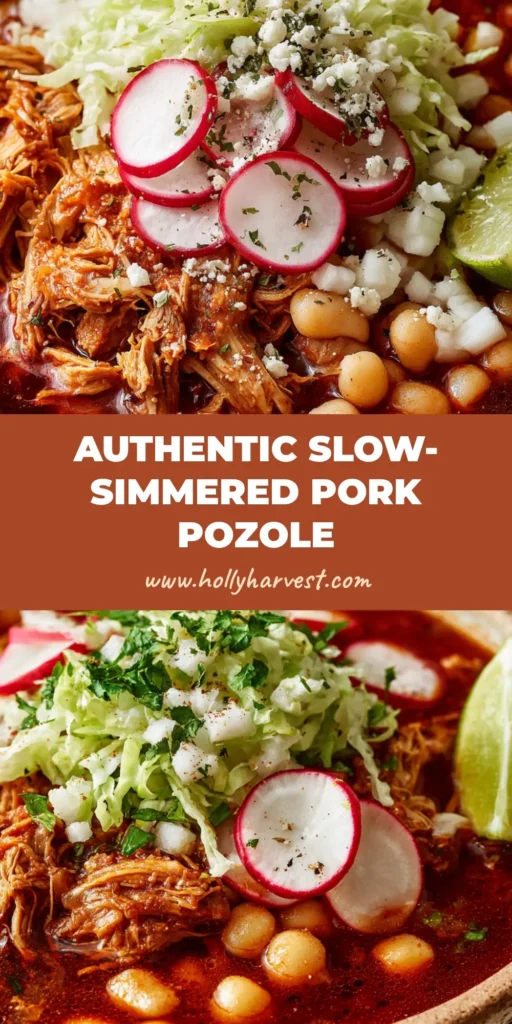
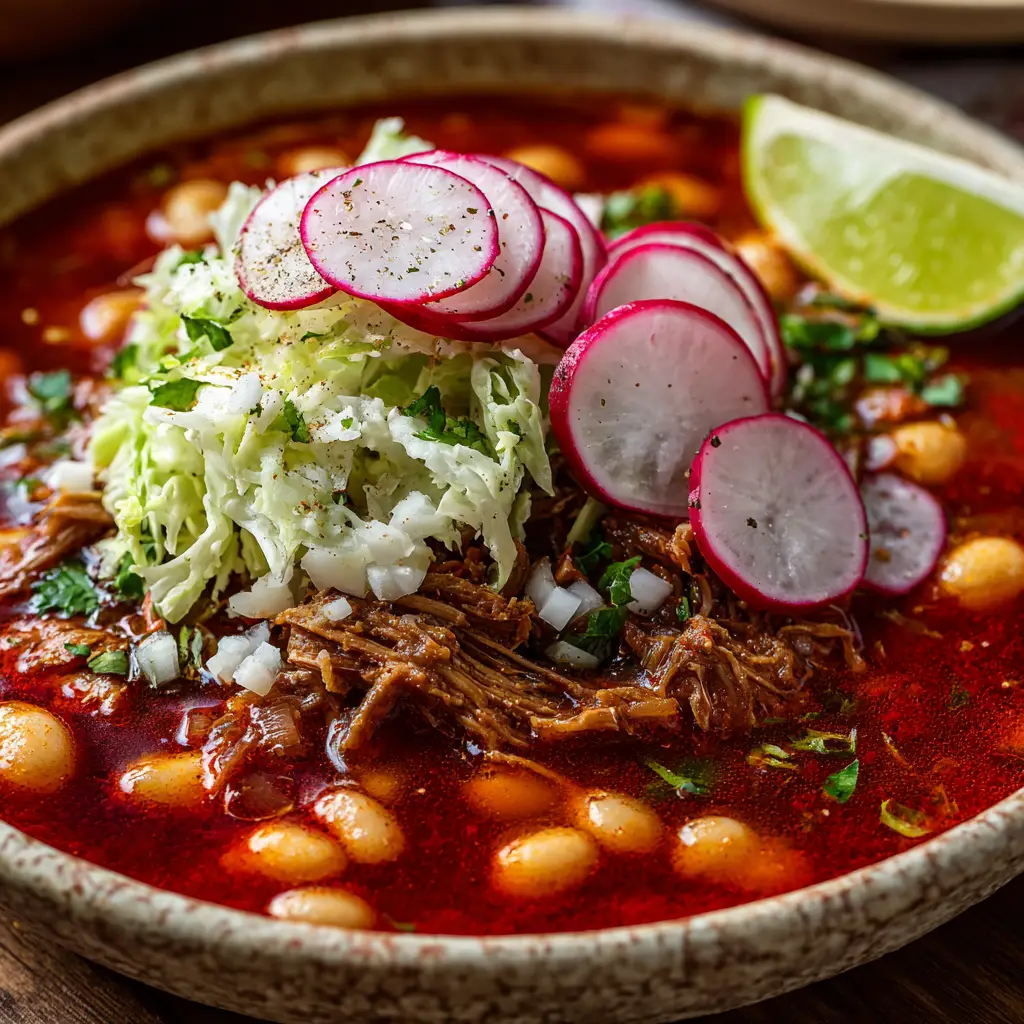
There are few dishes as deeply comforting and visually stunning as a traditional Pork Pozole. This isn’t just a soup; it’s an experience. Imagine a rustic bowl filled with a deep, opaque, rich red chile broth, so flavorful it warms you from the inside out.
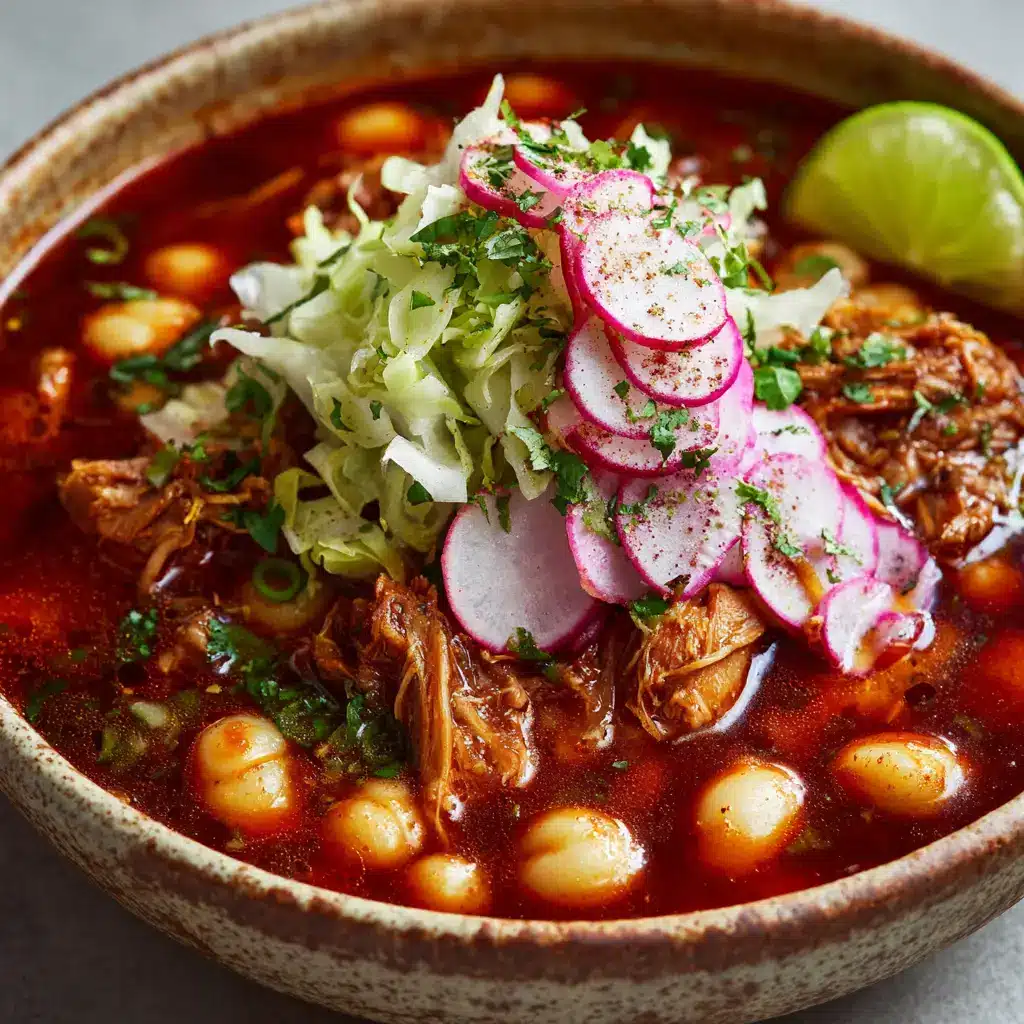
That incredible broth is the heart of the dish, cradling plump, soft kernels of white hominy and generous amounts of tender, pull-apart shredded pork. The magic happens when you add the toppings—a vibrant contrast of textures and flavors. A mound of finely shredded raw green cabbage, the crisp, peppery bite of thinly sliced radishes, the sharp punch of diced white onion, and a final dusting of earthy oregano complete the picture.
This recipe will guide you through creating that exact scene in your own kitchen. It’s a feast for the eyes and the soul, and it’s more achievable than you might think.
Why You’ll Love This Recipe
- Deep, Rich Broth: We use a blend of authentic dried Mexican chiles to create a broth that is complex, smoky, and has an incredible depth of flavor without overwhelming heat.
- Incredibly Tender Pork: By slowly simmering pork shoulder, we achieve that perfect, fall-apart texture that melts in your mouth with every spoonful.
- A Feast of Textures: The combination of the warm, savory soup with the cool, crisp, and fresh garnishes is what makes pozole so unique and addictive.
- Visually Stunning: Following these steps will produce a vibrant, beautiful bowl that looks just as good as it tastes, just like a rustic, handheld smartphone photo capturing a perfect culinary moment.
Ingredients & Substitutions
The key to authentic pozole is using the right ingredients. Here’s what you’ll need to build that perfect bowl.
For the Pork and Broth
- Pork Shoulder: 3 lbs (1.36 kg) boneless pork shoulder (Boston butt), cut into 2-inch chunks. This cut has the ideal fat content to become incredibly tender and shreddable after a long simmer.
- Dried Guajillo Chiles: 6 dried guajillo chiles, stems and seeds removed. These form the backbone of the red broth, providing a deep, crimson color and mild, smoky flavor.
- Dried Ancho Chiles: 2 dried ancho chiles, stems and seeds removed. Anchos add a touch of sweetness and complexity that complements the guajillos perfectly.
- White Onion: 1 large white onion, halved. Half will be used for the broth, and the other half will be diced for garnish.
- Garlic: 8 cloves of garlic, peeled. These provide a foundational aromatic flavor to the broth.
- Chicken Broth: 8 cups (1.9 liters) low-sodium chicken broth. This creates a richer base than just using water.
- White Hominy: 2 cans (29 oz / 822g each) of white hominy, drained and rinsed. Using canned hominy is a traditional and convenient way to get those signature plump, chewy kernels.
- Vegetable Oil: 2 tbsp (30 ml) vegetable oil. Needed for searing the pork to build an initial layer of flavor.
- Mexican Oregano: 1 tbsp (5g) dried Mexican oregano, plus more for garnish. It has a more floral, citrusy note than its Mediterranean counterpart.
- Ground Cumin: 1 tsp (2g) ground cumin. Adds a touch of earthy warmth.
- Salt and Black Pepper: To taste. Essential for seasoning the pork and the final broth.
For the Garnishes
- Green Cabbage: ½ head of green cabbage, cored and very finely shredded. Provides a cool, fresh crunch.
- Red Radishes: 6-8 red radishes, washed and thinly sliced. These add a crisp texture and a peppery bite.
- White Onion: ½ large white onion, finely diced. The reserved half from the broth ingredients.
- Limes: 2-3 limes, cut into wedges for serving. A squeeze of fresh lime juice brightens up all the flavors.
Equipment Needed
- Large Dutch Oven or Heavy-Bottomed Pot
- Blender
- Fine-Mesh Sieve
- Tongs
- Skillet
Step-by-Step Instructions
Making pozole is a journey of building flavors. We’ll break it down into manageable stages: preparing the chile base, cooking the pork until tender, and assembling the final soup.
1. Prepare the Chile Base
The soul of pozole rojo is the broth. Creating a smooth, flavorful chile sauce is the most important step.
- Toast the Chiles: Place a dry skillet over medium heat. Working in batches, press the dried, de-seeded chiles flat against the hot surface for about 30-45 seconds per side. You’ll know they’re ready when they become fragrant and slightly more pliable. Be careful not to burn them, or the broth will be bitter.
- Rehydrate the Chiles: Place the toasted chiles in a medium bowl and cover them with hot water. Let them soak for 20-30 minutes until they are very soft and rehydrated.
- Blend the Sauce: Transfer the softened chiles to a blender using tongs. Add 2 cups (480ml) of the chicken broth, 4 cloves of the garlic, and half of the onion (the half you’re using for the broth). Blend on high until the mixture is completely smooth.
- Strain the Sauce: Position a fine-mesh sieve over a clean bowl and pour the blended chile sauce through it, using a spatula to press all the liquid out. This step is crucial for achieving that “deep, opaque” and smooth broth texture, removing any tough bits of chile skin.
2. Cook the Pork
Now, we build the foundation of the soup by searing the pork and starting the simmer.
- Sear the Pork: Pat the pork shoulder chunks dry with a paper towel and season generously with salt and pepper. Heat the vegetable oil in your large Dutch oven over medium-high heat. Add the pork in a single layer (work in batches if needed) and sear until a deep golden-brown crust forms on all sides.
- Start the Simmer: Return all the seared pork to the pot. Add the strained red chile sauce, the remaining 6 cups (1.4 liters) of chicken broth, the remaining 4 cloves of garlic, the cumin, and the tablespoon of Mexican oregano. Stir everything together.
- Braise Until Tender: Bring the liquid to a boil, then reduce the heat to low, cover the pot, and let it simmer gently for 2.5 to 3 hours. The goal is to make the pork incredibly tender. You’ll know it’s ready when it can be easily pulled apart with a fork.
3. Assemble and Serve
The final step is bringing all the components together for the perfect bowl.
- Shred the Pork: Carefully remove the tender chunks of pork from the pot and transfer them to a cutting board. Using two forks, shred the meat into bite-sized pieces.
- Combine and Final Simmer: Return the shredded pork to the pot. Add the drained and rinsed white hominy. Stir gently and let the pozole simmer uncovered for another 15-20 minutes, allowing the hominy to heat through and the flavors to meld together. Taste and adjust seasoning with salt as needed.
- Serve: Ladle the hot pozole into rustic, shallow ceramic bowls. Serve immediately, allowing everyone to customize their bowl with mounds of shredded cabbage, sliced radishes, diced onion, a sprinkle of oregano, and a generous squeeze of fresh lime.
Expert Tips for Success
- Don’t Skip Straining the Sauce: This is the key to a professional-quality, smooth broth. It might seem like an extra step, but it makes a world of difference in the final texture.
- Sear the Pork Properly: Don’t overcrowd the pan when searing the pork. A deep, brown crust (the Maillard reaction) builds a massive layer of flavor that water or broth alone cannot create.
- The Garnishes Are Not Optional: The fresh, crunchy toppings are essential to the pozole experience. They provide a necessary contrast in texture and temperature to the rich, warm soup.
- Let It Rest: Like many stews, pozole tastes even better the next day. The flavors continue to meld and deepen as it sits in the refrigerator.
Storage & Reheating/Freezing
Pozole makes for fantastic leftovers. To store, let it cool completely and place it in an airtight container in the refrigerator for up to 4 days.
Store all the fresh garnishes (cabbage, radish, onion) in separate airtight containers in the fridge to maintain their crispness. Reheat the pozole gently on the stovetop over medium-low heat until warmed through.
For freezing, let the pozole cool and place it in a freezer-safe container, leaving some room for expansion. It can be frozen for up to 3 months. Thaw it overnight in the refrigerator before reheating.
What to Serve With This
While this pozole is a hearty, complete meal all on its own, a few simple sides can round out the experience. Warm corn tortillas or crispy tostada shells are perfect for dipping into the incredible broth.
For a refreshing counterpoint, a crisp and cool salad is an excellent choice. This light and zesty Thai Cucumber Salad offers a wonderful contrast to the rich, savory flavors of the stew.
If you’re looking for a heartier pairing, especially for a larger gathering, serving it alongside some simple, crusty bread like a Garlic Parmesan Herb Bread is perfect for soaking up every last drop of the delicious red chile broth.
FAQ
Absolutely. You can substitute boneless, skinless chicken thighs for the pork. The cooking time will be shorter; simmer until the chicken is cooked through and shreds easily, about 1 to 1.5 hours.
The spice level can be controlled. Guajillo and Ancho chiles provide deep, smoky flavor with mild to medium heat. For a spicier pozole, you can add a few Chiles de Árbol to the chile base.
Pork shoulder (also known as pork butt or Boston butt) is the best choice. Its fat content and connective tissue break down during the long simmer, resulting in incredibly tender, easy-to-shred meat.
The primary difference is the base of the broth. Pozole Rojo (red), like this recipe, is made with a base of dried red chiles. Pozole Verde (green) is made with a base of fresh green ingredients like tomatillos, cilantro, and jalapeños.
The Soul of a Great Soup
We hope you love this authentic Pork Pozole recipe. It’s a true labor of love that pays off in every single spoonful. Don’t forget to leave a comment and a rating below to let us know how it turned out!
For more visually delicious recipes, be sure to follow us on Pinterest @holly_harvest!
Schema
Authentic Pork Pozole Recipe (Rojo)
Ingredients
Equipment
Instructions
- Toast the Chiles: Place a dry skillet over medium heat. Working in batches, press the dried, de-seeded chiles flat against the hot surface for about 30-45 seconds per side. You'll know they're ready when they become fragrant and slightly more pliable. Be careful not to burn them, or the broth will be bitter.
- Rehydrate the Chiles: Place the toasted chiles in a medium bowl and cover them with hot water. Let them soak for 20-30 minutes until they are very soft and rehydrated.
- Blend the Sauce: Transfer the softened chiles to a blender using tongs. Add 2 cups (480ml) of the chicken broth, 4 cloves of the garlic, and half of the onion (the half you're using for the broth). Blend on high until the mixture is completely smooth.
- Strain the Sauce: Position a fine-mesh sieve over a clean bowl and pour the blended chile sauce through it, using a spatula to press all the liquid out. This step is crucial for achieving that 'deep, opaque' and smooth broth texture, removing any tough bits of chile skin.
- Sear the Pork: Pat the pork shoulder chunks dry with a paper towel and season generously with salt and pepper. Heat the vegetable oil in your large Dutch oven over medium-high heat. Add the pork in a single layer (work in batches if needed) and sear until a deep golden-brown crust forms on all sides.
- Start the Simmer: Return all the seared pork to the pot. Add the strained red chile sauce, the remaining 6 cups (1.4 liters) of chicken broth, the remaining 4 cloves of garlic, the cumin, and the tablespoon of Mexican oregano. Stir everything together.
- Braise Until Tender: Bring the liquid to a boil, then reduce the heat to low, cover the pot, and let it simmer gently for 2.5 to 3 hours. The goal is to make the pork incredibly tender. You'll know it's ready when it can be easily pulled apart with a fork.
- Shred the Pork: Carefully remove the tender chunks of pork from the pot and transfer them to a cutting board. Using two forks, shred the meat into bite-sized pieces.
- Combine and Final Simmer: Return the shredded pork to the pot. Add the drained and rinsed white hominy. Stir gently and let the pozole simmer uncovered for another 15-20 minutes, allowing the hominy to heat through and the flavors to meld together. Taste and adjust seasoning with salt as needed.
- Serve: Ladle the hot pozole into rustic, shallow ceramic bowls. Serve immediately, allowing everyone to customize their bowl with mounds of shredded cabbage, sliced radishes, diced onion, a sprinkle of oregano, and a generous squeeze of fresh lime.
Notes
Sear the Pork Properly: Don't overcrowd the pan when searing the pork. A deep, brown crust (the Maillard reaction) builds a massive layer of flavor that water or broth alone cannot create.
The Garnishes Are Not Optional: The fresh, crunchy toppings are essential to the pozole experience. They provide a necessary contrast in texture and temperature to the rich, warm soup.
Let It Rest: Like many stews, pozole tastes even better the next day. The flavors continue to meld and deepen as it sits in the refrigerator.