The San Sebastian Burnt Cheesecake is a culinary phenomenon that defies every traditional rule of pastry. While most cheesecakes demand a gentle water bath and a pristine, pale surface, this Basque masterpiece thrives on high heat and a daringly dark exterior.
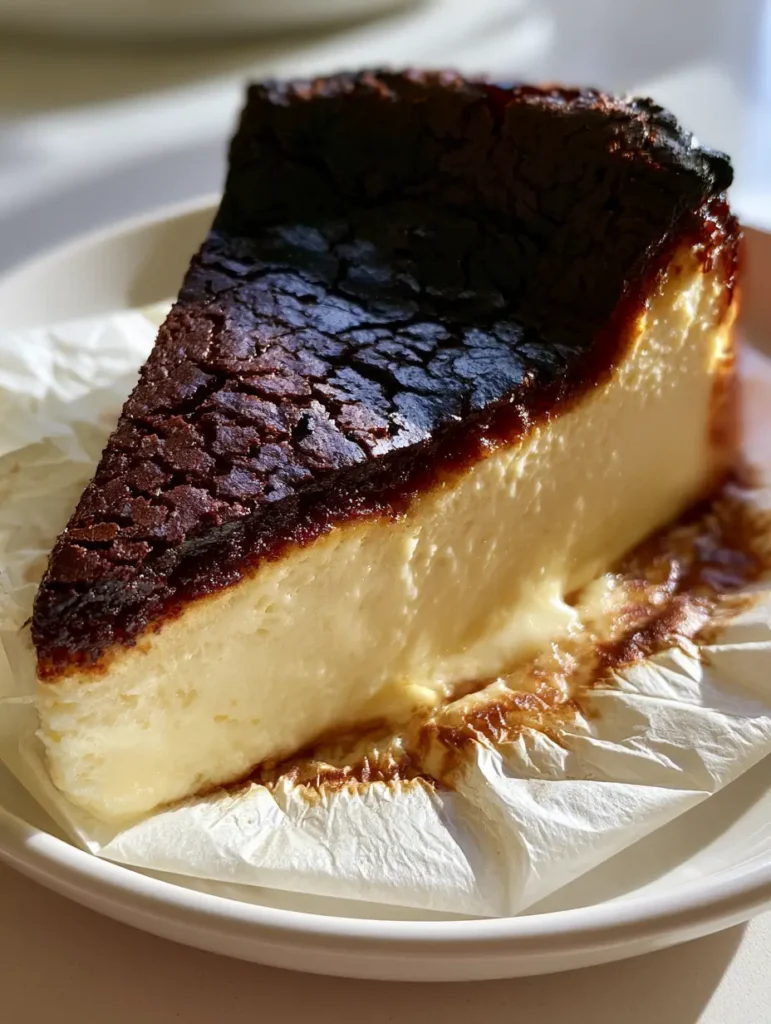
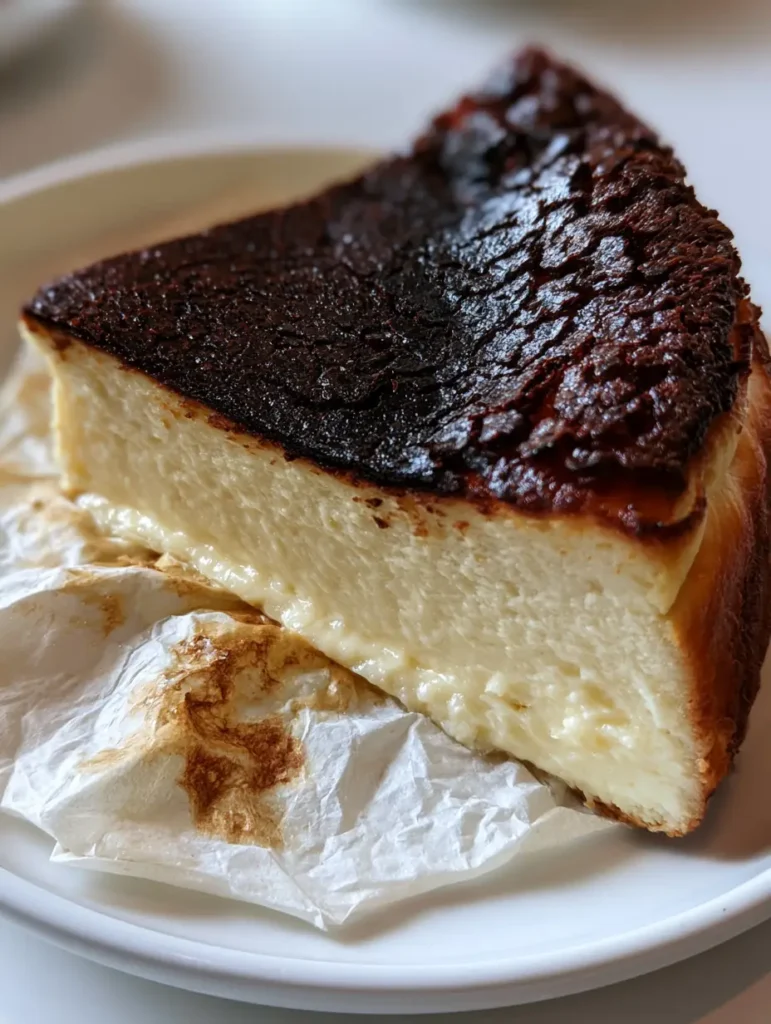
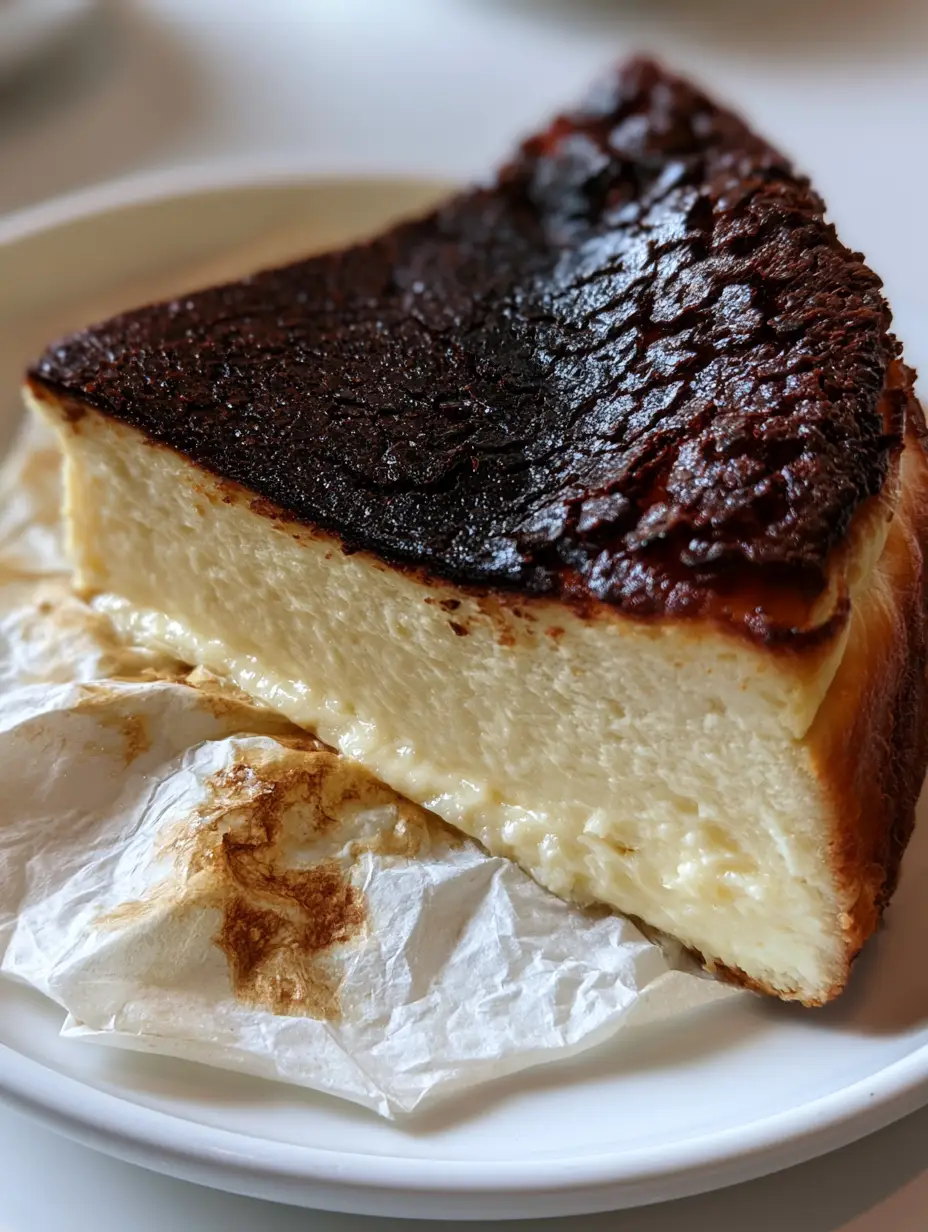
This recipe delivers a striking visual contrast: a deep, mahogany-brown top that looks nearly charred, giving way to a pale ivory, custard-like interior. It is the perfect marriage of smoky caramel notes and rich, velvety cream cheese.
Whether you are a seasoned baker or a curious novice, the San Sebastian Burnt Cheesecake is surprisingly forgiving. Because it has no crust and purposefully “burnt” edges, you never have to worry about cracks or a soggy bottom.
The Irresistible Allure of the Authentic Basque Tarta de Queso
- Textural Masterclass: Experience a spectrum of textures, from the rustic, crackled top to the exceptionally creamy, gooey center.
- Crustless Simplicity: Skip the graham crackers entirely; this cheesecake relies on its own structural integrity for a pure, unadulterated flavor.
- Deep Caramelization: The high-temperature bake creates a natural “crust” of caramelized sugars that tastes like a sophisticated toasted marshmallow.
- Visual Showstopper: Resting on a piece of crumpled white parchment paper, its rustic aesthetic makes it the star of any dinner party.
Essential Elements for the Perfectly Caramelized Custard
To achieve the signature look of a San Sebastian Burnt Cheesecake, every ingredient must be at room temperature. This ensures the batter is completely smooth, preventing air bubbles that could ruin the dense, velvety crumb.
Full-Fat Cream Cheese: Use 2.2 lbs (1kg) of premium, block-style cream cheese. This provides the foundational richness and the characteristic tang that defines a true Basque dessert.
Granulated Sugar: You will need 1 1/2 cups (300g) of sugar. Beyond sweetness, the sugar is vital for the Maillard reaction, allowing the top to blister and darken into that iconic “burnt” finish.
Large Eggs: 6 to 7 large eggs (approximately 350ml) act as the primary structural binder. They create the custard-like lift while maintaining that signature gooey center described in our visual blueprint.
Heavy Cream: Use 2 cups (480ml) of heavy cream with at least 35% fat content. This liquid gold is what transforms a standard cheesecake into an ivory-colored, melt-in-your-mouth experience.
All-Purpose Flour: Just 1 tbsp (10g) is required. This tiny amount of starch provides just enough stability to keep the slice upright while allowing the center to remain soft and custardy.
Fine Sea Salt: A pinch of salt (about 1/2 tsp) is the “invisible” hero. It balances the sweetness and enhances the complex caramel notes of the scorched top.
Tools Required for the Perfect Basque Bake
Achieving the rustic look seen in our Midjourney prompt requires a few specific tools. You cannot achieve the iconic “crumpled parchment” aesthetic without the right preparation.
A 9-inch (23cm) springform pan is essential for easy removal. Since the cake is crustless and very soft when warm, the removable sides of a springform pan are non-negotiable for success.
You must also use high-quality white parchment paper. To get that “rustic, crackled” side texture, you will manually crumple the paper before lining the pan, allowing the batter to seep into the folds.
A stand mixer or a high-powered hand mixer is recommended. You need to aerate the eggs and cream cheese just enough to keep it light, but not so much that it becomes a souffle.
Architecting the Iconic San Sebastian Burnt Cheesecake
Preparing the Signature Rustic Lining
Preheat your oven to 425°F (220°C). Unlike other cakes, we need intense, direct heat to scorch the top before the middle overcooks.
Take two large sheets of white parchment paper. Crumple them into a tight ball, then flatten them back out; this creates the “grease-stained white parchment paper” look from our visual guide.
Press the crumpled sheets into your 9-inch springform pan, overlapping them. Ensure the paper extends at least 2 inches (5cm) above the rim of the pan, as the cheesecake will rise significantly during baking.
Mixing the Velvety Ivory Batter
In a large bowl, beat the cream cheese and sugar together until the mixture is completely smooth and the sugar has dissolved. Listen for the sound of the whisk—it should transition from grainy to a quiet, silky slide.
Add the eggs one at a time, incorporating each fully before adding the next. This gradual process ensures the “exceptionally creamy and dense” interior seen in the close-up eye-level shot.
Whisk in the heavy cream and salt until the batter is fluid and pale ivory. Sift the flour over the top and gently fold it in, ensuring no white lumps remain in the mixture.
The High-Heat Scorch and The Jiggle Test
Pour the batter into the prepared pan. Give the pan a sharp tap on the counter to release any large air bubbles that might interfere with the “smooth, velvety side” of your slice.
Bake for 35 to 40 minutes. Watch the oven closely through the glass; the top will puff up like a souffle and turn a deep, dark brown, nearly black, with a rustic, crackled texture.
The most critical cue is the “jiggle.” When you move the pan, the outer edges should feel set, but the center 3 inches should wobble like unset Jello. This ensures the “slightly gooey towards the center” finish.
Professional Secrets for a Flawless Finish
- The Cooling Rule: Never slice this cake while warm. It needs at least 4 hours—or ideally overnight—to set into that “starkly contrasting pale ivory” interior.
- Room Temp Only: If your cream cheese is cold, you will get lumps. Lumps are the enemy of the “smooth, velvety side” we see in professional food photography.
- Don’t Be Afraid of the Dark: If the top looks “burnt,” you are doing it right! That bitterness is essential to balance the sweetness of the custard.
- Clean Slicing: For a “minimal white ceramic plate” presentation, dip your knife in hot water and wipe it clean between every single cut.
Mastering the Art of Preservation
The San Sebastian Burnt Cheesecake actually improves with a little time. The flavors deepen as the caramel notes from the top seep into the ivory custard below.
Store your cheesecake in the refrigerator, still in its parchment paper, for up to 5 days. Cover it loosely with plastic wrap once it has cooled completely to prevent it from absorbing fridge odors.
For the best texture, always bring a slice to room temperature for about 30 minutes before serving. This revives the “gooey towards the center” feel that refrigeration can firm up.
Perfect Pairings for a Gourmet Spread
While this cheesecake is a titan on its own, it fits beautifully into a larger menu. If you are hosting a brunch, consider starting with a light refreshing peach burrata salad to cleanse the palate before the rich dessert.
For a cozy dinner, this cheesecake follows a savory main like creamy garlic pasta or a batch of caprese quick bread exceptionally well.
If you love a variety of sweets, try serving smaller bites alongside it, such as peach crumble bars for a fruity contrast to the smoky caramel of the Basque cake.
Frequently Asked Questions
No. The structural integrity and ‘ivory custard’ texture rely on the high fat content of full-fat cream cheese and heavy cream.
It needs at least 4 hours at room temperature and then in the fridge to reach the ideal slicing consistency, though overnight is best.
It should taste like deep caramel, similar to the top of a crème brûlée. It adds a sophisticated bitterness that balances the rich sweetness of the cheese.
Crumpling the paper allows it to fit the round pan easily and creates the signature rustic, pleated edges on the sides of the cheesecake.
You likely overbaked it. The cheesecake must still have a significant ‘jiggle’ in the center when you pull it out of the oven. It continues to set as it cools.
The Ultimate San Sebastian Burnt Cheesecake Recipe
San Sebastian Burnt Cheesecake: The Ultimate Creamy Basque Recipe
Ingredients
Equipment
Instructions
- Preheat your oven to 425°F (220°C). Crumple two sheets of white parchment paper into balls, then flatten them and line a 9-inch springform pan, ensuring the paper rises 2 inches above the rim.
- Beat the room-temperature cream cheese and sugar in a stand mixer until completely smooth and the sugar has fully dissolved.
- Add eggs one at a time, beating well after each addition to ensure a dense, creamy custard texture.
- Slowly pour in the heavy cream and salt while mixing on low. Sift in the flour and fold gently until no lumps remain.
- Pour batter into the pan and bake for 35-40 minutes until the top is dark brown and crackled, but the center still jiggles significantly.
- Let the cheesecake cool completely in the pan at room temperature before refrigerating for at least 4 hours to set the ivory interior.
Notes
Always use full-fat ingredients for the correct structural integrity.
Join the Harvest Community!
Capturing the perfect “handheld smartphone photo” of your San Sebastian Burnt Cheesecake? We want to see those crackled tops and gooey centers!
Leave a comment below telling us how your bake turned out, or share your masterpiece and tag us. Don’t forget to follow holly_harvest on Pinterest for more visual recipe blueprints!
Your feedback helps us refine our culinary forensics and brings more delicious, ad-free-feeling content to home cooks everywhere. Happy baking!