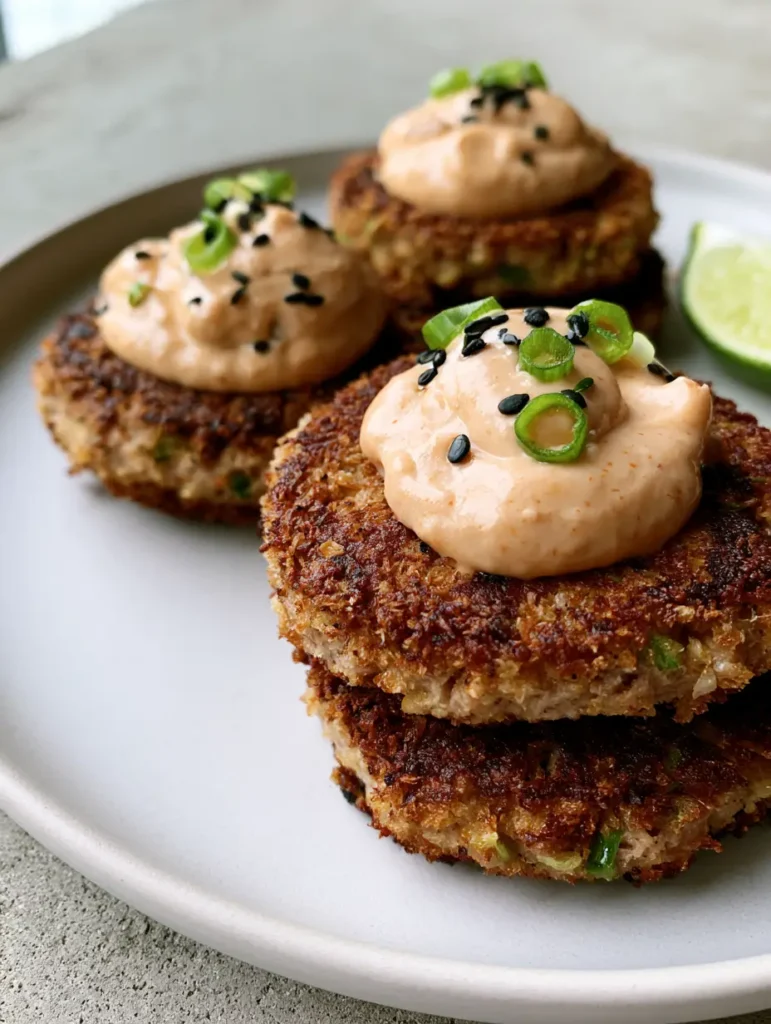
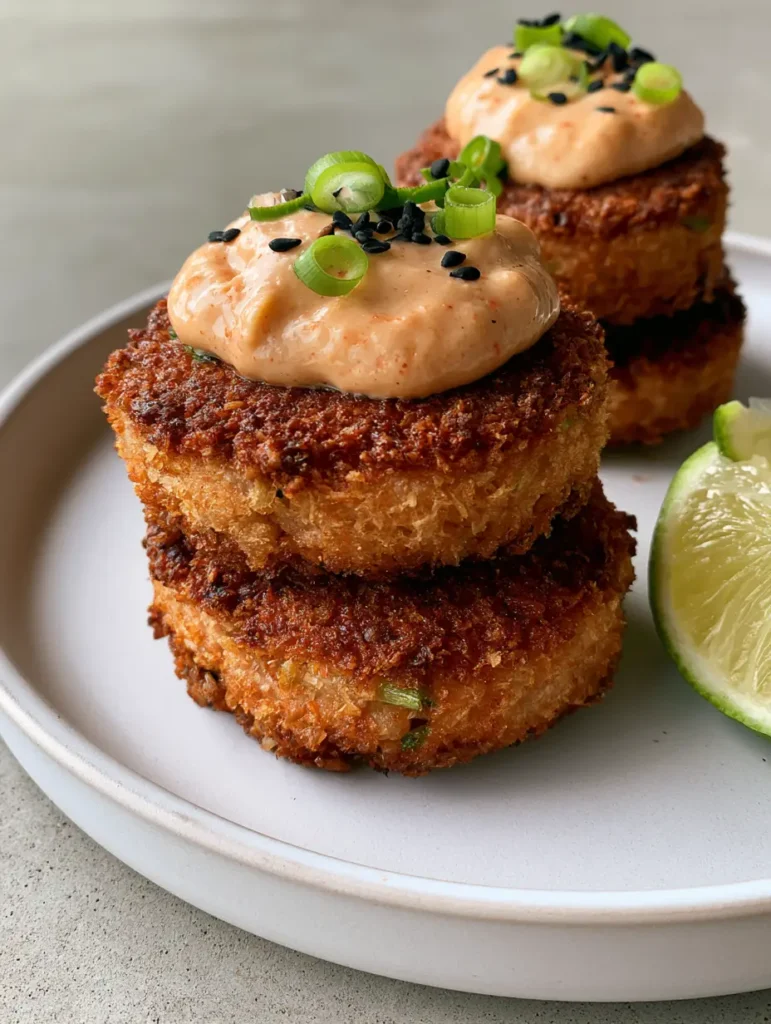
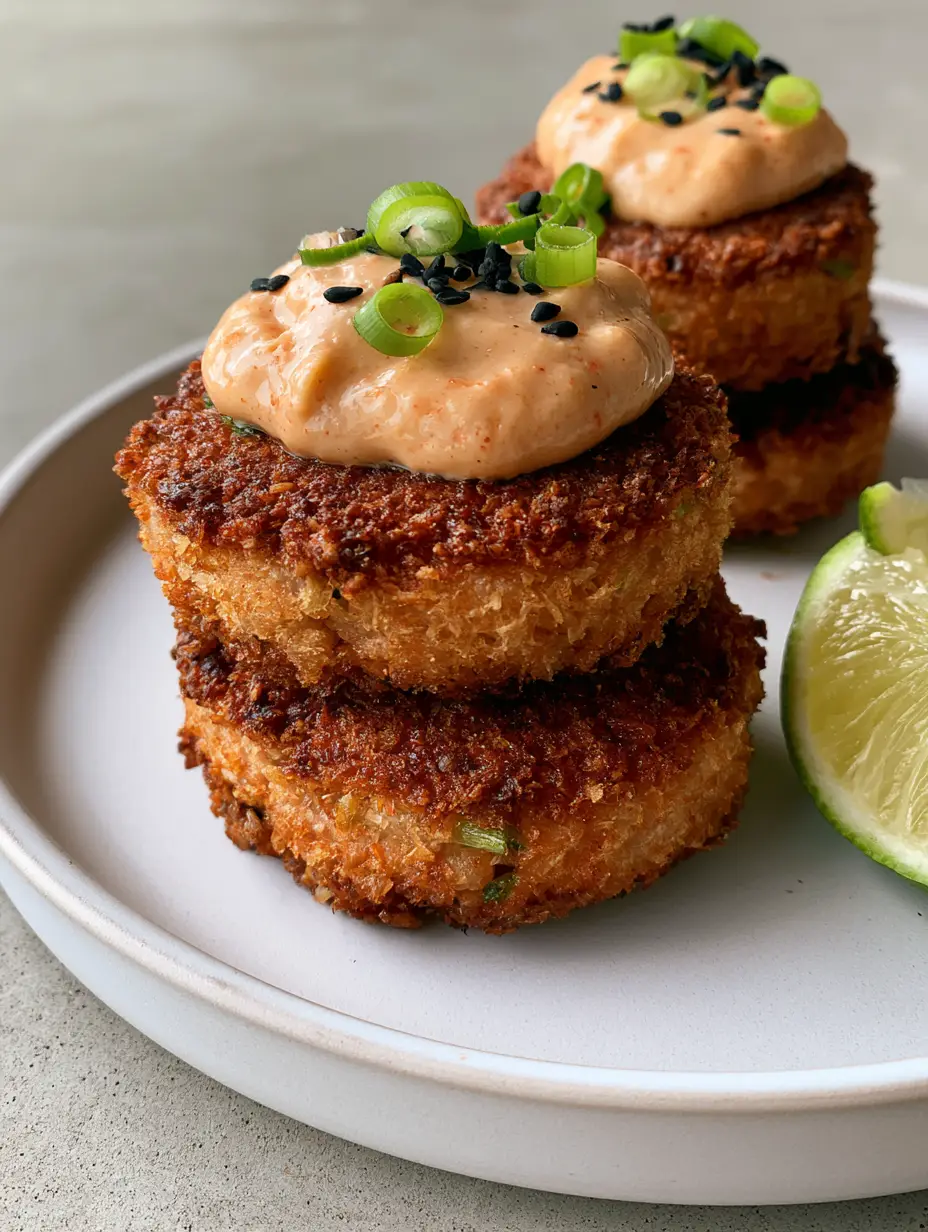
If you have ever stared at a can of tuna in your pantry and wondered how to turn it into a gourmet masterpiece, these Asian Tuna Cakes are your definitive answer. This isn’t your average cafeteria fish cake; we are talking about thick, succulent patties with a shattering crispy panko crust and a center bursting with umami. The visual of these golden-brown discs stacked high on a plate, topped with a vibrant orange sauce, is enough to make any home cook feel like a professional chef.
Creating the perfect Asian Tuna Cakes requires a balance of texture and heat. We lean into the aromatic profiles of fresh ginger, soy sauce, and scallions to elevate the humble tuna into something extraordinary. Every bite offers a contrast between the charred, crispy edges and the tender, savory interior, finished with the creamy zing of a signature sriracha-infused mayo.
Whether you are looking for a quick weeknight dinner or an impressive appetizer for your next gathering, this recipe delivers on every front. Inspired by the bold flavors of a traditional Korean bibimbap (coming soon), these cakes bring a fusion flair to your kitchen without requiring hours of prep. Let’s dive into the culinary science behind achieving that iconic golden-brown sear.
Why You’ll Crave These Crispy Golden-Brown Tuna Patties
- The Ultimate Texture Contrast: The combination of toasted panko breadcrumbs and high-heat pan-frying creates a “shatter-crunch” exterior that protects the moist tuna inside.
- Budget-Friendly Elegance: We use accessible pantry staples like canned tuna and sriracha, yet the presentation rivals a high-end seafood bistro.
- Aromatic Depth: Freshly grated ginger and sliced green scallion rings provide a bright, sharp contrast to the savory tuna and rich sesame oil.
- Visual Perfection: From the black sesame seed garnish to the thick dollop of creamy sriracha mayo, these cakes are designed to be as beautiful as they are delicious.
Pantry Staples and Fresh Aromatics for Bold Flavor
Canned Albacore or Skipjack Tuna: You will need 12 oz (340g) of high-quality canned tuna, drained very well. Dry tuna is the secret to a patty that doesn’t fall apart in the pan, ensuring a solid, thick structure.
Toasted Panko Breadcrumbs: Use 1 cup (60g) of Panko for the coating and a bit for the binder. Panko’s larger surface area is what provides those charred crispy edges you see in professional food photography.
Large Eggs: Use 2 large eggs to act as the primary protein binder. The eggs coagulate during the pan-frying process, locking the tuna and aromatics into a circular, stackable shape.
Fresh Scallions: You’ll need 4 large stalks, finely sliced. We use the white parts inside the cakes for flavor and the bright green rings as a garnish for that essential pop of color.
Sriracha and Mayonnaise: Mix 1/2 cup (120ml) of mayo with 2 tbsp (30ml) of sriracha. This creates a thick, stable sauce that holds its shape as a dollop rather than running off the side of the cake.
Foundational Seasonings: Don’t forget 1 tbsp (15ml) of soy sauce, 1 tsp (5ml) of toasted sesame oil, and 1/2 tsp (3g) of sea salt. These “invisible” ingredients build the umami base necessary for an authentic Asian profile.
Essential Tools for Achieving the Perfect Sear
To get that deep golden-brown crust without the cakes sticking, a heavy-bottomed non-stick skillet or a well-seasoned cast-iron pan is non-negotiable. The heat retention of cast iron is particularly effective for creating the charred crispy edges that define this dish.
A thin metal spatula or a fish turner is also highly recommended. Since these patties are thick and circular, you need a tool that can slide underneath the delicate panko crust without breaking it. Finally, a small cookie scoop can help you portion out even sizes, ensuring all three cakes in your stack are perfectly uniform.
Forging the Perfect Sear: A Step-by-Step Culinary Guide
Preparing the Tuna Base
In a large mixing bowl, flake your 12 oz (340g) of drained tuna with a fork until no large chunks remain. Add in your beaten eggs, 1/4 cup (15g) of panko, soy sauce, sesame oil, and the white parts of the sliced scallions. Mix thoroughly until the mass is cohesive and holds together when pressed.
Forming the Thick Circular Patties
Divide the mixture into six equal portions to create thick, circular cakes. Press them firmly between your palms to ensure they are compact. Dredge each patty in the remaining panko breadcrumbs, pressing the crumbs into the surface to create a thick, even coating that covers the top, bottom, and sides.
The Art of the Pan-Fry
Heat 3 tbsp (45ml) of neutral oil in your skillet over medium-high heat. Wait until the oil is shimmering and just starting to wisps of smoke—this is the sensory cue that the pan is ready. Place the cakes in the pan, leaving space between them to allow steam to escape.
Monitoring Visual Cues
Fry the tuna cakes for 3-4 minutes per side. Look for the “Golden-Brown Transformation”: the edges will begin to turn a dark, toasted amber. When you flip them, you should hear a distinct sizzle and see a perfectly uniform, crispy crust that has formed across the entire surface.
Crafting the Sriracha Mayo Topping
While the cakes rest for a minute, whisk together your mayo and sriracha until a smooth, light-orange hue is achieved. The consistency should be thick enough to hold a soft peak. Use a spoon to place a generous, thick dollop right in the center of each hot tuna cake.
Expert Tips for Success and “Pro-Level” Presentation
- The “Dryness” Rule: If your tuna mixture feels too wet, add an extra tablespoon of panko. Wet batter leads to soggy cakes that won’t achieve that characteristic “shatter-crunch.”
- Chill for Stability: If you have time, let the formed patties rest in the fridge for 20 minutes before frying. This helps the proteins in the egg set, making them much easier to handle.
- Garnish with Precision: For the best visual result, scatter the black sesame seeds and scallion rings from a few inches above the plate to get an even, artistic distribution.
- Don’t Crowd the Pan: Frying in batches ensures the oil temperature stays high enough to sear rather than steam the tuna.
Flavor Pairings and Serving Suggestions
These Asian Tuna Cakes are incredibly versatile. For a light lunch, serve them atop a fresh peach burrata salad where the sweetness of the fruit balances the spicy sriracha. If you are looking for a more substantial meal, they pair beautifully with a side of savory black beans and rice (coming soon) for a unique fusion twist.
If you enjoy the crispy texture of these cakes, you might also love our famous crack burgers, which focus on that same high-flavor, high-crunch profile. Always serve these cakes with a fresh lime wedge on the side; the acidity cuts through the richness of the mayo and brightens the sesame notes.
Frequently Asked Questions
The cakes themselves are mild and savory. The heat comes primarily from the sriracha mayo topping, which you can adjust to your preference.
Yes, bake at 400°F (200°C) for 15-20 minutes. However, for the authentic deep golden-brown crust shown in the photos, pan-frying is the superior method.
You can, but you won’t get the same ‘shatter-crunch’ texture. Panko flakes are larger and airier, which is essential for those charred crispy edges.
Stored in an airtight container in the fridge, these cakes will stay fresh for up to 3 days. Reheat in a skillet to regain the crispiness.
This usually happens if the tuna is too wet or the patties aren’t chilled. Ensure you squeeze all liquid from the canned tuna and press the patties firmly before frying.
The Ultimate Asian Tuna Cakes Recipe
Asian Tuna Cakes with Crispy Panko and Sriracha Mayo
Ingredients
Equipment
Instructions
- In a large bowl, combine drained tuna, eggs, 1/4 cup panko, soy sauce, sesame oil, ginger, and scallion whites. Mix until cohesive.
- Shape into 6 thick circular patties. Dredge each patty in the remaining panko breadcrumbs, pressing firmly to coat the exterior.
- Heat oil in a skillet over medium-high heat. Fry cakes for 3-4 minutes per side until a deep golden-brown crust and charred crispy edges form.
- Whisk mayo and sriracha. Dollop onto hot cakes. Top with green scallion rings, black sesame seeds, and serve with a lime wedge.
Notes
For an extra kick, add finely diced jalapeño to the tuna mixture.
Closing & Call to Action
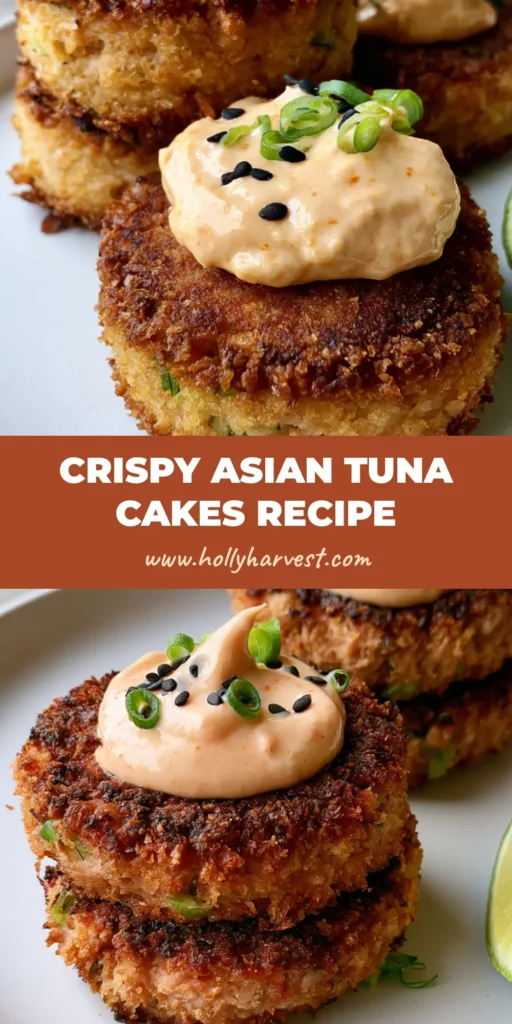
Transforming a simple pantry staple into these stunning Asian Tuna Cakes is a rewarding culinary experience that proves you don’t need expensive ingredients to eat like royalty. The combination of the deep golden-brown crust, the spicy sriracha dollop, and the fresh crunch of scallions creates a sensory experience that is hard to beat. If you enjoyed this recipe, please leave a comment below and let us know how your crispy edges turned out!
Be sure to follow us on Pinterest for more visual recipe inspiration and weeknight meal solutions. Share your creations by tagging us—we love seeing your stacks of tuna cakes!