Mastering the perfect Cacio e Pepe recipe is a rite of passage for every home cook who craves the soul-satisfying elegance of Roman cuisine. This isn’t just a bowl of noodles; it is a masterclass in emulsification, where three humble ingredients transform into a decadent, velvet-like masterpiece.
In this guide, we dive deep into the forensic details of achieving that iconic glossy finish you see in high-end trattorias. From the specific coarseness of the black pepper kernels to the precise temperature required to melt Pecorino Romano without clumping, every step is designed for perfection.
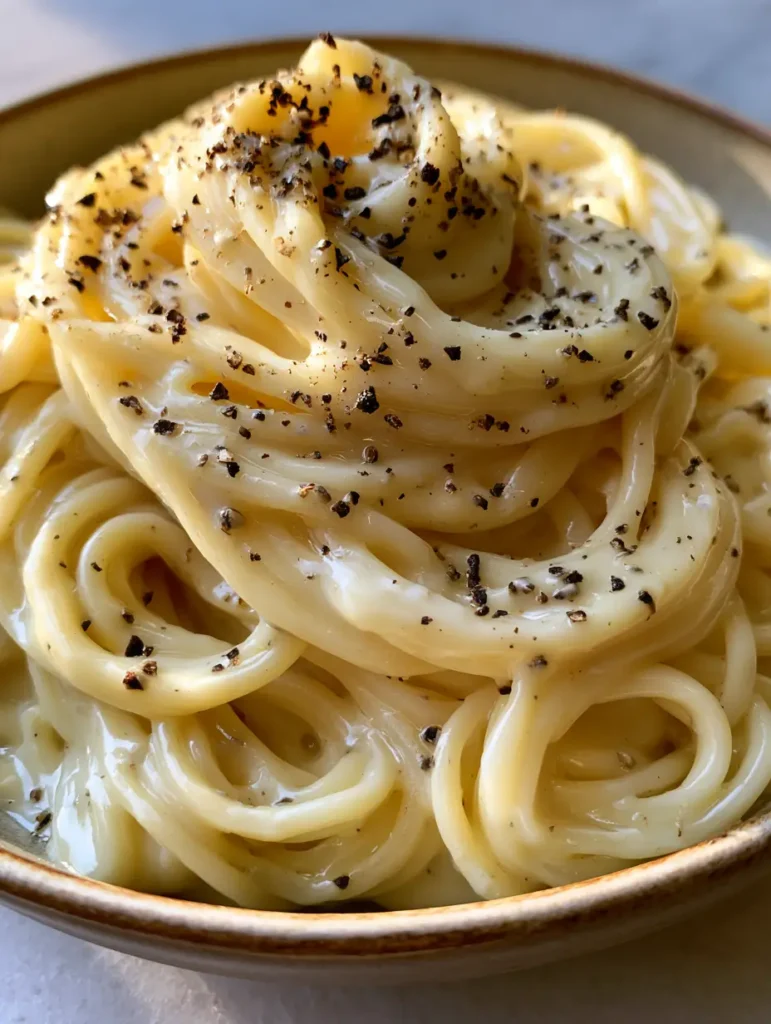
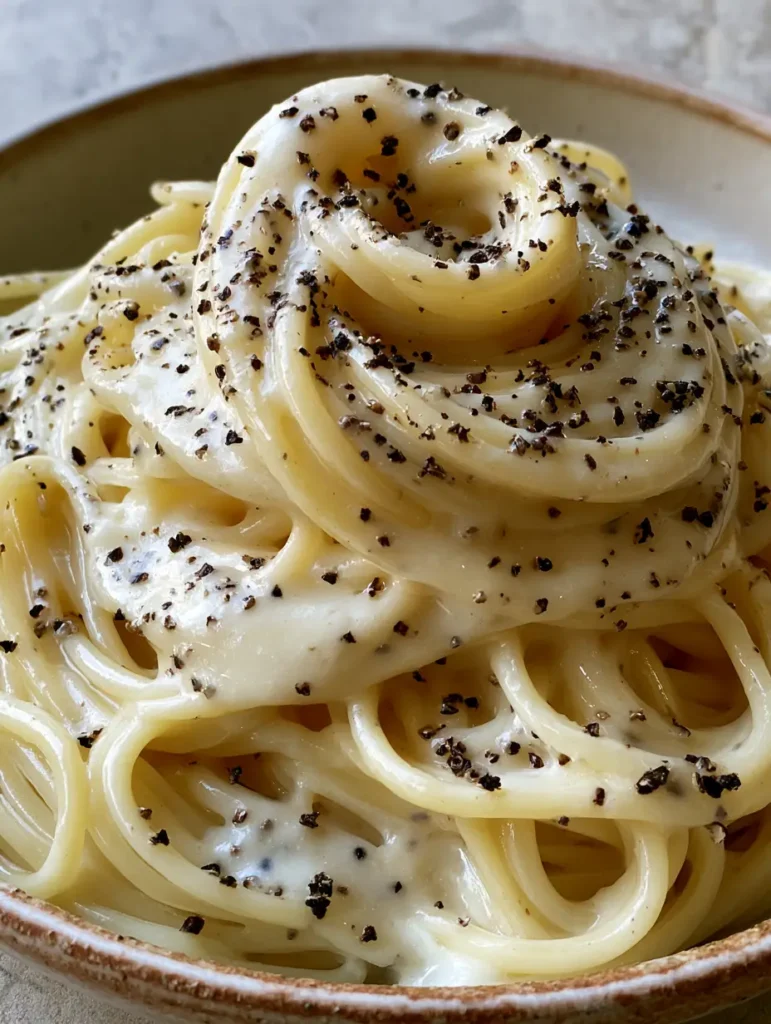
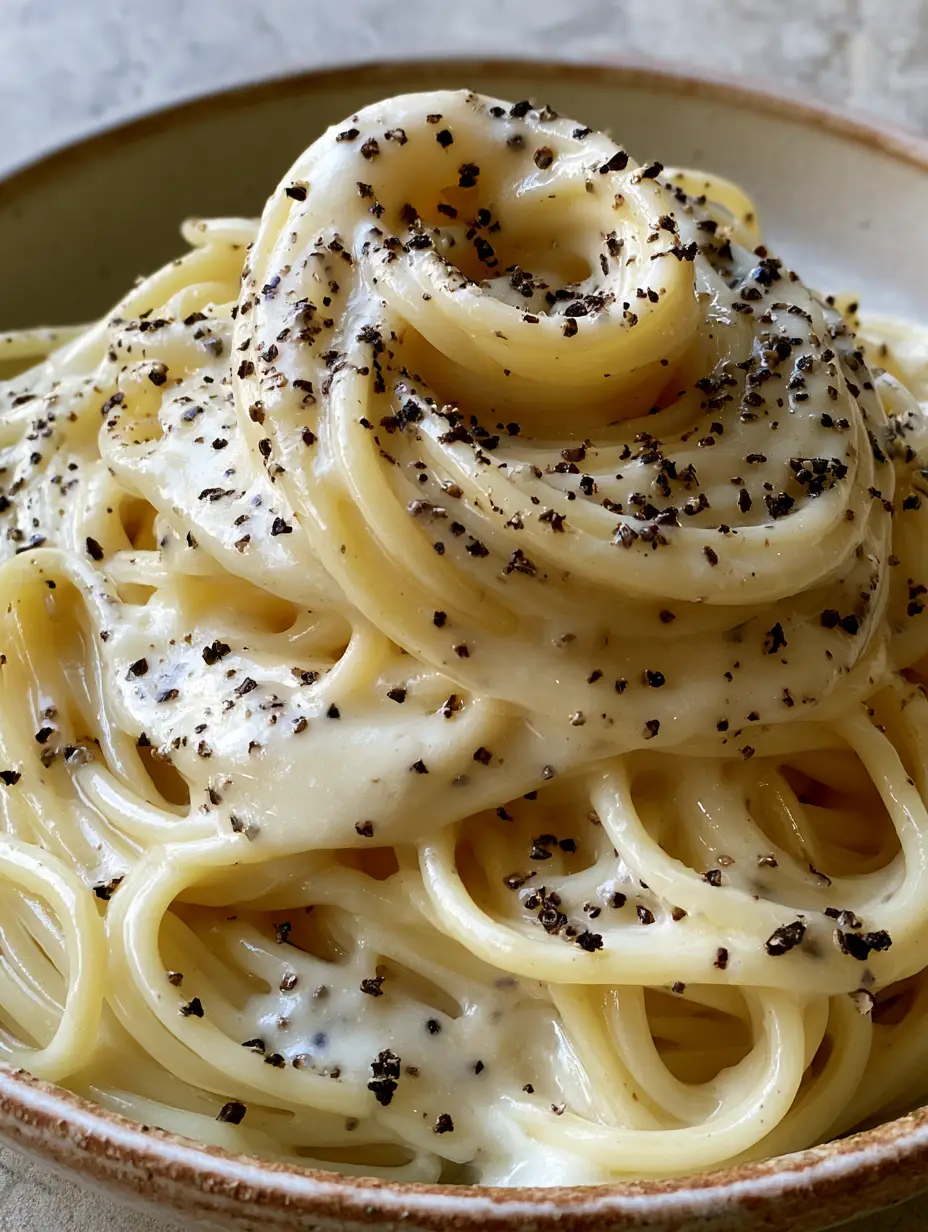
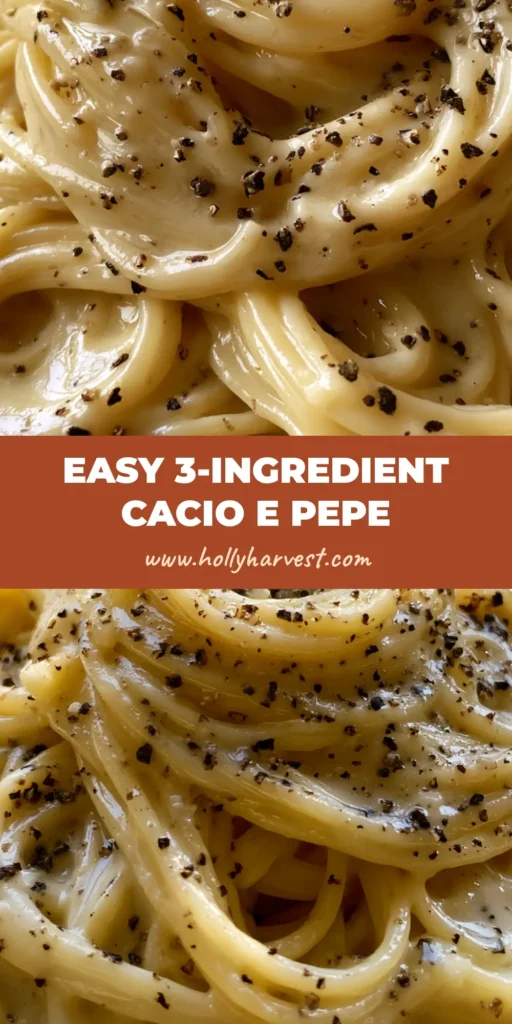
Our visual goal is a mound of twirled spaghetti noodles coated in a thick, glossy, pale cream-colored Pecorino Romano cheese emulsion. The final dish features coarsely cracked black pepper flakes of various sizes, clinging beautifully to the silky sauce in a rustic ceramic bowl.
Why This Authentic Cacio e Pepe recipe is a Game Changer
- The Perfect Emulsion: Learn the “Mantecatura” technique to create a sauce that is thick and creamy without the addition of cream.
- Sensory Precision: We focus on the fragrance of toasted pepper and the tactile resistance of al dente pasta.
- Visual Authenticity: This recipe delivers the exact pale-cream sheen and dark pepper specks characteristic of a handheld smartphone photo from a Roman holiday.
- Scientific Accuracy: We utilize starch-water chemistry to ensure the cheese bonds perfectly to every strand of spaghetti.
The Essential Ingredients for a Flawless Roman Finish
To execute this Cacio e Pepe recipe correctly, the quality of your ingredients is non-negotiable. Because there are so few components, each one must be of the highest caliber to achieve the desired flavor profile.
Spaghetti or Tonnarelli: 1 lb (450g) of high-quality, bronze-die extruded pasta is essential. The rough surface of bronze-die pasta is what allows the glossy starch-water emulsion to cling to the noodles rather than sliding off.
Pecorino Romano DOP: 2 cups (200g) of finely grated, aged Pecorino Romano provides the sharp, salty backbone of the dish. It must be grated on a Microplane to a “snow-like” consistency to ensure it melts instantly into the sauce without becoming grainy.
Whole Black Peppercorns: 2 tbsp (12g) of whole peppercorns, coarsely crushed, provide the heat and floral notes. Using pre-ground pepper is a cardinal sin here; we need the varying sizes of dark specks to provide texture and visual depth.
Kosher Salt: Used sparingly in the pasta water. Since Pecorino is naturally very salty, we only use about half the salt we normally would for boiling pasta to maintain a balanced palate.
Pasta Cooking Water: Often called “Liquid Gold,” this is the foundational invisible ingredient. The concentrated starch in the water acts as the bridge between the fat in the cheese and the water, creating that silky, pale cream-colored sauce.
Professional Equipment for the Perfect Twirl
Achieving the look of a mound of twirled spaghetti in a shallow, rustic ceramic bowl requires a few specific tools. You cannot rely on standard kitchen gear if you want elite results.
You will need a large heavy-bottomed skillet or “saltapasta” pan to provide enough surface area for the emulsion to form. A mortar and pestle is preferred for crushing the pepper, as it creates those beautiful, irregular kernels seen in authentic food photography.
A fine-mesh Microplane is mandatory for the cheese; standard box graters produce shreds that are too thick to melt properly. Finally, long kitchen tweezers or a carving fork are necessary to achieve that professional, high-volume twirl when plating.
Mastering the Mantecatura: Step-by-Step Instructions
The secret to a world-class Cacio e Pepe recipe lies in the technique rather than the ingredient list. Follow these steps carefully to avoid the common pitfall of “clumpy cheese.”
1. Toasting the Pepper Aromatics
Place your whole peppercorns in a dry skillet over medium heat. Toast them for 2-3 minutes until they become highly fragrant and you see a tiny wisp of smoke; this releases the piperine oils.
Immediately transfer the toasted berries to a mortar and pestle and crush them into various sizes—some fine dust, some coarse kernels. Return the crushed pepper to the skillet and set aside; this ensures the pepper is “bloomed” and ready for the pasta.
2. The Controlled Pasta Boil
Bring 4 quarts (3.8L) of water to a boil, but use only 1 tbsp (15g) of salt. Cook your spaghetti for exactly 2 minutes less than the package instructions for “al dente.”
We are looking for a firm, slightly chalky center because the pasta will finish cooking in the pepper-infused water. This process, known as “risottatura,” allows the pasta to release more starch directly into the sauce.
3. Creating the Pepper Broth
While the pasta cooks, add 1 cup (240ml) of the starchy pasta water to your skillet with the toasted pepper. Bring it to a simmer over medium-high heat.
The water will begin to bubble and turn a slightly cloudy, greyish-tan color as it picks up the toasted notes of the pepper. This is the base of your glossy starch-water emulsion.
4. The Critical Emulsification Phase
Using tongs, transfer the undercooked spaghetti directly from the pot into the skillet with the pepper water. Do not drain the pasta; the water clinging to the noodles is vital.
Toss the noodles constantly over medium heat. If the pan looks dry, add another half-cup (120ml) of pasta water. You want the noodles to be coated in a thin, watery glaze before you ever add the cheese.
5. Adding the Pecorino Romano
Remove the pan from the heat entirely—this is the most important step of the Cacio e Pepe recipe. If the pan is too hot, the cheese proteins will tighten and clump into a rubbery mess.
Sprinkle the finely grated Pecorino over the pasta in three stages. After each addition, use your tongs to vigorously stir and toss the pasta, creating a “slapping” sound. This mechanical action, combined with the residual heat, emulsifies the cheese into a thick, pale cream-colored sauce.
Expert Tips for a Silky Restaurant Result
- The Temperature Sweet Spot: If the sauce is too thin, keep tossing; the starch will thicken as it cools. If it starts to clump, add a splash of cool pasta water to drop the temperature.
- Micro-Grating: Always grate your cheese fresh. Pre-shredded cheeses are coated in potato starch or cellulose, which will completely ruin the silky texture of your emulsion.
- The Water Ratio: Your pasta water should be extra starchy. Use less water in your pot than usual to concentrate the starch levels.
- Plating for the Camera: To get that “handheld smartphone photo” look, twirl the pasta into a high mound using a ladle and a long fork, then slide it into a warm ceramic bowl.
The Best Pairings for Your Roman Feast
While this dish is a powerhouse on its own, it benefits from bright or acidic side dishes to cut through the richness of the sheep’s milk cheese. A crisp salad or a light seafood starter makes for a balanced meal.
Consider serving this alongside a refreshing peach burrata salad for a contrast in textures. If you’re looking for a more robust Italian-inspired spread, our mediterranean baked salmon provides a lean protein that won’t overshadow the pasta.
For those who enjoy a variety of textures, a bowl of cowboy caviar (coming soon) can serve as a surprisingly zesty appetizer, while a side of cheesy zucchini breadsticks is perfect for mopping up any leftover glossy sauce at the bottom of the bowl.
Storage and Reheating Advice
Cacio e Pepe is best enjoyed immediately while the emulsion is at its peak silkiness. However, if you have leftovers, store them in an airtight container in the refrigerator for up to 2 days.
To reheat, do not use a microwave, as it will cause the cheese to separate and become oily. Instead, place the pasta in a skillet with 2 tbsp (30ml) of water or milk over very low heat. Stir constantly until the sauce becomes creamy again, being careful not to let it boil.
Frequently Asked Questions about Cacio e Pepe
While you can, it won’t be authentic. Pecorino is a sheep’s milk cheese with a sharper, saltier profile and a lower melting point, which is essential for the specific ‘Cacio’ flavor and texture.
Toast whole peppercorns in a dry pan until they smell floral and a tiny bit of smoke appears. This blooms the oils before you crush them into those beautiful coarse flakes.
No. The creaminess comes entirely from the emulsification of finely grated cheese with starchy pasta cooking water. This creates a more complex, less heavy flavor than cream.
Spaghetti or Tonnarelli are traditional. Look for ‘bronze-die’ extruded pasta, as the rough texture is scientifically better at grabbing and holding onto the emulsion.
Clumping usually happens because the pan was too hot. Always remove the skillet from the heat source before adding the Pecorino Romano to ensure the proteins melt gently into the starch water.
The Definitive Cacio e Pepe recipe Card
Cacio e Pepe recipe: The Ultimate Guide to the Creamiest Roman Pasta
Ingredients
Equipment
Instructions
- Toast whole peppercorns in a dry skillet over medium heat until fragrant. Crush coarsely in a mortar and pestle so you have various sizes of dark specks.
- Grate the Pecorino Romano using a Microplane until it resembles fine snow. Set aside in a bowl.
- Cook spaghetti in salted water for 2 minutes less than the package instructions. Do not drain; you will need the starchy water.
- Add 1 cup (240ml) of pasta water to the skillet with the crushed pepper. Simmer to create a light broth.
- Transfer noodles to the skillet. Toss constantly over medium heat until the water is mostly absorbed and noodles are al dente.
- Remove pan from heat. Sprinkle cheese in stages, tossing vigorously until a thick, glossy, pale cream-colored emulsion forms.
Notes
Use less water than usual to boil the pasta to ensure maximum starch concentration.
Closing the Roman Kitchen
We hope this deep dive into the Cacio e Pepe recipe empowers you to create a dish that looks as good as it tastes. The combination of coarsely cracked black pepper and a perfectly emulsified Pecorino sauce is a testament to the beauty of simplicity when executed with precision.
If you enjoyed this recipe, please leave a comment below and let us know how your emulsion turned out! Don’t forget to share your photos and follow us on Pinterest for more culinary inspiration.