Welcome to the ultimate guide to the perfect Greek salad recipe. If you’ve ever dreamed of recreating that incredibly fresh, vibrant, and satisfying salad you enjoyed on a Mediterranean holiday, you’ve come to the right place. We’re not making just any salad; we are crafting an authentic Horiatiki, the true village salad of Greece. It’s a celebration of simplicity and fresh ingredients, proving that you only need a few quality components to create something truly spectacular.
Forget the versions bulked up with lettuce. This traditional Greek salad recipe is a masterpiece of texture and flavor, featuring crisp cucumbers, juicy tomatoes, sharp red onion, and salty Kalamata olives, all crowned with a generous block of feta cheese. It’s a dish that’s both rustic and elegant, perfect for a light lunch, a side dish for dinner, or the star of a summer barbecue.
What is a Horiatiki Salad? The True Greek Salad
In Greece, what the world knows as a “Greek salad” is called Horiatiki, which translates to “village” or “peasant” salad. It reflects its rustic origins, using fresh, seasonal vegetables that a farmer would have readily available. It’s a testament to the beauty of Mediterranean cuisine.
The “No Lettuce” Rule
The most important distinction of a true Horiatiki is the complete absence of lettuce or any other leafy greens. The salad’s substance and crunch come from the hearty combination of cucumber, tomato, and bell pepper. This focus on core ingredients is what makes the dish so uniquely refreshing and authentic.
Why It’s a Staple of Mediterranean Cuisine
The Horiatiki salad embodies the principles of the Mediterranean diet: it’s vegetable-forward, relies on healthy fats like extra virgin olive oil, and uses fresh, minimally processed ingredients. It’s naturally gluten-free, healthy, and bursting with flavor, making it a beloved staple across the region.
The Key to the Best Greek Salad: Quality Ingredients
With so few ingredients, the quality of each one is paramount. There’s nowhere for a subpar tomato or waxy cucumber to hide. Seek out the freshest produce you can find for a truly vibrant salad.
- Tomatoes: Use ripe, in-season tomatoes. Roma or vine-ripened tomatoes are excellent choices because they are firm and have a lower water content. Cut them into wedges or large chunks.
- Cucumbers: Persian or English cucumbers are ideal. They have thin skins that don’t need to be peeled and contain fewer seeds, providing a sweeter, less watery crunch.
- Red Onion: Slice it as thinly as possible. If you find the flavor of raw onion too sharp, you can soak the slices in cold water for about 10 minutes to mellow them out.
- Kalamata Olives: These are a must for their rich, fruity flavor. Use whole, pitted olives for the best taste and texture.
- Feta Cheese: This is the soul of the salad. For the most authentic experience, buy a block of Greek feta packed in brine. It’s creamier and has a more complex, tangy flavor than pre-crumbled varieties.
- Green Bell Pepper: A traditional Horiatiki includes a green bell pepper, sliced into thin rings or chunks. It adds a slightly bitter, crisp element that balances the other flavors.
The Perfect Greek Salad Dressing
You don’t need a complicated, store-bought dressing for this recipe. The best Greek salad dressing is incredibly simple, allowing the fresh vegetables to shine. It’s more of a classic vinaigrette that lightly coats the ingredients rather than drowning them.
Dressing Ingredients
The magic comes from just a few high-quality staples. This is where you should use your best extra virgin olive oil—the kind with a robust, fruity, and slightly peppery flavor. It makes all the difference.
- Extra Virgin Olive Oil: The foundation of the dressing.
- Red Wine Vinegar: Provides a tangy, acidic kick.
- Dried Oregano: A pinch of dried Greek oregano is essential for that classic Mediterranean aroma.
- Sea Salt & Black Pepper: To taste.
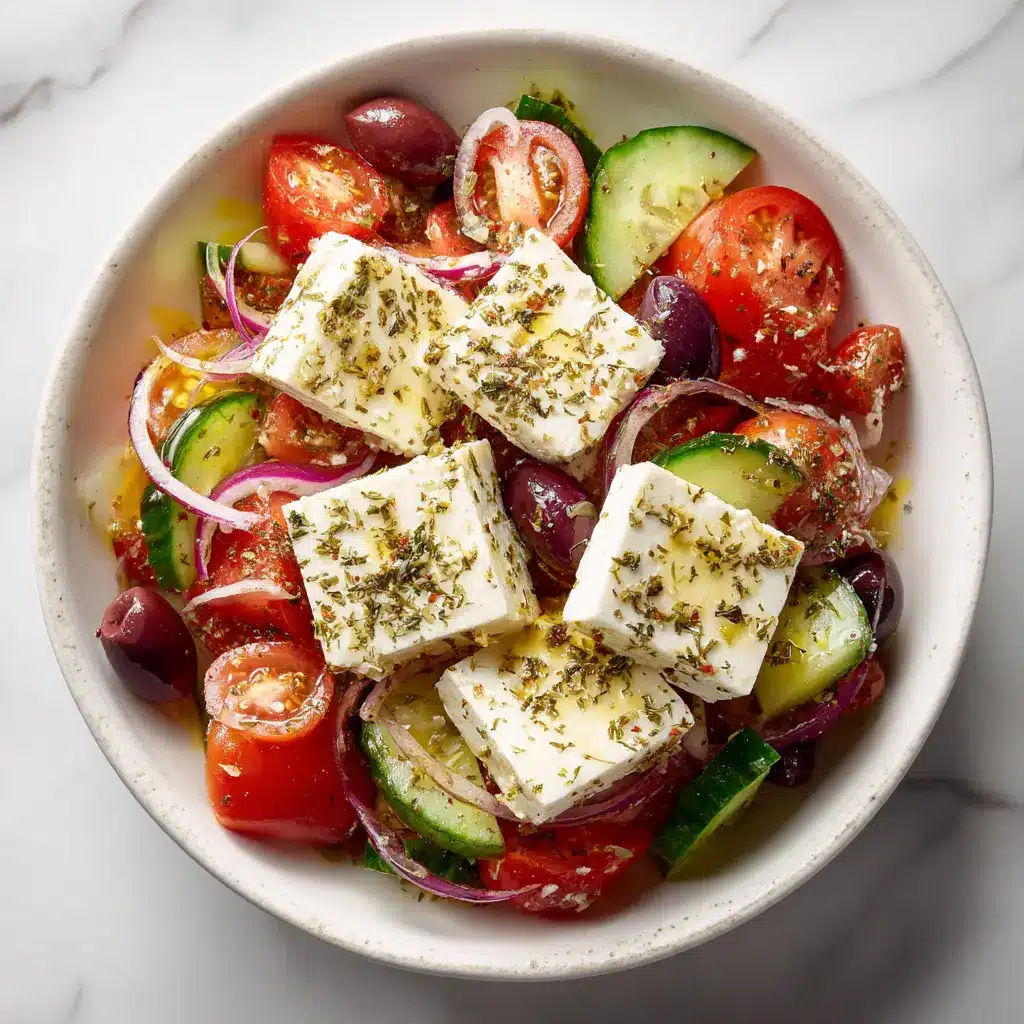
How to Make This Authentic Greek Salad Recipe
Assembling your Horiatiki is quick and easy. The key is in the preparation and the order of operations. Follow these steps for a perfect salad every time.
Step 1: Prepare the Vegetables
Start by washing and chopping your vegetables. Cut the tomatoes into wedges, slice the cucumber into thick half-moons, thinly slice the red onion, and chop the green bell pepper. Add all the prepared vegetables and the Kalamata olives to a large, shallow bowl.
Step 2: Whisk the Dressing
In a small bowl or jar, combine the extra virgin olive oil, red wine vinegar, and dried oregano. Season with a pinch of salt and freshly cracked black pepper. Whisk or shake vigorously until the dressing is well emulsified.
Step 3: Combine and Toss
Pour about two-thirds of the dressing over the vegetables in the large bowl. Gently toss everything together until the vegetables are lightly coated. You want to be careful not to break up the tomatoes too much.
Step 4: Add the Feta
The final, and most iconic, step. Place the entire block of feta cheese right on top of the tossed vegetables. Drizzle the remaining dressing over the feta and finish with an extra sprinkle of dried oregano. The salad is traditionally served this way, allowing diners to break off pieces of feta as they eat.
Pro Tips for Restaurant-Quality Results
Want to elevate your salad from good to unforgettable? Here are a few professional tips to ensure the best possible outcome.
- Chill Your Veggies: For an extra crisp and refreshing salad, make sure your cucumber, tomatoes, and bell pepper are well-chilled before you begin.
- Don’t Dress It Too Soon: Wait to dress the salad until just before serving. The salt in the dressing will draw water out of the vegetables, making them less crisp over time.
- Use a Shallow Bowl: Serving in a shallow bowl or on a platter not only looks beautiful but also prevents the ingredients at the bottom from getting crushed or soggy.
- Let the Feta Shine: Serving the feta as a block is a non-negotiable for an authentic Horiatiki. It allows each person to enjoy the creamy texture of the cheese with every bite.
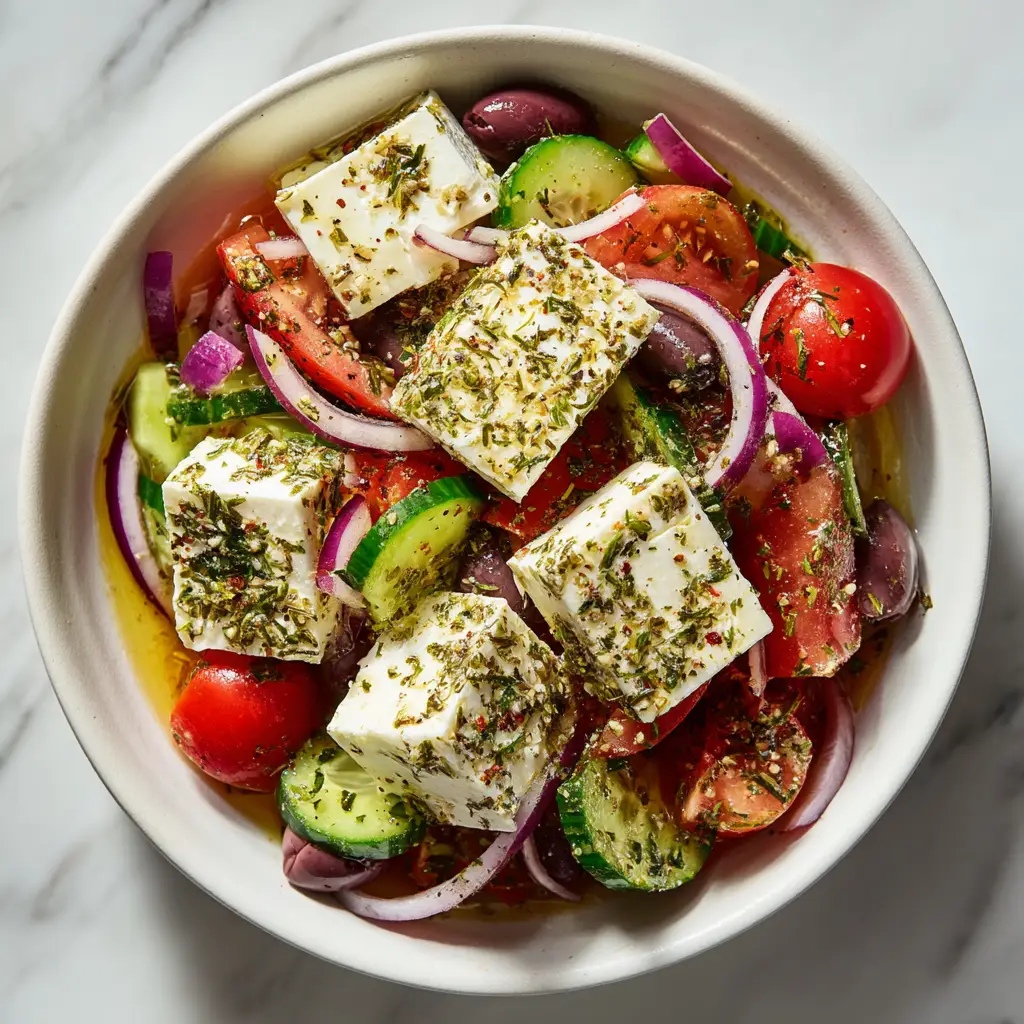
Delicious Variations to Try
While the classic Horiatiki is perfect as is, sometimes you might want to switch things up. Here are a few simple variations that honor the spirit of the original recipe.
Adding Protein
To turn this salad into a complete meal, consider adding a source of protein. Grilled chicken is a fantastic option. Try adding sliced pieces of this simple and flavorful Lemon Garlic Chicken for a satisfying main course.
Including Leafy Greens
If you absolutely love greens, you can serve the Horiatiki over a bed of romaine lettuce. While not traditional, it’s a common and delicious adaptation, especially in North America.
Other Add-ins
For a bit of extra texture and flavor, you can add a tablespoon of capers or a handful of chickpeas (garbanzo beans). These additions complement the core ingredients beautifully without overpowering them.
What to Serve with Your Greek Salad
This versatile salad pairs wonderfully with a wide range of dishes. It can be a light lunch on its own with some crusty bread to mop up the juices, or it can be a refreshing side to a heartier main.
- Serve it alongside grilled fish, like this simple Baked Salmon in Foil.
- It’s the perfect companion for roasted chicken, such as this easy Sheet Pan Balsamic Chicken.
- Pair it with souvlaki, gyros, or any other grilled meats for a classic Greek feast.
Make-Ahead and Storage Instructions
Greek salad is best enjoyed fresh. However, you can do some prep work in advance. Chop all the vegetables and store them in a covered container in the refrigerator for up to 24 hours. Whisk the dressing and keep it in a separate airtight jar. When you are ready to eat, simply toss the vegetables with the dressing and top with the feta cheese.
Leftovers can be stored in the refrigerator for up to a day, but be aware that the vegetables will soften as they sit in the dressing.
Frequently Asked Questions About This Greek Salad Recipe
It’s best served fresh, but you can prepare the components ahead of time. Chop the vegetables and store them in an airtight container in the fridge, and mix the dressing separately. Combine everything just before serving to prevent the vegetables from becoming soggy.
It is not necessary, especially if you use a thin-skinned variety like an English or Persian cucumber. The skin adds color and texture to the salad.
Authentic Greek salad dressing is very simple. It’s a vinaigrette made from high-quality extra virgin olive oil, red wine vinegar, and a pinch of dried oregano, seasoned with salt and pepper.
They are essentially the same, but ‘Horiatiki’ refers to the true, traditional Greek salad from Greece which never contains lettuce. The term ‘Greek salad’ is often used for versions outside of Greece that might include lettuce and other non-traditional ingredients.
For the best flavor and texture, always choose a block of feta cheese that is sold in brine. It is much creamier and more flavorful than pre-crumbled feta. Look for feta made from sheep’s milk or a mix of sheep’s and goat’s milk.
More Mediterranean-Inspired Recipes
If you loved the fresh, vibrant flavors of this recipe, you might also enjoy exploring other Mediterranean dishes. For another healthy and delicious option, give these Mediterranean Stuffed Sweet Potatoes a try!
Enjoy Your Authentic Greek Salad!
There you have it—a simple, authentic Greek salad recipe that brings the taste of the Mediterranean right to your kitchen. It’s more than just a recipe; it’s a way of celebrating fresh, beautiful ingredients. I hope you love making and sharing it! If you do, please leave a comment below or share a photo on Pinterest!
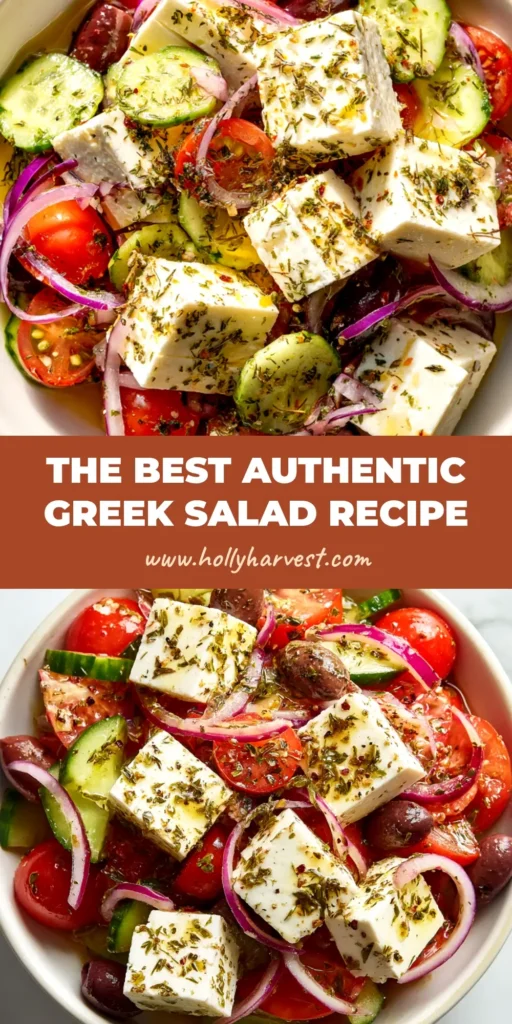
Greek Salad Recipe
Greek Salad Recipe (Authentic Horiatiki)
Ingredients
Equipment
Instructions
- In a large, shallow serving bowl, combine the chopped tomatoes, cucumber, thinly sliced red onion, and green bell pepper. Add the Kalamata olives.
- In a separate small bowl or a jar with a lid, combine the extra virgin olive oil, red wine vinegar, and dried oregano. Season with salt and pepper. Whisk or shake until well combined.
- Pour most of the dressing over the vegetables and toss gently to combine.
- Place the block of feta cheese on top of the salad. Drizzle with the remaining dressing and sprinkle with a little more dried oregano. Serve immediately.
Notes
Soak the Onion: If you find raw red onion too potent, soak the slices in ice water for 10-15 minutes before adding to the salad to mellow its flavor.
Serving: For an authentic presentation, always serve the feta as a whole block on top of the salad.