This remarkable Sourdough Discard Focaccia is the ultimate way to utilize your unfed starter while creating a bakery-worthy masterpiece at home. There is nothing quite like the satisfaction of pulling a thick, golden-brown bread base straight from your oven. The irresistible aroma of caramelized garlic and fresh herbs will instantly fill your kitchen.
Imagine sinking your teeth into a heavily textured top crust that is lightly charred in spots, yet gives way to an incredibly soft, pillowy crumb. Deep, glistening dimples act as tiny reservoirs for rich extra virgin olive oil. Every bite is an explosion of savory flavor.
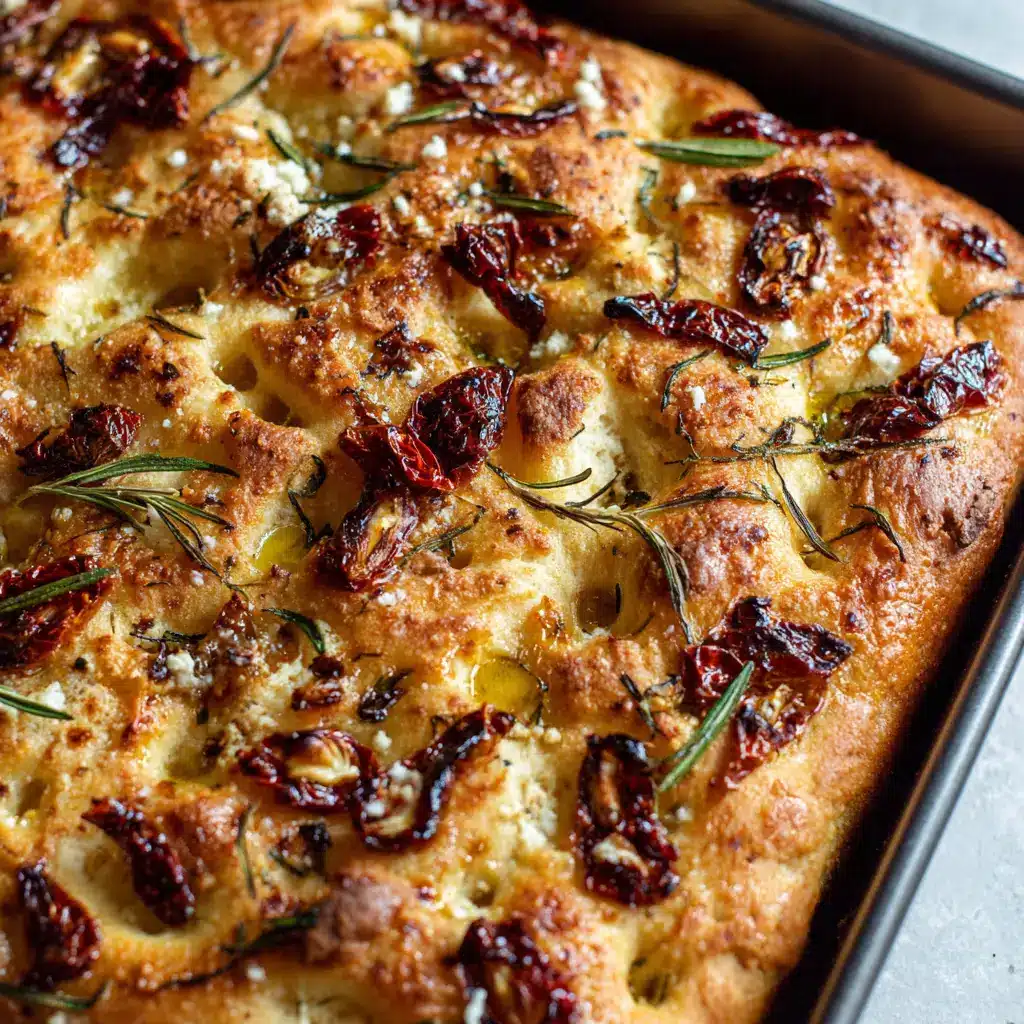
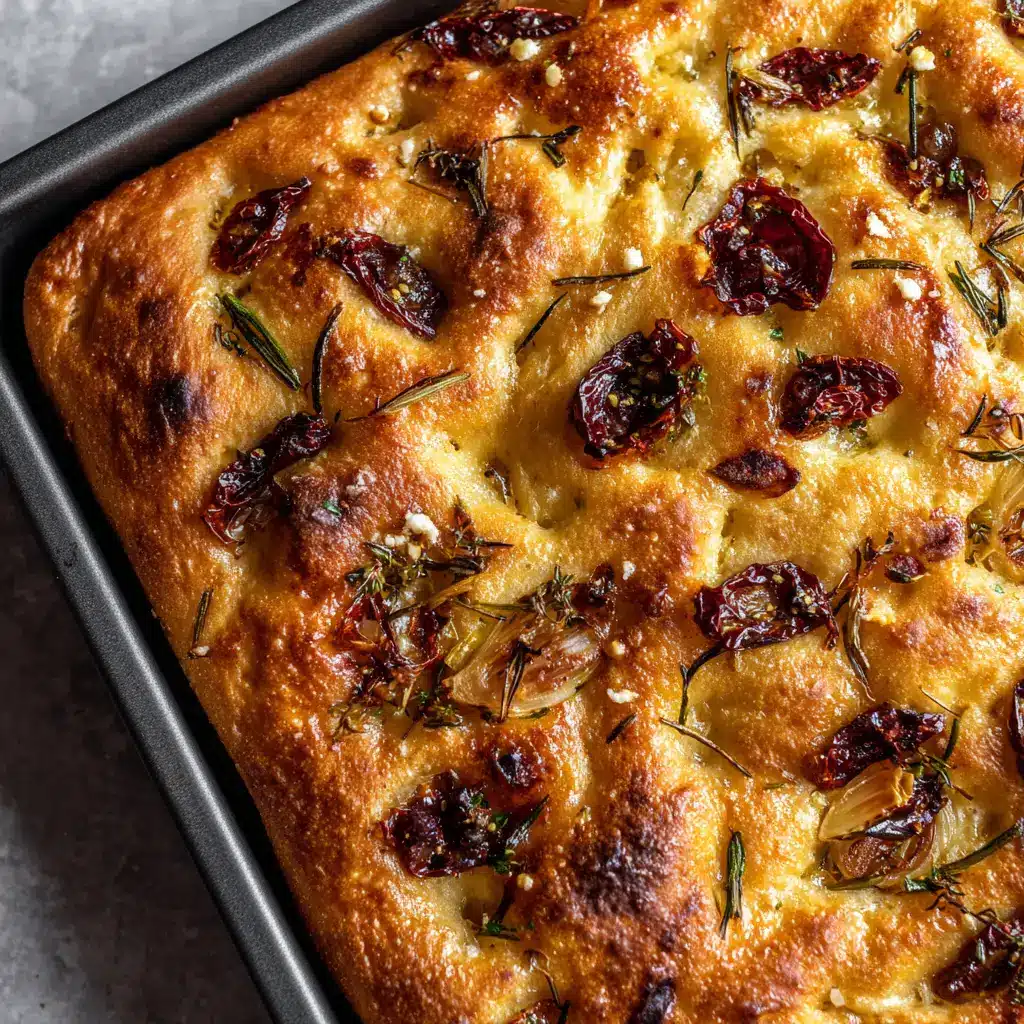
This recipe transforms simple pantry staples into a visual and culinary stunner. With wrinkled dark red dried tomatoes, whole caramelized roasted garlic cloves, and blistered melted white artisan cheese, this artisan loaf requires minimal effort but delivers maximum sensory appeal.
Why This Dimpled, Golden-Brown Bread Will Be Your New Obsession
- Unbeatable Texture: A dark metal rectangular baking pan ensures the bottom crust fries in olive oil to a perfectly crispy finish, while the interior remains light and airy.
- Zero Waste, Maximum Flavor: Utilizing unfed sourdough discard imparts a subtle, complex tang that active dry yeast alone simply cannot replicate.
- Gourmet Visuals: The generous scatter of coarse white sea salt flakes and finely chopped fresh green rosemary makes this loaf look like it came from a rustic Italian bakery.
- Sensory Contrast: Small melted pockets of artisan white cheese blister around the edges, providing a chewy, savory contrast to the sweet caramelized garlic.
Essential Components for the Perfect Textured Crust
Unfed Sourdough Discard: You will need 1 cup (227g) of unfed sourdough starter straight from the fridge. This provides the signature fermented tang and incredible dough hydration.
Bread Flour: Use 4 cups (480g) of high-protein bread flour to build a strong gluten network. This ensures the thick bread base can support the heavy gourmet toppings.
Warm Water: Exactly 1 ¾ cups (420ml) of warm water (around 95°F/35°C) is crucial. High hydration is the secret to those large, airy bubbles in the crumb.
Active Dry Yeast: Add 2 tsp (7g) of active dry yeast to do the heavy lifting. Because discard lacks strong rising power, this commercial yeast guarantees a thick, fluffy rise.
Extra Virgin Olive Oil: You will need ½ cup (120ml) divided throughout the recipe. High-quality olive oil creates those glistening dimples and fries the crust to a deep golden-brown.
Roasted Garlic Cloves: 1 whole head of garlic, roasted until sweet and caramelized, then separated into whole cloves. These melt like butter when baked into the dough.
Sun-Dried Tomatoes: ½ cup (75g) of wrinkled dark red dried tomatoes, roughly chopped. Pressing these into the dough prevents burning and adds intense umami sweetness.
Artisan White Cheese: ½ cup (60g) of cubed artisan white cheese (such as aged Fontina or low-moisture Mozzarella). These create those highly sought-after blistered, melted pockets around the edges.
Fresh Herbs & Sea Salt: 2 tbsp (8g) of finely chopped fresh green rosemary and 1 tbsp (15g) of coarse white sea salt flakes. These final touches embed into the crust for an incredible crunch and aroma.
The Right Baking Gear for That Deep Golden-Brown Finish
To achieve the heavily textured and lightly charred crust seen in professional bakeries, your equipment matters. A 9×13-inch (23x33cm) dark metal rectangular baking pan is absolutely critical. Dark metal conducts heat aggressively, frying the bottom of the dough in olive oil for a superior crunch.
You will also need a large mixing bowl and a sturdy dough whisk or wooden spoon. Because this is a high-hydration, no-knead dough, there is no need for a stand mixer.
Crafting Your Dough: From Shaggy Mix to Blistered Perfection
Step 1: Hydrating the Discard and Mixing the Dough
In a large bowl, whisk together 1 ¾ cups (420ml) of warm water, 2 tsp (7g) of active dry yeast, and 1 cup (227g) of sourdough discard until milky and smooth. Pour in 4 cups (480g) of bread flour and 2 tsp (12g) of fine sea salt. Use a wooden spoon to mix until a sticky, shaggy dough forms.
Cover the bowl with a damp towel and let it rest at room temperature for 45 minutes. This initial resting phase, known as the autolyse, allows the flour to fully hydrate and jumpstarts gluten development.
Step 2: The Stretch and Fold Technique
To build structure without heavy kneading, perform a series of stretches and folds. Wet your hands slightly, grab one side of the dough, stretch it upwards, and fold it over itself. Repeat this on all four sides of the dough.
Cover the bowl and repeat this stretching process two more times, spacing them 30 minutes apart. You will visually notice the dough becoming smoother, more elastic, and highly pillowy.
Step 3: Pan Preparation and the Final Rise
Pour ¼ cup (60ml) of extra virgin olive oil into your dark metal rectangular baking pan, ensuring the bottom and sides are thoroughly coated. Gently transfer your dough into the pan, turning it once to coat it in the glistening olive oil.
Cover the pan loosely and let the dough proof for 1.5 to 2 hours in a warm spot. Watch for the dough to spread naturally to the edges of the pan and become visibly bubbly and jiggly.
Step 4: Dimpling and Embedding the Gourmet Toppings
Preheat your oven to 425°F (220°C). Drizzle the remaining ¼ cup (60ml) of olive oil over the top of the risen dough. Oil your fingers and press them firmly down into the dough, pushing all the way to the bottom of the pan to create deep, oil-glistening dimples.
Gently embed the wrinkled dark red dried tomato pieces and the whole caramelized roasted garlic cloves into the dimples. Scatter the chunks of artisan white cheese predominantly around the edges to encourage blistering. Finally, generously scatter the coarse white sea salt flakes and finely chopped fresh green rosemary evenly across the surface.
Step 5: Baking to a Glistening, Lightly Charred Crust
Transfer the dark metal pan to the center rack of your preheated oven. Bake for 28 to 32 minutes. You are looking for specific sensory cues: the top crust should be heavily textured and lightly charred in spots, and the kitchen should smell intensely of roasted garlic and rosemary.
Watch for the small melted pockets of artisan white cheese to become beautifully blistered around the edges. Carefully remove from the oven and use a spatula to transfer the bread to a wire rack immediately to prevent a soggy bottom.
Troubleshooting Your Bake: Pro Secrets for Focaccia Mastery
- Dough Bouncing Back? If the dough resists stretching to the corners of your dark metal pan, let it rest for another 20 minutes. The gluten needs time to relax.
- Preventing Burnt Toppings: Always press your wrinkled dark red dried tomatoes and caramelized roasted garlic cloves deep into the dimples. If left completely exposed on the surface, they may burn before the crust finishes baking.
- Getting the Perfect Blister: The artisan white cheese must be cubed, not shredded. Shredded cheese melts too quickly, whereas chunks will pool into small melted pockets and blister beautifully.
- The Secret to Glistening Bread: Do not skimp on the olive oil. The oil is a foundational ingredient that fries the crust; using less will result in a dry, cake-like texture rather than artisan focaccia.
Keeping Your Bread Fresh: Storing and Reviving
This Sourdough Discard Focaccia is undeniably best enjoyed on the day it is baked. However, you can store leftover slices in an airtight container at room temperature for up to 3 days. The olive oil will help keep the crumb moist.
To revive the heavily textured crust, reheat individual slices in a 350°F (175°C) oven or toaster oven for 5-7 minutes. Freezing is also an excellent option; simply wrap completely cooled slices tightly in foil and freeze for up to 3 months. Thaw at room temperature before crisping up in the oven.
Perfect Pairings: What to Serve Alongside Your Artisan Bake
A thick, flavor-packed bread demands equally robust dishes to accompany it. Dip this golden-brown masterpiece into a steaming bowl of hearty Tuscan sausage and potato soup for the ultimate comfort meal.
It also serves as an incredible side to soak up rich, savory sauces. Serve it alongside succulent pork tenderloin with Dijon cream sauce or a plate of creamy veggie white lasagna.
If you are hosting a summer gathering, pair slices of this blistered cheese focaccia with a fresh salad and juicy Mediterranean grilled chicken. The caramelized garlic and rosemary perfectly complement bright, zesty flavors.
Answering Your Most Pressing Sourdough Queries
Yes. While this recipe is optimized for unfed sourdough discard combined with active dry yeast, you can substitute an equal amount of bubbly, active starter. You may find the dough rises slightly faster during the proofing stage.
While you can use a glass or ceramic dish, a dark metal pan conducts heat much more efficiently. This aggressive heat transfer is what fries the bottom of the dough in olive oil, creating that signature golden-brown, crispy bottom crust.
The high baking temperature (425°F/220°C) is necessary for a crispy crust, but it can scorch toppings. Always press your wrinkled tomatoes and roasted garlic deep into the olive oil-filled dimples to shield them from direct heat.
Aged Fontina, low-moisture Mozzarella, or a sharp white Cheddar are excellent choices. Be sure to cut the cheese into small cubes rather than shredding it, as chunks melt slowly into small pockets that blister perfectly around the edges.
A dense crumb usually results from under-proofing or using water that was too cold to activate the dry yeast. Ensure you let the dough rise in a warm spot until it is visibly jiggly and filled with air bubbles before dimpling.
Bring the Bakery Home: The Official Recipe Card
Outstanding Sourdough Discard Focaccia with Roasted Garlic & Sun-Dried Tomatoes
Ingredients
Equipment
Instructions
- In a large bowl, whisk together the warm water, active dry yeast, and sourdough discard until smooth. Stir in the bread flour and fine sea salt until a shaggy, sticky dough forms. Cover with a damp towel and rest for 45 minutes.
- Wet your hands slightly. Grab one side of the dough, pull upwards, and fold it over itself. Repeat on all four sides. Cover and repeat this process two more times, waiting 30 minutes between each set.
- Pour ¼ cup (60ml) of olive oil into a 9x13-inch dark metal rectangular pan. Transfer the dough to the pan, turning once to coat. Cover loosely and let rise in a warm spot for 1.5 to 2 hours until bubbly and spread to the edges.
- Preheat your oven to 425°F (220°C). Drizzle the remaining ¼ cup (60ml) of olive oil over the dough. Oil your fingers and press deeply into the dough to create dimples. Embed the sun-dried tomatoes and roasted garlic cloves into the dimples. Scatter the cubed artisan cheese, chopped rosemary, and coarse sea salt flakes over the top.
- Bake on the center rack for 28 to 32 minutes until the top crust is heavily textured, lightly charred in spots, and the cheese has blistered around the edges. Transfer to a wire rack immediately to cool.
Notes
Tip 2. Always use a dark metal pan for the best crispy bottom crust.

Don’t Let Your Discard Go to Waste: Final Thoughts
This Sourdough Discard Focaccia proves that you never need to throw away your unfed starter again. With its thick baked golden-brown base, caramelized roasted garlic, and blistered artisan cheese, it is guaranteed to impress both your family and dinner guests.
Did you achieve those perfect, deep, oil-glistening dimples? Leave a comment and a star rating below to share your baking success! Be sure to pin this recipe to your favorite boards on Pinterest so you always have a gourmet use for your sourdough discard.