Forget takeout menus and bland instant noodles. This Spicy Korean Beef Ramen recipe is your new go-to for a flavor-packed, deeply satisfying meal that tastes like it simmered for hours but comes together in under 45 minutes. We’re talking tender, savory beef, chewy noodles, and a rich, spicy broth that will warm you from the inside out. It’s the perfect dish to elevate your weeknight dinner rotation.
This isn’t just another ramen recipe; it’s a gateway to creating restaurant-quality Korean-inspired noodle soup at home. We’ll build layers of flavor with simple, accessible ingredients, creating a broth that’s both complex and incredibly easy to make. Get ready to impress yourself and anyone you share this with.
Why This Spicy Korean Beef Ramen Belongs in Your Recipe Book
In a world of endless dinner options, this Spicy Korean Beef Ramen stands out. It’s a quick, flavorful, and soul-soothing dish that hits all the right notes. Plus, it’s incredibly versatile and easy to adapt to your personal taste.
- Speed and Simplicity: From start to finish, you can have this steaming bowl of goodness on the table in about 40 minutes, making it ideal for busy weeknights.
- Rich, Layered Broth: We use a smart combination of beef broth, gochujang, soy sauce, and sesame oil to create a broth that is savory, spicy, and umami-rich without hours of simmering.
- Tender, Flavorful Beef: Slicing the beef thinly ensures it cooks quickly and absorbs all the delicious flavors of the broth, becoming perfectly tender.
- Completely Customizable: Adjust the spice, add your favorite vegetables, or swap out the protein. This recipe is a fantastic starting point for your own creations. For another amazing weeknight meal, try these Ground Beef Philly Cheesesteaks.
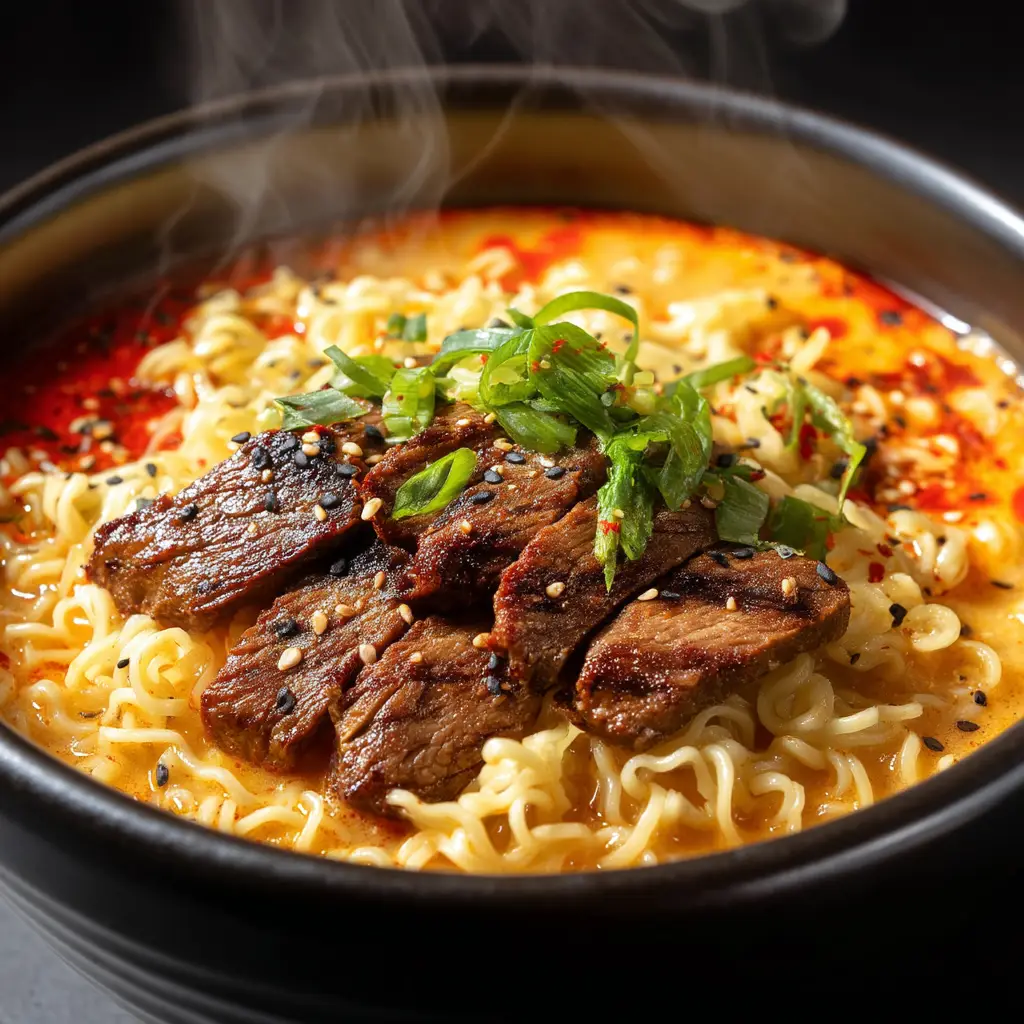
Key Ingredients for Authentic Flavor
The magic of this ramen is in the harmony of its ingredients. Each component plays a crucial role in building the signature spicy and savory flavor profile. Here’s what you’ll need.
For the Broth & Beef:
- Sirloin or Ribeye Steak: Thinly sliced against the grain for maximum tenderness.
- Beef Broth: A quality, low-sodium beef broth provides a robust base.
- Gochujang: This Korean chili paste is the heart of the broth, providing a sweet, savory, and spicy kick.
- Low-Sodium Soy Sauce: Adds essential umami and saltiness.
- Sesame Oil: For a nutty, aromatic finish.
- Garlic & Ginger: Freshly minced is best for a vibrant, aromatic foundation.
- Brown Sugar: A touch of sweetness to balance the spice and salt.
For the Bowl:
- Ramen Noodles: Use your favorite fresh or dried ramen noodles.
- Vegetables: We’re using cremini mushrooms and bok choy for earthy flavor and fresh crunch.
- Toppings: Soft-boiled eggs, sliced green onions, and sesame seeds are classic and delicious additions.
Step-by-Step Guide to the Perfect Spicy Ramen
Follow these simple steps to create an unforgettable bowl of Spicy Korean Beef Ramen. We’ll start by building the flavorful broth and then assemble the perfect bowl.
1. Prepare the Aromatics and Beef
Start by heating the sesame oil in a large pot or Dutch oven over medium-high heat. Add the minced garlic and ginger and sauté for about 30 seconds until fragrant. Add the thinly sliced beef and cook, stirring occasionally, until it’s just browned. You don’t need to cook it all the way through at this stage.
2. Build the Broth
To the pot with the beef, add the gochujang, soy sauce, and brown sugar. Stir everything together for about a minute to let the flavors meld and toast the chili paste slightly. Pour in the beef broth, bring it to a simmer, then reduce the heat to low. Let it gently simmer for at least 15 minutes to allow the flavors to deepen.
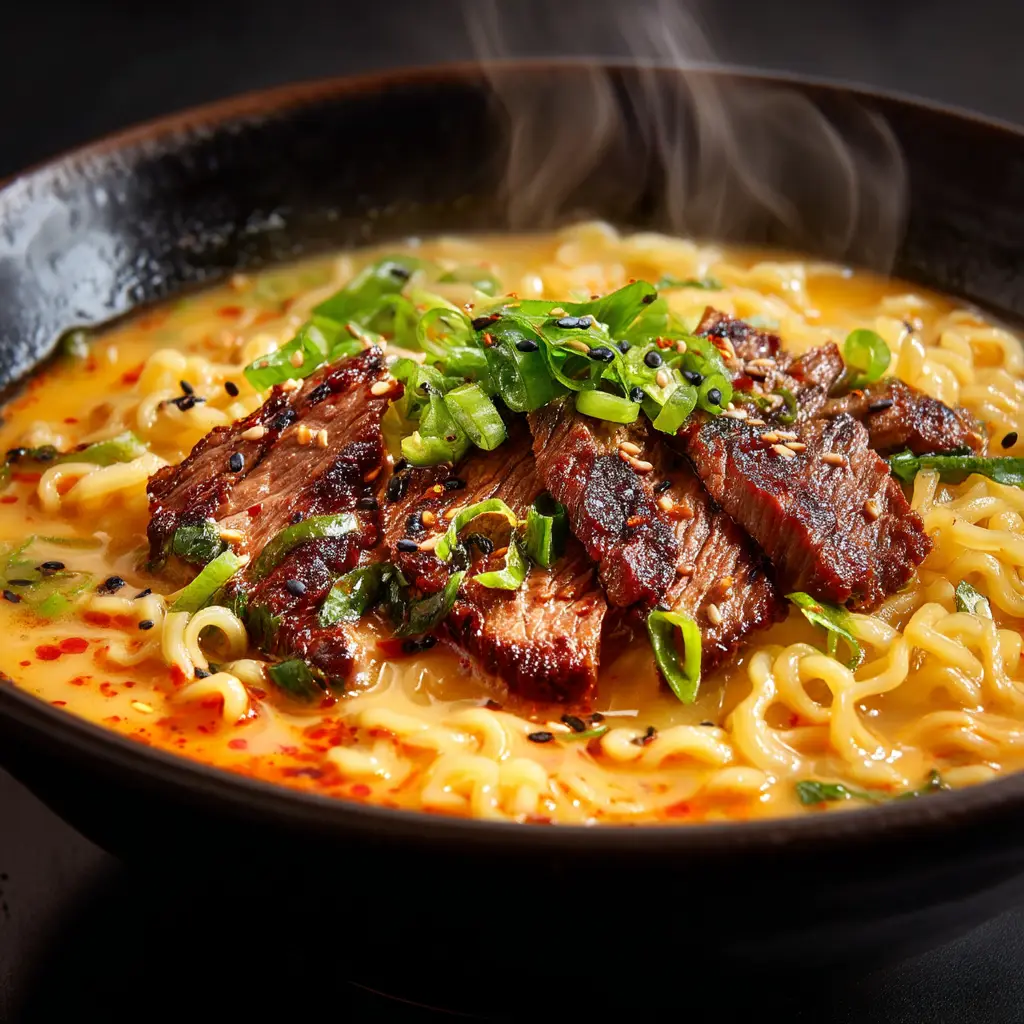
3. Cook Noodles and Vegetables
While the broth is simmering, cook your ramen noodles according to the package directions. In the last 2 minutes of the broth simmering, add the sliced mushrooms and bok choy. This will cook them perfectly, leaving the bok choy with a pleasant crunch. If you’re a fan of comforting soups, you’ll love this Ginger-Garlic Chicken Noodle Soup as well.
4. Assemble Your Masterpiece
To serve, divide the cooked noodles among four bowls. Ladle the hot broth, beef, and vegetables over the noodles. Garnish generously with a soft-boiled egg, a sprinkle of sliced green onions, and a dash of sesame seeds. Serve immediately and enjoy the incredible flavors!
Tips for Success and Variations
Want to take your Spicy Korean Beef Ramen to the next level? Here are a few expert tips and fun variations to try.
- Don’t Overcook the Noodles: Cook the noodles separately and add them to the bowl just before serving to prevent them from becoming mushy in the broth.
- Adjust the Spice: Gochujang brands vary in spiciness. Start with the recommended amount and add more at the end if you want more heat.
- Veggie Variations: Feel free to add other vegetables like spinach, shredded carrots, or bean sprouts. Add heartier veggies like carrots earlier with the broth and delicate ones like spinach at the very end.
- Make it Creamy: For a richer, creamier broth, stir in a tablespoon of peanut butter or a slice of American cheese until melted. It sounds unusual, but it’s a delicious and popular ramen hack! For a different kind of creamy comfort, this Boursin Chicken is always a winner.
Yes, you can prepare the broth with the beef and vegetables ahead of time and store it in the refrigerator for up to 3 days. When you’re ready to eat, simply reheat the broth and cook the noodles and toppings fresh for the best texture.
Absolutely! While classic ramen noodles are ideal, you can easily substitute with udon noodles for a chewier texture or even spaghetti or linguine in a pinch. Just be sure to cook them according to their specific package instructions.
The main source of heat is the gochujang (Korean chili paste). To make it less spicy, start with half the recommended amount and add more to taste. For extra heat, you can add a drizzle of chili oil or some fresh sliced chilis as a garnish.
Bring a pot of water to a rolling boil. Gently lower fridge-cold eggs into the water and cook for exactly 6 to 7 minutes. Immediately transfer the eggs to an ice bath for 2 minutes to stop the cooking process before peeling.
Thinly sliced sirloin or ribeye are excellent choices because they are tender and cook very quickly. You can often find pre-sliced beef labeled for ‘hot pot’ or ‘shabu-shabu’ at Asian grocery stores, which works perfectly.
Yes, you can prepare the broth with the beef and vegetables ahead of time and store it in the refrigerator for up to 3 days. When you’re ready to eat, simply reheat the broth and cook the noodles and toppings fresh for the best texture.
Absolutely! While classic ramen noodles are ideal, you can easily substitute with udon noodles for a chewier texture or even spaghetti or linguine in a pinch. Just be sure to cook them according to their specific package instructions.
The main source of heat is the gochujang (Korean chili paste). To make it less spicy, start with half the recommended amount and add more to taste. For extra heat, you can add a drizzle of chili oil or some fresh sliced chilis as a garnish.
Bring a pot of water to a rolling boil. Gently lower fridge-cold eggs into the water and cook for exactly 6 to 7 minutes. Immediately transfer the eggs to an ice bath for 2 minutes to stop the cooking process before peeling.
Thinly sliced sirloin or ribeye are excellent choices because they are tender and cook very quickly. You can often find pre-sliced beef labeled for ‘hot pot’ or ‘shabu-shabu’ at Asian grocery stores, which works perfectly.
Enjoy and Share Your Creation!
This Spicy Korean Beef Ramen recipe is more than just a meal; it’s an experience. It’s a testament to how simple ingredients can create something truly special and delicious right in your own kitchen. We are confident you’ll love this recipe as much as we do.
If you make this dish, we’d love to see it! Share your creation and tag us. Don’t forget to save this recipe to your favorite board on Pinterest!
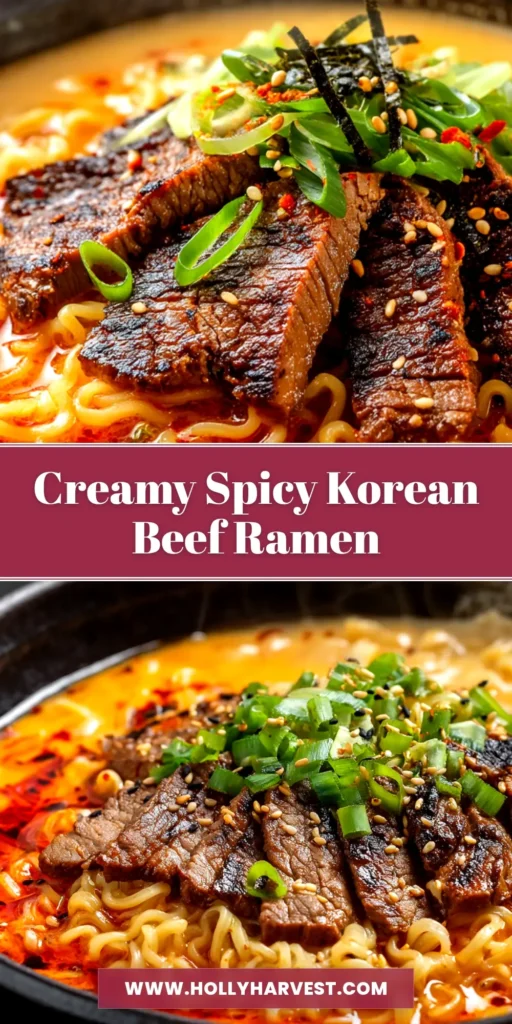
Spicy Korean Beef Ramen: The Ultimate Weeknight Comfort Bowl
This Spicy Korean Beef Ramen is a flavor-packed, deeply satisfying meal with tender beef, chewy noodles, and a rich, spicy broth. Ready in under 45 minutes, it's the perfect dish to elevate your weeknight dinner rotation.
Ingredients
Equipment
Instructions
- Heat sesame oil in a large pot or Dutch oven over medium-high heat. Add minced garlic and ginger and cook until fragrant, about 30 seconds. Add the sliced beef and cook until just browned.
- Add gochujang, soy sauce, and brown sugar to the pot. Stir for 1 minute to combine. Pour in the beef broth, bring to a simmer, then reduce heat to low. Cover and simmer for at least 15 minutes.
- Meanwhile, cook ramen noodles according to package directions. Drain and set aside. During the last 2 minutes of the broth's simmering time, add the sliced mushrooms and bok choy to the pot.
- Divide the cooked noodles among four bowls. Ladle the hot broth with beef and vegetables over the noodles. Garnish with a soft-boiled egg, sliced green onions, and sesame seeds. Serve immediately.
Notes
Spice Level: Adjust the amount of gochujang to your preference. Start with 2 tablespoons for a milder version.
Storage: Store leftover broth and noodles separately in airtight containers in the refrigerator for up to 3 days.
Spicy Korean Beef Ramen: The Ultimate Weeknight Comfort Bowl
Ingredients
Equipment
Instructions
- Heat sesame oil in a large pot or Dutch oven over medium-high heat. Add minced garlic and ginger and cook until fragrant, about 30 seconds. Add the sliced beef and cook until just browned.
- Add gochujang, soy sauce, and brown sugar to the pot. Stir for 1 minute to combine. Pour in the beef broth, bring to a simmer, then reduce heat to low. Cover and simmer for at least 15 minutes.
- Meanwhile, cook ramen noodles according to package directions. Drain and set aside. During the last 2 minutes of the broth's simmering time, add the sliced mushrooms and bok choy to the pot.
- Divide the cooked noodles among four bowls. Ladle the hot broth with beef and vegetables over the noodles. Garnish with a soft-boiled egg, sliced green onions, and sesame seeds. Serve immediately.
Notes
Storage: Store leftover broth and noodles separately in airtight containers in the refrigerator for up to 3 days.