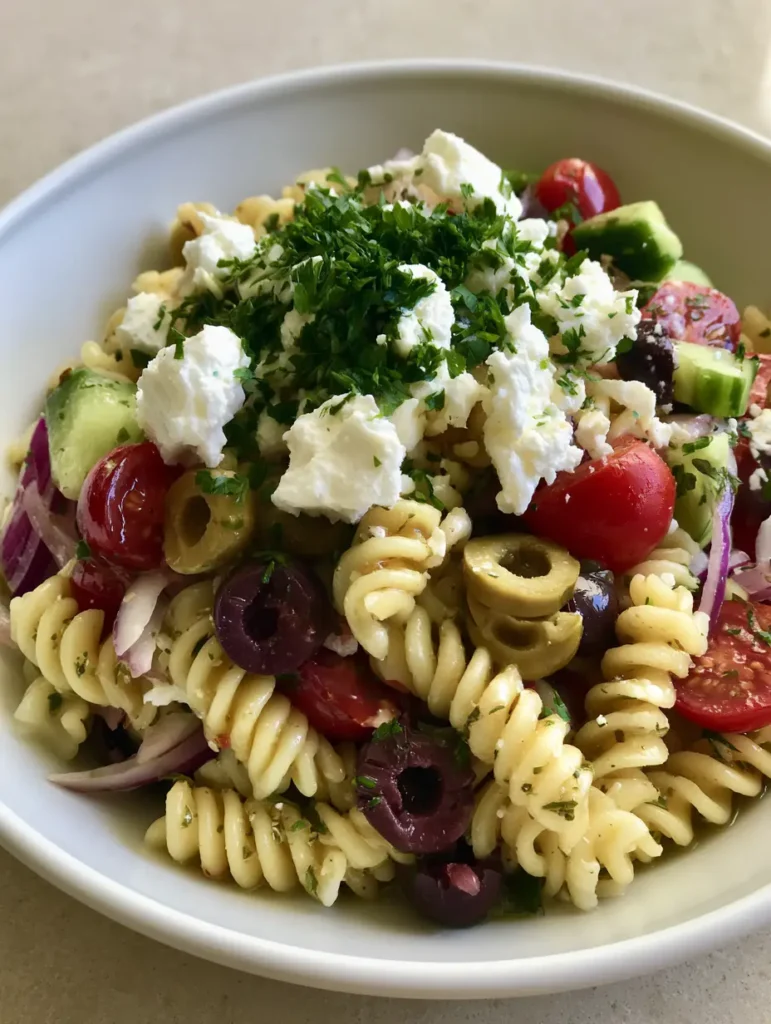
There is something inherently celebratory about a bowl of Greek Olive Pasta Salad landing on a sun-drenched table. Whether you are hosting a backyard gathering or looking for a vibrant lunch to brighten your work week, this recipe captures the essence of the Mediterranean. It is a dish where every ingredient has a voice, from the briny pop of sliced olives to the crisp bite of English cucumbers.
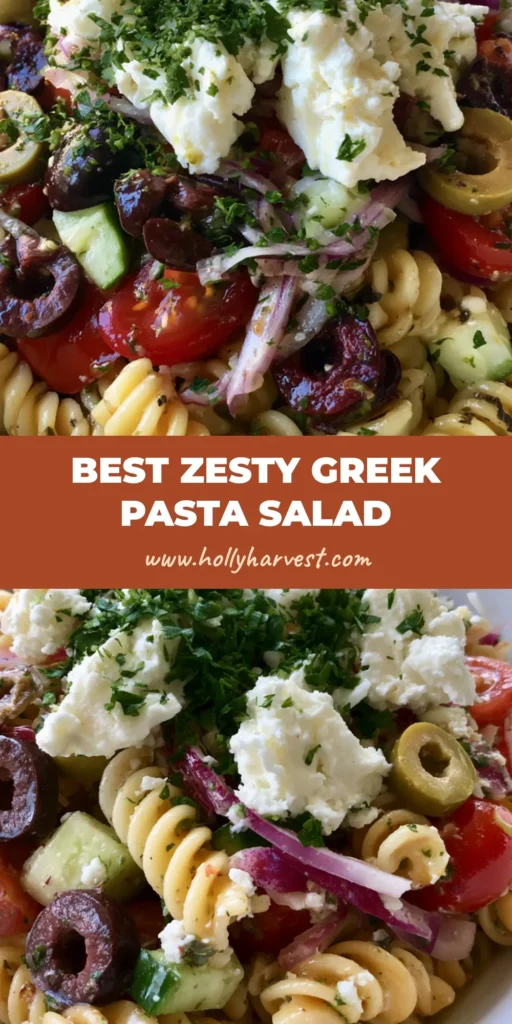
Inspired by the classic flavors of the Aegean, this version focuses on visual contrast and texture. Imagine a shallow white ceramic bowl brimming with perfectly al dente rotini, each spiral catching a translucent, herb-flecked vinaigrette. The deep purple of the kalamata olives plays against the bright red of cherry tomatoes and the verdant green of fresh parsley, creating a culinary mosaic that tastes even better than it looks.
Achieving this level of freshness requires a forensic approach to ingredients. We aren’t just tossing things in a bowl; we are layering flavors to ensure every bite is balanced. From the sharp zing of thinly slivered red onions to the creamy, irregular crumbles of feta cheese, this Greek Olive Pasta Salad is a masterclass in simple, high-quality assembly.
The Vibrancy of a Mediterranean Masterpiece
- Textural Harmony: The ridges of the rotini pasta are specifically chosen to trap the vinaigrette, ensuring no dry bites.
- Briny Depth: By using both sliced kalamata and green olives, we achieve a dual-layered saltiness that balances the sweet cherry tomatoes.
- Visual Contrast: The stark white of the feta cheese against the dark purple olives and bright red tomatoes makes this a centerpiece-worthy side dish.
- Aromatic Foundation: A translucent dressing allows the fresh parsley and dried herbs to shine through without clouding the colors of the vegetables.
The Essential Components for a Bold Greek Olive Pasta Salad
To recreate the exact visual and flavor profile described, you will need high-quality pantry staples and fresh produce. Every ingredient here serves a specific purpose, from providing structural integrity to offering sharp acidic contrast.
1 lb (454g) Rotini Pasta: The spiral shape is non-negotiable for this recipe as it maximizes the surface area for the herb-flecked dressing to cling to. Look for a high-quality bronze-cut pasta for the best texture.
1/2 cup (75g) Sliced Kalamata Olives: These dark purple gems provide a deep, fruity saltiness and a meaty texture that defines the Mediterranean profile. Slicing them ensures they are evenly distributed throughout the salad.
1/2 cup (75g) Sliced Green Olives: We include these for a sharper, more piquant brine that contrasts beautifully with the richer kalamata varieties. They add a bright green pop to the shallow white bowl.
1 cup (150g) Cherry Tomatoes: Halving these bright red jewels releases just enough juice to mingle with the dressing while maintaining their structural snap. They provide the necessary sweetness to balance the vinegar.
1 cup (150g) English Cucumber: Diced into uniform pieces, these offer a cool, refreshing crunch. English cucumbers are preferred because their skin is thin and their seeds are negligible, preventing the salad from becoming watery.
1/4 cup (40g) Red Onion: These must be sliced into very thin slivers to provide a sharp aromatic bite without overwhelming the palate. If you find them too pungent, soak the slivers in cold water for 5 minutes before adding.
1/2 cup (75g) Feta Cheese: Look for a block of feta in brine and crumble it yourself into large, irregular chunks. This provides a creamy, tangy finish that pre-crumbled varieties simply cannot match.
1/4 cup (15g) Fresh Parsley: Finely chopped, this herb adds a final layer of “green” flavor and serves as the primary visual garnish against the neutral white bowl. It brings a necessary freshness to the heavier pasta.
The Translucent Herb Vinaigrette (Foundational Invisible Ingredients)
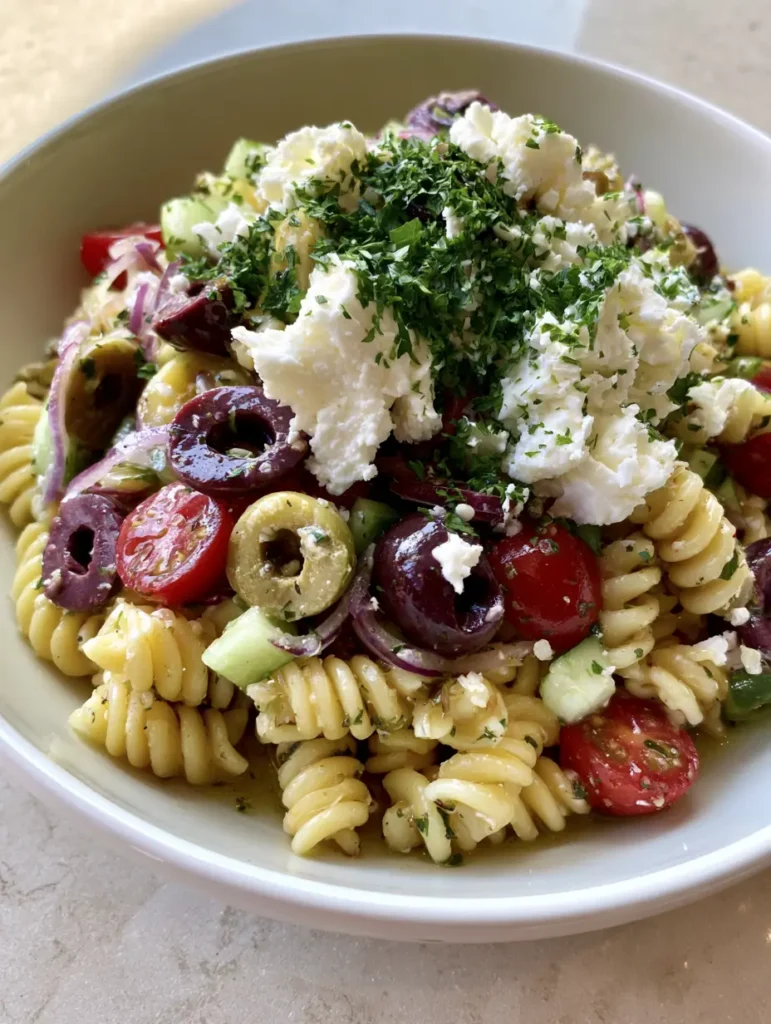
While the vegetables provide the bulk, the dressing is the invisible force that binds the Greek Olive Pasta Salad together. To achieve a translucent, herb-flecked look, we avoid creamy bases like yogurt or mayonnaise.
1/2 cup (120ml) Extra Virgin Olive Oil: Use the best quality you have, as this is the primary fat source. It should be fruity and light to allow the herbs to remain visible.
1/4 cup (60ml) Red Wine Vinegar: This provides the sharp, bright acidity required to cut through the starch of the pasta and the fat of the feta.
1 tsp (5g) Dried Oregano and 1/2 tsp (2g) Dried Basil: These are the “flecks” mentioned in our visual prompt. Drying intensifies their flavor, allowing them to stand out in the translucent liquid.
1/2 tsp (3g) Sea Salt and 1/4 tsp (1g) Black Pepper: Essential for seasoning the vegetables from within. The salt also helps draw out a tiny bit of moisture from the cucumbers to meld with the oil.
Essential Culinary Tools for Assembly
To achieve the “handheld smartphone photo” aesthetic of a professional home cook, you need the right tools for precision. A large pot is required for boiling the rotini to a perfect al dente state.
A sharp chef’s knife or a mandoline is crucial for achieving those very thin slivers of red onion. You will also need a shallow white ceramic bowl—as specified in the visual blueprint—to allow the layered ingredients to be fully visible rather than buried in a deep mixing bowl.
Mastering the Preparation of Greek Olive Pasta Salad
Perfectly Cooking the Rotini Base
Bring a large pot of heavily salted water to a rolling boil. Add the rotini and cook for approximately 8-10 minutes, or until it is “al dente”—firm to the bite but not hard in the center. Drain the pasta and immediately rinse it with cold water to stop the cooking process; this prevents the spirals from becoming mushy and ensures they hold their shape in the bowl.
Whisking the Translucent Herb Dressing
In a small glass jar or bowl, combine the extra virgin olive oil, red wine vinegar, dried oregano, and dried basil. Whisk vigorously until the mixture is emulsified but still clearly translucent. You should see the herbs suspended in the oil. Season with salt and pepper to taste, keeping in mind that the olives and feta will add significant saltiness later.
Prepping the Mediterranean Produce
While the pasta cools, dice your English cucumber into uniform 1/2-inch (1.25cm) cubes and halve your cherry tomatoes. Slice the red onion into paper-thin slivers. By keeping the cuts consistent, you ensure that every forkful of the Greek Olive Pasta Salad contains a bit of everything.
The Final Layered Assembly
Place the cooled rotini in the shallow white ceramic bowl and pour over half of the vinaigrette, tossing to coat each spiral. Layer the sliced kalamata and green olives, cucumbers, and tomatoes over the top. Finish by scattering the thin red onion slivers and the large, irregular crumbles of feta cheese. A final generous sprinkle of finely chopped parsley adds the finishing touch.
Expert Tips for a Professional Result
- Cool the Pasta Fully: Never add your fresh vegetables or feta to warm pasta. The residual heat will wilt the cucumbers and cause the feta to melt, ruining the visual “irregular crumbles” look.
- The Onion Trick: To achieve those translucent, thin slivers of onion, cut the onion in half through the root and slice lengthwise as thinly as possible.
- Dress Twice: Pasta absorbs liquid as it sits. If you are making this ahead of time, save half the dressing to toss in just before serving to maintain that glossy, translucent sheen.
- Quality Matters: Since there is no cooking involved for the toppings, the quality of your olives and feta will directly dictate the success of the dish.
Optimal Storage and Meal Prep Advice
This salad is actually better after an hour of chilling, as the flavors have time to meld. You can store leftovers in an airtight container in the refrigerator for up to 3 to 4 days. Note that the pasta will continue to soak up the dressing, so you might want to add a tiny splash of olive oil and a squeeze of lemon to refresh it the next day.
We do not recommend freezing the Greek Olive Pasta Salad. The high water content in the cucumbers and tomatoes will cause them to become mushy and unappealing upon thawing.
What to Serve with Your Mediterranean Pasta
This versatile salad pairs beautifully with a variety of proteins and other fresh sides. For a complete feast, try serving it alongside some honey glazed grilled shrimp for a sweet and savory contrast. The briny olives also complement the acidity of a spicy pineapple cucumber salad if you are looking for a multi-salad spread.
If you’re hosting a themed dinner, these flavors align perfectly with authentic greek salad or even greek chicken gyros. To wash it all down, a glass of unicorn lemonade provides a whimsical, refreshing finish for the kids and adults alike.
Frequently Asked Questions
Yes, you can make it up to 24 hours in advance. However, the pasta will absorb the dressing, so we recommend reserving half the vinaigrette to toss in just before serving.
Lemon juice is an excellent substitute if you want a brighter, more citrusy acidity, but red wine vinegar provides the most authentic Greek flavor profile.
Rinsing the cooked pasta in cold water to remove excess starch helps, but the real secret is ‘double-dressing’: once when the pasta is cool and once right before serving.
English cucumbers are preferred for this recipe because they have thinner skin and fewer seeds, which keeps the salad crisp and prevents it from getting watery.
Rotini is ideal because its spiral shape and ridges trap the herb-flecked vinaigrette, ensuring flavor in every bite. Other good options include fusilli or farfalle.
The Ultimate Greek Olive Pasta Salad Recipe
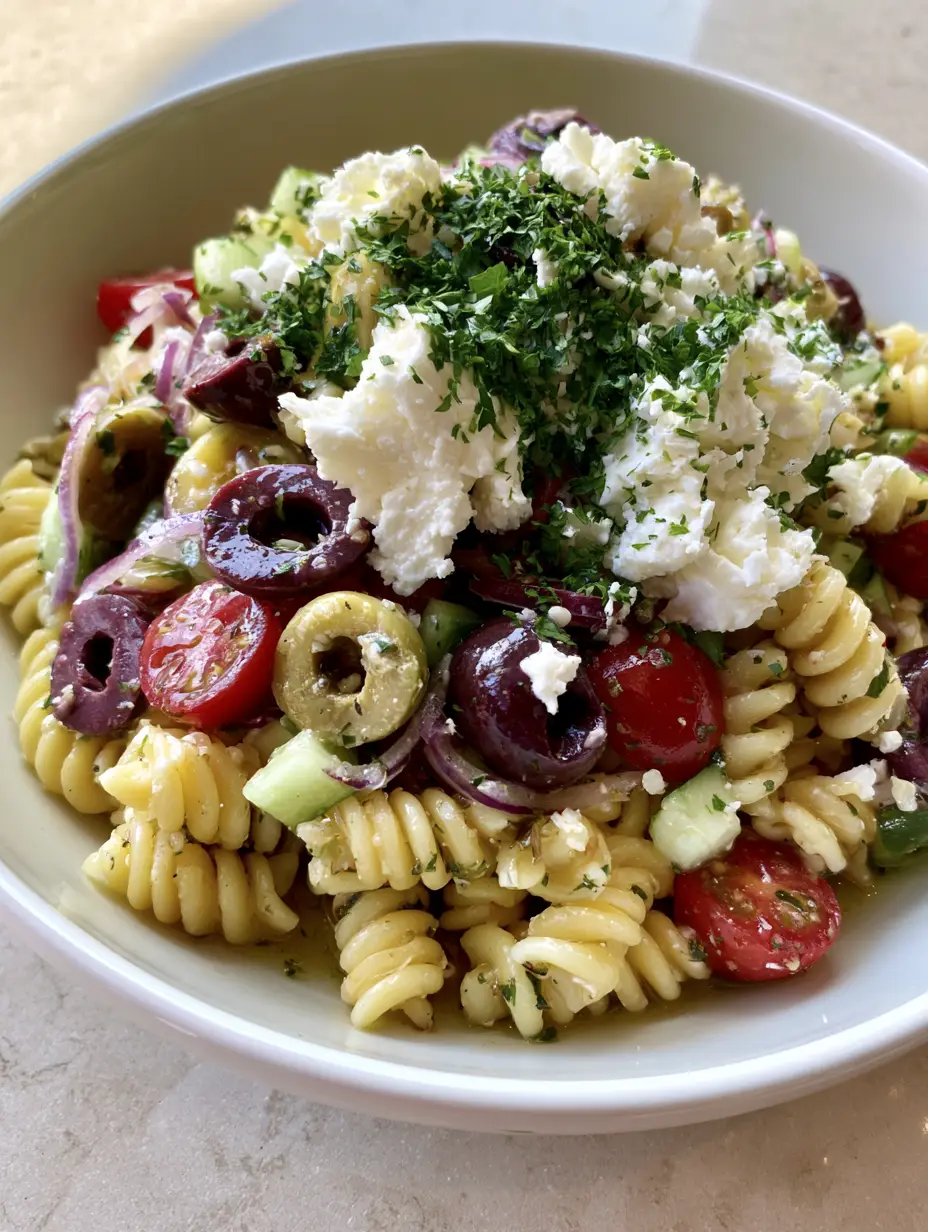
Greek Olive Pasta Salad with a Zesty Translucent Herb Vinaigrette
Ingredients
Equipment
Instructions
- Cook the rotini in a large pot of salted boiling water for 8-10 minutes until al dente.
- Drain and rinse with cold water immediately to stop cooking and keep the spirals firm.
- In a jar, whisk together olive oil, vinegar, oregano, basil, salt, and pepper until translucent and flecked with herbs.
- Place pasta in a shallow bowl, toss with half the dressing, then top with olives, tomatoes, cucumber, onion, and feta.
- Sprinkle generously with finely chopped parsley and serve.
Notes
Crumble your own feta from a block for the best large, irregular textures.
Sharing the Harvest
We hope this Greek Olive Pasta Salad becomes a staple in your kitchen just as it has in ours. The combination of vibrant colors, briny textures, and that zesty herb vinaigrette is truly hard to beat. It is a testament to how simple ingredients, when treated with care and forensic attention to detail, can create a world-class meal.
If you enjoyed this recipe, please leave a comment below and let us know how yours turned out! Don’t forget to snap a photo and share it with us by tagging holly_harvest on social media. For more Mediterranean inspiration, be sure to follow our boards on Pinterest and sign up for our newsletter to get fresh recipes delivered straight to your inbox.