When you close your eyes and imagine the perfect Mediterranean summer, you likely see sun-drenched islands and a rustic ceramic bowl filled with an Authentic Greek Salad. Known in Greece as “Horiatiki,” which translates to “village salad,” this dish is a masterclass in simplicity and high-quality ingredients. Forget the wilted lettuce and bland dressings found in many Western versions; a true Horiatiki is a vibrant, chunky, and oil-glistened celebration of the harvest.
The beauty of this recipe lies in its visual and textural contrasts. Picture large, irregular chunks of crimson, vine-ripened tomatoes nestled against thick, unpeeled cucumber crescents. Thinly sliced half-moons of red onion add a sharp bite, while plump, dark purple Kalamata olives provide a glossy, briny depth. Everything is crowned with a single, majestic slab of creamy white feta cheese and a heavy dusting of fragrant dried oregano.
In this guide, we will break down the culinary science and traditional techniques required to replicate that perfect handheld smartphone photo aesthetic. From the specific way you slice your vegetables to the golden-yellow drizzle of extra virgin olive oil, every detail matters. Whether you are serving this as a light lunch or a side for Greek chicken gyros, you are about to master a cornerstone of Greek cuisine.
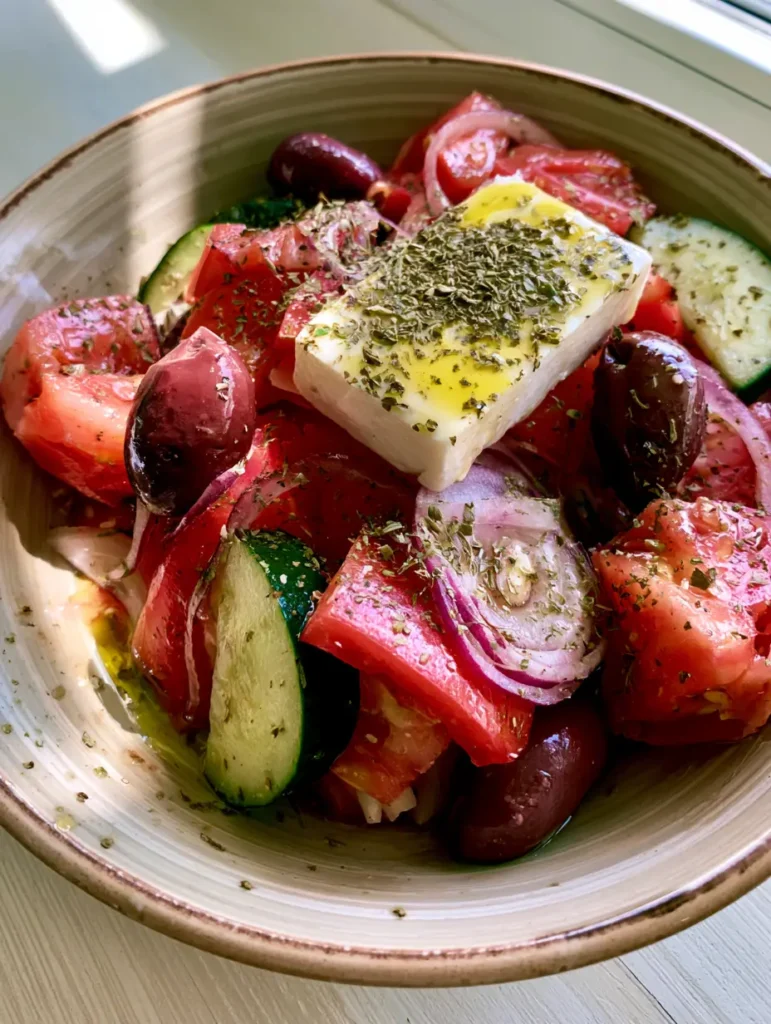
Why This Traditional Horiatiki Stands Above the Rest
- The No-Lettuce Rule: An Authentic Greek Salad never contains lettuce or leafy greens, allowing the juice of the tomatoes and the olive oil to create a natural “vinaigrette” in the bottom of the bowl.
- Textural Integrity: By using thick-cut cucumber crescents and large tomato chunks, the salad maintains its crunch and structure even after sitting for twenty minutes.
- The Feta Slab: Rather than crumbling the cheese into tiny bits, we place a thick rectangular slab on top, preserving the creamy texture and allowing guests to break off pieces as they eat.
- The “Papara” Factor: The combination of tomato juices, sea salt, and high-quality oil creates a liquid gold at the bottom of the bowl that is practically designed for dipping crusty bread.
The Fresh Mediterranean Bounty You Will Need
Vine-Ripened Tomatoes: You need 4 medium (approx. 600g) tomatoes that are heavy for their size and fragrant at the stem. These provide the essential acidic base and the vibrant red color that defines the dish.
English or Persian Cucumbers: Use 1 large (300g) cucumber, kept unpeeled for that deep green visual contrast and extra fiber. The skin provides a necessary “snap” when bitten into.
Red Onion: One small (100g) red onion, sliced into paper-thin half-moons, adds a colorful purple hue and a pungent, spicy note that cuts through the richness of the cheese. If you find raw onions too sharp, you can soak the slices in ice water for ten minutes before adding them to the bowl.
Kalamata Olives: Ensure you use 1/2 cup (approx. 75g) of whole, pit-in Kalamata olives for the most authentic flavor. Their glossy sheen and dark purple color are non-negotiable for the visual blueprint.
Greek Feta Cheese: Look for a 7 oz (200g) block of high-quality Greek feta made from sheep and goat milk. This must be served as a single rectangular slab to maintain the traditional aesthetic.
Extra Virgin Olive Oil: You will need 1/4 cup (60ml) of the highest quality “liquid gold” you can find. A golden-yellow oil with a peppery finish is ideal for drizzling over the vegetables and cheese.
Dried Greek Oregano: This is the soul of the salad; use 1 tablespoon (approx. 3g) of dried oregano flakes. It should be heavily dusted over the top, with some specks intentionally landing on the rim of the ceramic bowl for a rustic look.
Sea Salt: A pinch of coarse sea salt (approx. 1/2 tsp or 3g) is the invisible hero that draws the juices out of the tomatoes, creating the salad’s signature sauce.
Red Wine Vinegar (Optional): While the visual prompt focuses on the oil, a splash of red wine vinegar (1 tbsp or 15ml) is often used by Greek grandmothers to add a bright, fermented tang to the base.
Essential Tools for Your Village Kitchen
To achieve the rustic, handheld photo aesthetic, you don’t need fancy gadgets, but a few specific tools will help. A sharp Chef’s knife is essential for creating those irregular tomato chunks without bruising the delicate flesh. A ceramic bowl with a slightly uneven, rustic finish will perfectly frame the vibrant colors of the vegetables.
You might also want a mandoline for the onions if you struggle with thin slicing, though a steady hand and a sharp blade are usually sufficient. For serving, large wooden spoons help toss the vegetables gently without breaking the cucumber crescents or smashing the olives. If you enjoy this type of fresh prep, you might also like making spicy pineapple cucumber salad for a tropical twist on vegetable bowls.
Mastering the Art of the Traditional Horiatiki
Step 1: Preparing the Vegetable Base
Begin by washing your tomatoes and cucumber thoroughly. Cut the 4 medium (600g) tomatoes into large, irregular chunks rather than uniform wedges; this creates a more authentic, “home-grown” appearance. Place them directly into your rustic ceramic bowl, ensuring some of the juices from the cutting board are scraped in as well.
Take your 1 large (300g) cucumber and, leaving the skin on, slice it lengthwise. Cut these halves into thick crescents (about 1/2 inch or 1.25cm thick). Add the cucumber crescents to the bowl with the tomatoes. The unpeeled skin should provide a vibrant green pop against the red tomatoes.
Step 2: Adding the Aromatics and Brine
Peel your small (100g) red onion and slice it into very thin half-moons. Scatter these across the top of the tomatoes and cucumbers, letting them fall naturally into the crevices. Follow this with 1/2 cup (75g) of whole Kalamata olives. Notice how the glossy purple skins of the olives catch the light—this is a key sensory cue for a fresh Authentic Greek Salad.
Step 3: Seasoning and the “Liquid Gold” Drizzle
Sprinkle 1/2 tsp (3g) of coarse sea salt over the vegetables. This is the scientific step that initiates osmosis, drawing moisture out of the vegetable cells to blend with the oil. Drizzle about 3 tablespoons (45ml) of the extra virgin olive oil over the mixture. If you are using red wine vinegar, add it now. Use your hands or large spoons to gently toss the vegetables until they are all shimmering with a thin coat of oil.
Step 4: The Signature Feta Presentation
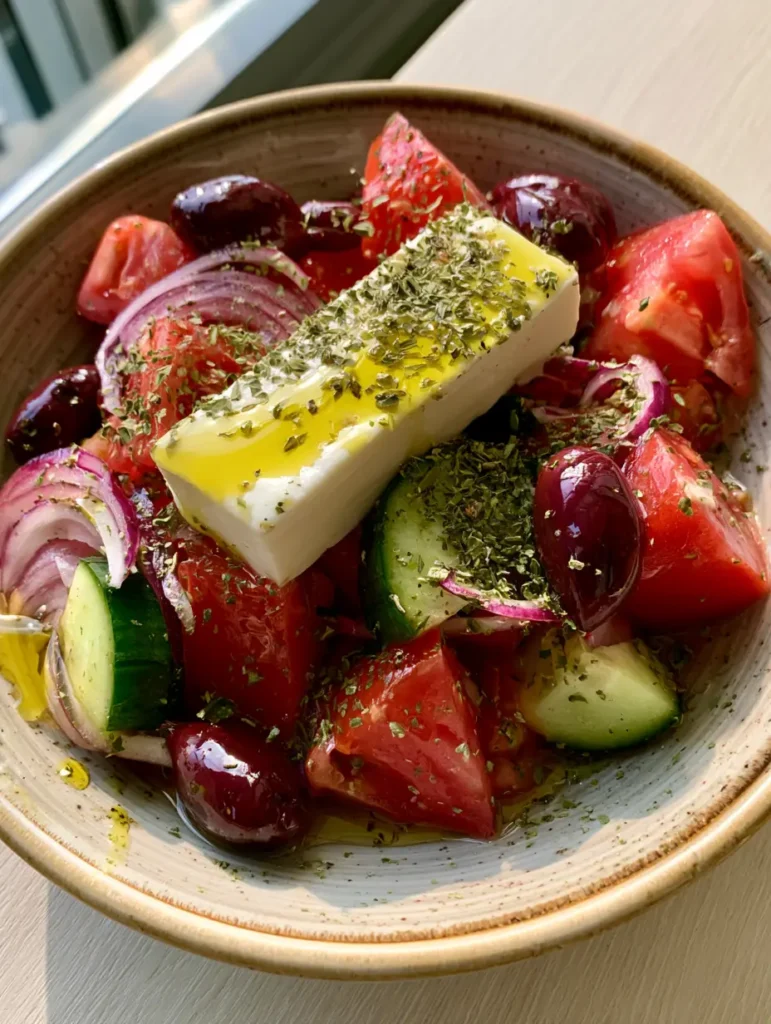
Retrieve your 7 oz (200g) block of feta from its brine and pat it dry slightly. Place the entire rectangular slab prominently on top of the vegetable mound. Do not crumble it. This slab is the visual centerpiece of the dish, representing the generosity of Greek hospitality.
Step 5: The Finishing Touches and Plating
Drizzle the remaining 1 tablespoon (15ml) of olive oil directly over the feta slab so it runs down the sides and pools slightly on the vegetables. Finally, take your 1 tablespoon (3g) of dried oregano and heavily dust the entire salad from a height. Allow some of the green flakes and a few stray drops of oil to land on the rim of the ceramic bowl. This creates that “perfectly imperfect” look described in our visual blueprint.
Pro Secrets for the Perfect Greek Texture
- Temperature Matters: Never serve your tomatoes straight from the fridge. Room-temperature tomatoes have much more flavor and release their juices more readily than cold ones.
- The Pit Precaution: Using whole olives with the pits intact preserves the interior flesh of the olive, preventing it from becoming waterlogged or mushy in the salad’s juices.
- Oregano Quality: If possible, use Greek oregano that is still on the dried branch and rub it between your palms directly over the salad to release the essential oils.
- The Resting Period: Let the salad sit for 5 to 10 minutes before serving. This allows the salt to work its magic, creating that delicious pool of tomato-oil broth at the bottom.
Shelf Life and Freshness Guidelines
An Authentic Greek Salad is best enjoyed immediately or within an hour of assembly. Because the salt draws out moisture, the vegetables will eventually lose their structural integrity and become soft if left overnight. However, if you have leftovers, they can be stored in an airtight container in the refrigerator for up to 24 hours.
Note that the olive oil may solidify slightly in the fridge; simply let the salad sit at room temperature for 15 minutes and give it a gentle toss before eating. This salad does not freeze well due to the high water content of the cucumbers and tomatoes. For other fresh options that hold up well for meal prep, consider our crunchy Thai chickpea salad.
What to Serve With Your Authentic Greek Salad
This salad is incredibly versatile. In Greece, it is often served as a center-table dish for everyone to share. It pairs beautifully with grilled meats, especially honey glazed grilled shrimp or lamb chops. If you are looking for a more casual lunch, a peach and brie grilled cheese provides a surprising but delightful sweet-and-salty contrast.
During a summer BBQ, this Horiatiki is the perfect cooling side dish to serve alongside Mexican street corn salad for a multicultural feast. No matter what you choose, ensure you have a loaf of crusty sourdough or pita bread on hand to soak up every last drop of the oregano-infused oil.
Common Questions About Horiatiki
Actually, dried Greek oregano is preferred. It has a more intense, savory flavor that stands up well to the bold olives and salty feta. Rub it between your palms to wake up the oils before sprinkling.
No. In an authentic version, the cucumber is left unpeeled. The skin provides a necessary crunchy texture and a vibrant dark green color that contrasts beautifully with the red tomatoes.
Use an Extra Virgin Olive Oil (EVOO), preferably from Greece (like Koroneiki olives). It should have a golden-yellow hue and a slightly peppery finish to balance the sweetness of the tomatoes.
Serving feta as a slab is the traditional Greek way. It preserves the creaminess of high-quality sheep’s milk feta and allows each person to break off as much as they want, preventing the cheese from getting lost in the juices.
Traditional Greek Horiatiki is a ‘village salad’ designed to showcase summer produce. Lettuce is not traditionally grown in the same season as sun-ripened tomatoes in Greece and would wilt under the heavy oil and juicy tomatoes.
The Authentic Greek Salad Recipe Card
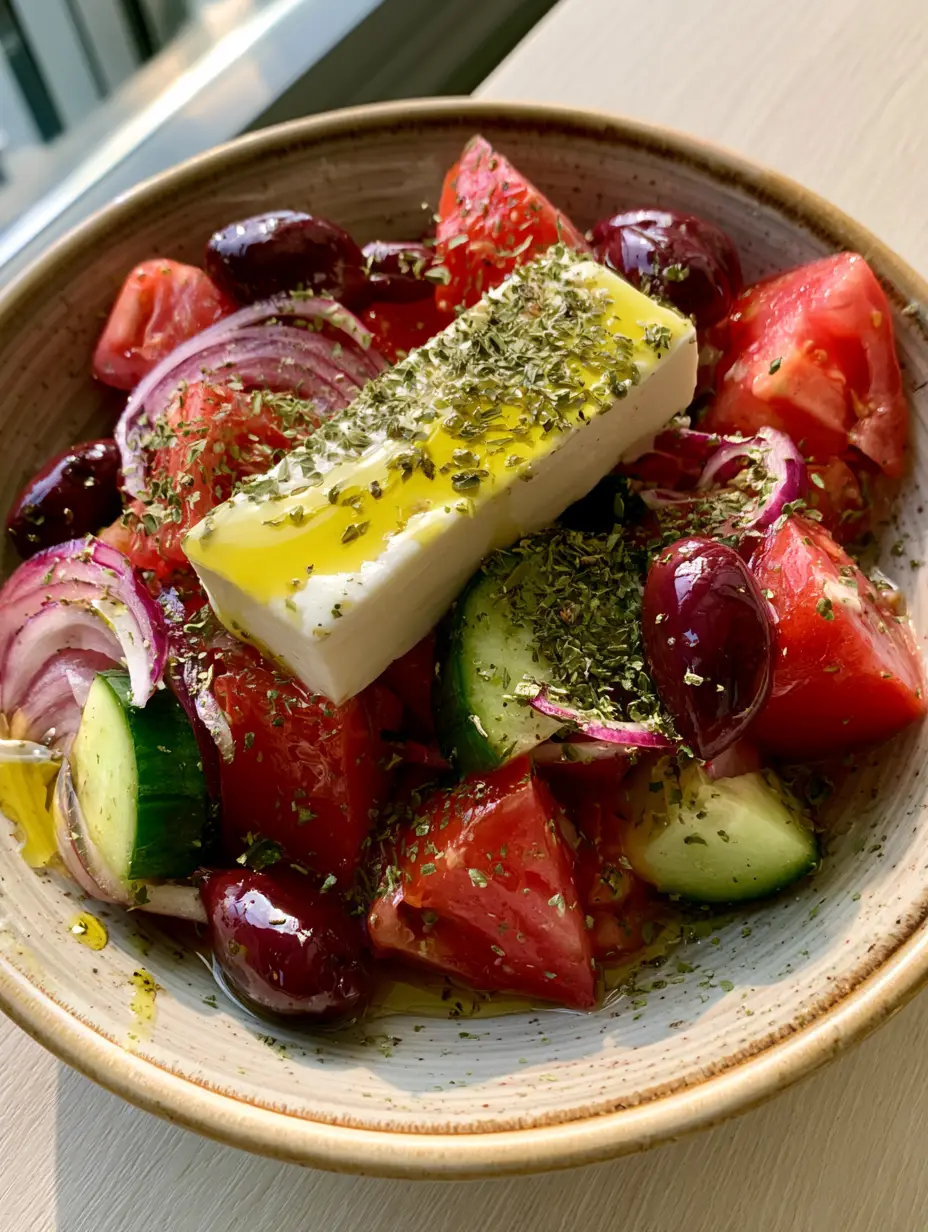
Authentic Greek Salad: The Ultimate Horiatiki Recipe
Ingredients
Equipment
Instructions
- Cut the ripe tomatoes into large, irregular chunks and add to a rustic ceramic bowl.
- Keep the skin on the cucumber, slice it lengthwise, then cut into thick half-inch crescents.
- Scatter the thinly sliced red onion half-moons and whole Kalamata olives over the tomatoes and cucumbers.
- Sprinkle sea salt and drizzle most of the olive oil over the vegetables, tossing gently to coat.
- Place the whole slab of feta prominently on top of the salad. Drizzle with the remaining oil.
- Heavily sprinkle dried oregano over the cheese and vegetables, allowing some to fall on the bowl rim.
Notes
Keep the cucumber skin on for authentic texture and visual contrast.
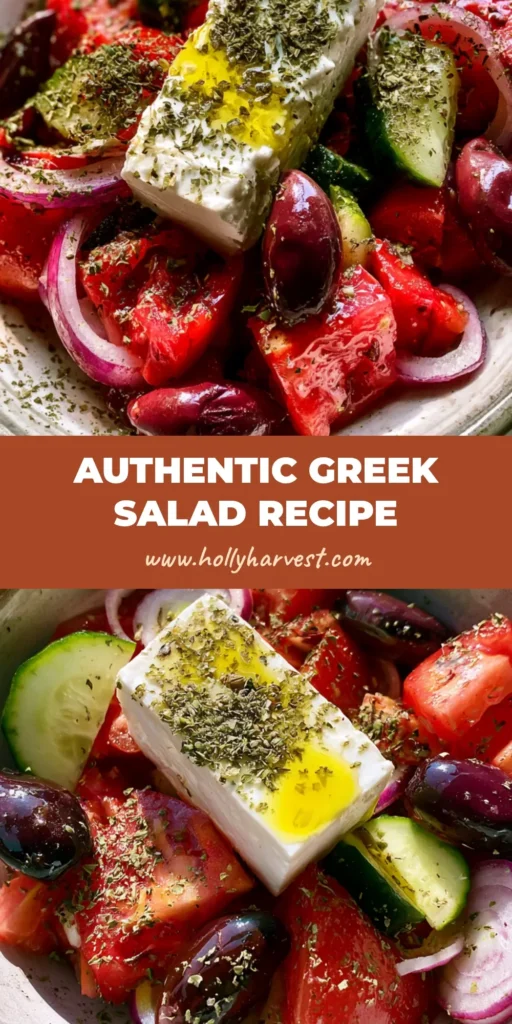
Mastering the Authentic Greek Salad is a rite of passage for any home cook who values fresh, seasonal ingredients. By following these traditional steps—the irregular chunks, the unpeeled cucumber, and that iconic slab of feta—you aren’t just making a salad; you’re bringing a piece of the Mediterranean to your table. The combination of sun-ripened flavors and aromatic oregano is a sensory experience that never goes out of style.
Did you try this recipe? We would love to see your rustic recreations! Tag us in your photos and be sure to follow holly_harvest on Pinterest for more Mediterranean inspiration. Leave a comment below with your favorite way to serve Horiatiki!