There is a specific, undeniable magic that happens when a cold piece of fish meets a ripping-hot cast iron skillet. This Lemon Garlic Butter Salmon isn’t just a meal; it is a masterclass in contrasting textures and vibrant, bright flavors that dance across the palate.
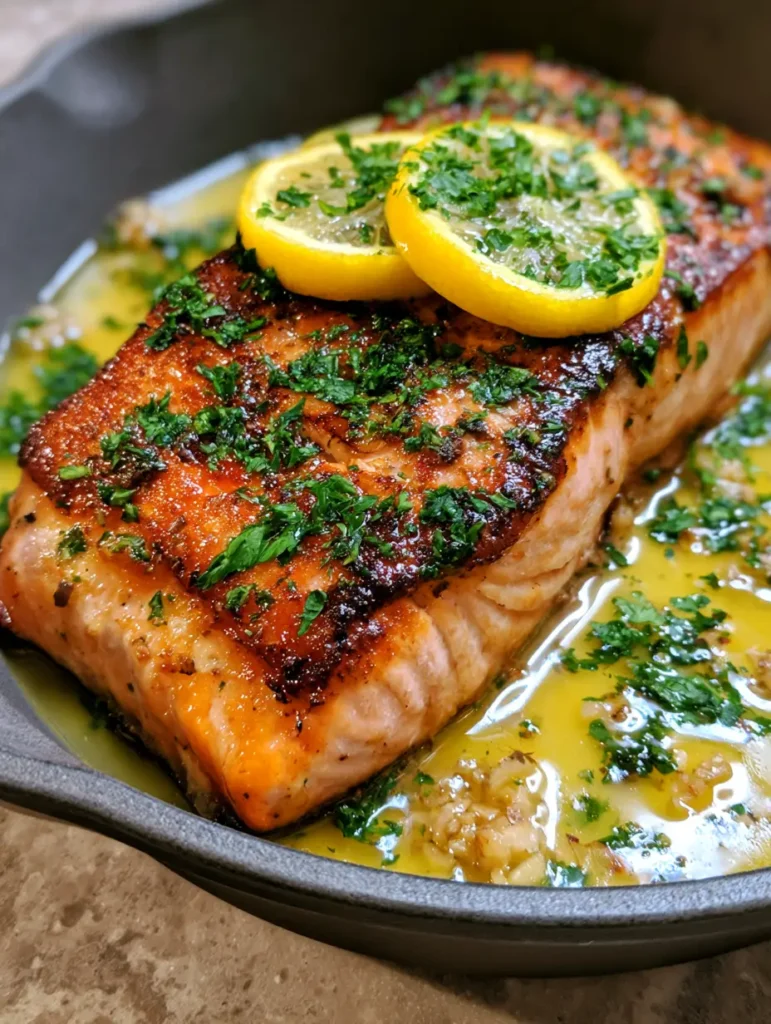
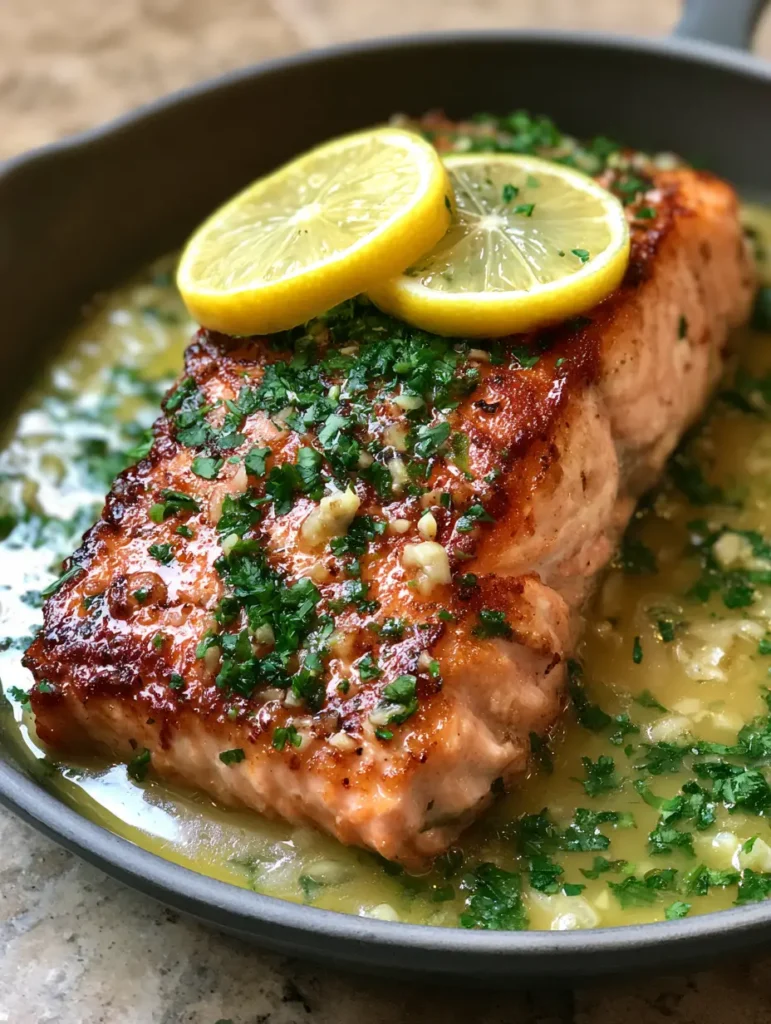
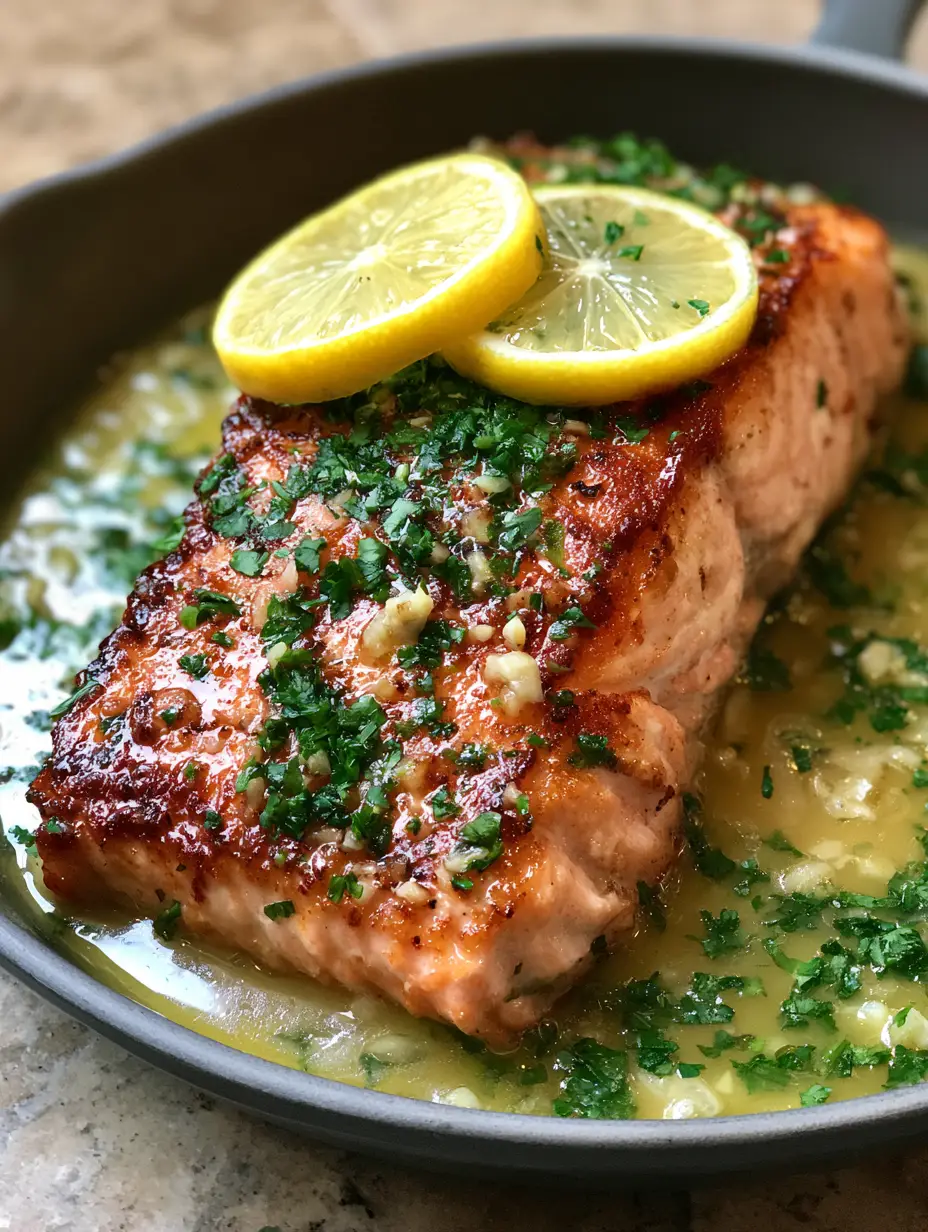
Imagine a thick, center-cut fillet with a crust so golden and crisp it crackles under your fork, revealing a succulent, moist, flaky pink interior. We are going to bathe this perfectly cooked protein in a glossy, translucent yellow lemon garlic butter sauce that pools in the skillet, clinging to every curve of the fish.
Whether you are looking for a high-protein weeknight dinner or a show-stopping centerpiece for a weekend date night, this recipe delivers restaurant-quality results in under 20 minutes. Follow along as we break down the science of the sear and the secrets to a sauce that never breaks.
Why This Pan-Seared Salmon Recipe Wins Every Time
- The Forensic Crust: By utilizing high-heat searing techniques, we achieve a perfectly seared, golden-brown crispy crust that provides a structural and textural counterpoint to the tender meat.
- The Velvety Emulsion: Unlike oily sauces, our lemon garlic butter sauce is a glossy, translucent yellow masterpiece, featuring visible bits of minced sautéed garlic for a punch of aromatic depth.
- Balanced Acidity: The addition of fresh lemon wheels and juice cuts through the richness of the butter, ensuring every bite is bright and refreshing.
- Visual Sophistication: Finished with a heavy dusting of finely chopped fresh green parsley, this dish looks like it was plated by a professional chef in a high-end bistro.
The Anatomy of Flavor: Essential Ingredients
Center-Cut Salmon Fillet (approx. 1.5 lbs / 680g): We specifically recommend a thick, center-cut piece for this Lemon Garlic Butter Salmon to ensure the interior remains moist while the exterior achieves a deep sear. A uniform thickness allows for even heat distribution across the entire fillet.
Unsalted Butter (4 tbsp / 56g): Using unsalted butter allows us to control the sodium levels precisely while providing the fat necessary for that glossy, translucent yellow sauce. It acts as the primary vehicle for the garlic and lemon flavors.
Fresh Garlic (4 cloves, minced): Avoid the pre-minced jars; fresh garlic provides the essential pungent aroma and “bits of minced sautéed garlic” that define the visual and flavor profile of the sauce. It should be sautéed until just golden to avoid bitterness.
Fresh Lemons (2 large): You will need one lemon for juice and a second lemon to cut into two vibrant yellow lemon wheels for the final presentation. The citric acid is vital for tenderizing the surface of the fish and balancing the fats.
Fresh Parsley (1/2 cup, finely chopped): A heavy dusting of finely chopped fresh green parsley isn’t just a garnish; it adds a layer of earthy freshness that complements the garlic beautifully. It provides that essential pop of color against the dark grey cast iron.
High-Smoke Point Oil (1 tbsp / 15ml): While butter is for flavor, a neutral oil like avocado or grapeseed is required for the initial sear. This prevents the fish from sticking and allows us to reach the temperatures needed for a crispy crust without burning the milk solids in the butter.
Kosher Salt and Cracked Black Pepper: These foundational seasonings draw out moisture from the skin side, ensuring maximum crispiness, and enhance the natural sweetness of the salmon meat.
Must-Have Tools for the Perfect Sear
To achieve the specific visual results described—a perfectly seared crust in a dark grey cast iron skillet—the right equipment is non-negotiable. A 12-inch (30cm) cast iron skillet is the gold standard here because of its incredible heat retention and natural non-stick properties once seasoned.
You will also need a flexible metal fish spatula. This tool is thin enough to slide under the delicate skin without tearing it, ensuring that golden-brown crust stays attached to the fish and not the pan. Finally, a sharp chef’s knife is required for the finely chopped parsley and the precise lemon wheels.
Mastering the Perfect Pan-Sear Technique
Preparing the Salmon for the Skillet
The secret to a crispy crust starts long before the heat is turned on. Remove your salmon from the refrigerator 15 minutes before cooking to take the chill off. Use a paper towel to pat the salmon fillet bone-dry on all sides.
Moisture is the enemy of a sear; any water left on the surface will create steam, resulting in mushy fish rather than a golden crust. Once dry, season generously with kosher salt and cracked black pepper. If you enjoy this flavor profile, you might also love our honey glazed grilled shrimp for your next seafood night.
Achieving the Golden-Brown Crispy Crust
Place your cast iron skillet over medium-high heat and add the oil. Wait until the oil is shimmering and just starting to wisps a tiny bit of smoke. Lay the salmon fillet into the pan, skin-side down (if skin-on) or the presentation side down.
Press down lightly with your spatula for 10 seconds to ensure even contact. Let it cook undisturbed for 4-5 minutes. You will see the pink meat begin to turn opaque from the bottom up. Once a deep golden-brown crust has formed, gently flip the fillet.
Basting in Lemon Garlic Butter Greatness
Immediately reduce the heat to medium and add the 4 tbsp (56g) of butter to the pan. Once the butter foams, toss in the minced garlic. Tilt the skillet slightly so the butter pools at one end, and use a large spoon to continually pour the melting butter over the salmon.
Add the juice of half a lemon into the bubbling butter. This creates that glossy, translucent yellow lemon garlic butter sauce. Place the two vibrant yellow lemon wheels directly on top of the fillet. The heat from the fish will slightly soften the lemons, releasing their oils into the crust.
The Final Flourish
Continue basting for another 2-3 minutes until the salmon is flaky and the interior reaches an internal temperature of 125°F (52°C) for medium-rare or 135°F (57°C) for medium. Remove from heat immediately to prevent overcooking.
While the salmon rests for a minute in the skillet, apply a heavy dusting of finely chopped fresh green parsley. The residual heat will wake up the aroma of the herbs without wilting them into nothingness.
Pro Secrets for Restaurant-Quality Salmon
- Don’t Move the Fish: The most common mistake is poking or moving the fillet too early. The salmon will naturally “release” from the cast iron once the crust has properly formed. If it sticks, it’s not ready to flip!
- Cold Butter for Gloss: If your sauce looks too oily, try adding a final small knob of cold butter at the very end and swirling it in off the heat. This creates a more stable emulsion.
- Check for Doneness: Use a cake tester or a fork to gently peek at the flakes. The meat should be moist and flaky pink, not chalky and light pink (which indicates overcooking).
- Cast Iron Care: Ensure your skillet is well-seasoned. A dark grey, matte finish on the pan provides the perfect aesthetic backdrop for the vibrant yellows and greens of this dish.
Smart Storage and Reheating Advice
Lemon Garlic Butter Salmon is best enjoyed immediately to preserve the crispiness of the crust. However, if you have leftovers, store them in an airtight container in the refrigerator for up to 2 days.
To reheat, avoid the microwave, which will turn the salmon rubbery. Instead, place the fillet in a cold pan with a splash of water or extra butter, cover with a lid, and heat over low until just warmed through. This steam-heat method preserves the moisture of the flaky pink interior.
What to Pair with Your Lemon Garlic Butter Salmon
This dish is incredibly versatile. For a light and refreshing summer meal, serve it alongside an authentic Greek salad or a bowl of spicy pineapple cucumber salad. The acidity in the salads complements the buttery sauce perfectly.
If you prefer a heartier pairing, these fillets are excellent when flaked over shrimp and avocado bowls for a double-seafood protein punch. For dessert, the bright citrus notes of the salmon transition beautifully into a slice of peach cobbler with oatmeal crumble.
Common Questions About Pan-Seared Salmon
Yes, but it must be completely thawed and dried. Frozen salmon often contains more internal moisture, so extra care in patting it dry is required for a good sear.
While cast iron provides the best crust and aesthetic, a high-quality stainless steel or heavy non-stick pan will also work, though the sear may be less intense.
Press the top of the fillet gently with a fork. If the flakes begin to separate easily (the ‘pink flake test’), the salmon is done and ready to rest.
The key is moisture removal. Pat the skin bone-dry with paper towels and ensure your cast iron skillet is hot with shimmering oil before placing the fish skin-side down.
Garlic burns quickly. Ensure you reduce the heat to medium before adding the butter and garlic, and keep the butter moving by basting the salmon constantly.
The Complete Lemon Garlic Butter Salmon Recipe
Lemon Garlic Butter Salmon: The Ultimate Crispy Pan-Seared Fillet
Ingredients
Equipment
Instructions
- Pat the salmon fillet bone-dry using paper towels. Season both sides with salt and pepper.
- Heat oil in a cast iron skillet over medium-high. Place salmon skin-side down and sear for 4-5 minutes until a deep golden-brown crust forms.
- Flip the salmon and reduce heat. Add butter and garlic. Spoon the melting, glossy butter over the fish repeatedly.
- Add lemon juice and top with two lemon wheels. Cook 2-3 more minutes. Dust heavily with finely chopped parsley before serving.
Notes
Use fresh parsley for the best aromatic finish against the garlic butter.
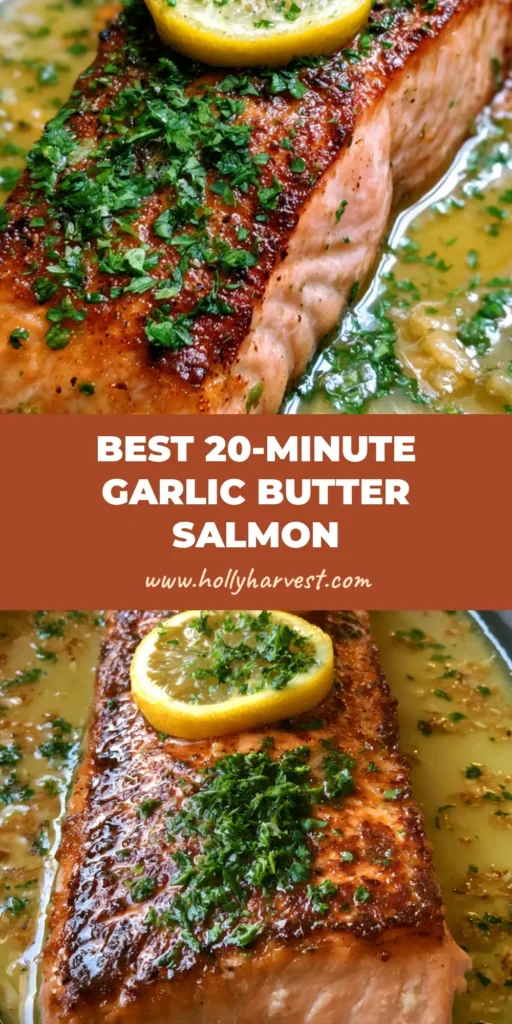
Mastering the Lemon Garlic Butter Salmon is a milestone for any home cook. It combines basic chemistry with high-quality ingredients to create a meal that feels truly indulgent yet remains incredibly healthy. The combination of the heavy parsley dusting, the charred lemon wheels, and that translucent sauce makes for a visual feast as much as a literal one.
If you enjoyed this recipe, please let us know in the comments below! Don’t forget to sign up for our newsletter for more restaurant-quality recipes delivered to your inbox. You can also save this recipe to your “Easy Dinners” board by following holly_harvest on Pinterest.