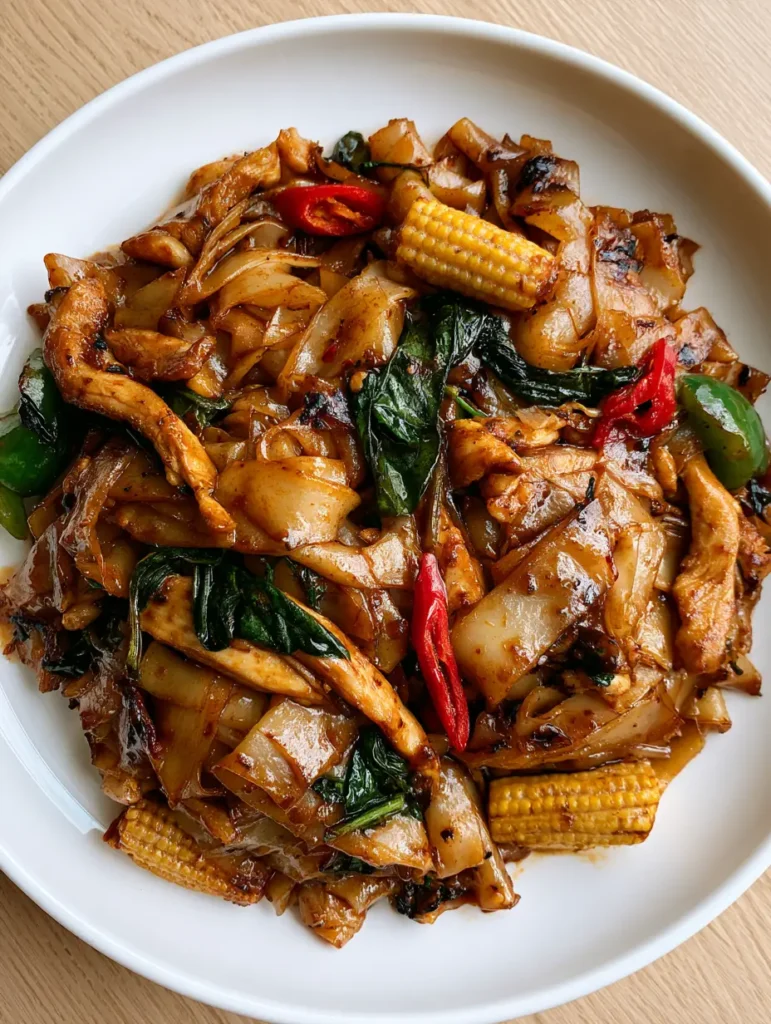
There is something intoxicating about the aroma of Thai Drunken Noodles as they hit a scorching hot wok. The scent of caramelized soy sauce, pungent garlic, and the sharp heat of red bird’s eye chilies creates an immediate sensory overload. This isn’t just a meal; it is a masterclass in balance, combining salty, sweet, and spicy notes into one glossy, dark brown masterpiece.
If you have ever stared at a plate of these wide, flat rice noodles and wondered how to achieve those signature charred edges at home, you are in the right place. We are going to break down the “wok hei” technique that gives this dish its legendary flavor profile. From the snap of the baby corn to the aromatic wilt of holy basil, every element is designed to replicate the best street food stalls in Bangkok.
Why These Thai Drunken Noodles Stand Out
- Wok-Seared Excellence: We focus on high-heat techniques to ensure your wide rice noodles achieve those visually stunning charred edges and a smoky finish.
- Textural Harmony: The combination of tender seared chicken breast, crisp-tender green bell peppers, and snap-heavy baby corn provides a varied mouthfeel in every bite.
- Authentic Heat Profile: By using sliced red bird’s eye chilies, we deliver a clean, sharp heat that cuts through the rich, savory soy-based sauce.
- Aromatic Depth: The inclusion of genuine holy basil leaves (Tulsi) offers a peppery, clove-like finish that regular sweet basil simply cannot match.
The Essential Components for Authentic Pad Kee Mao
Creating the perfect plate of Thai Drunken Noodles requires a specific set of ingredients that balance the “drunken” intensity of the sauce. Each component serves a functional purpose in both flavor and visual presentation.
Wide Flat Rice Noodles: You will need 1 lb (450g) of fresh wide rice noodles or dried XL rice sticks. These are the canvas for our sauce, providing a chewy, translucent base that holds onto the dark soy glaze perfectly.
Chicken Breast Strips: 12 oz (340g) of chicken breast, sliced into thin strips across the grain. The goal is a quick sear that keeps the meat succulent while developing a golden-brown exterior that contrasts with the dark noodles.
Holy Basil Leaves: 1 cup (30g) of fresh holy basil leaves is non-negotiable for true authenticity. They provide the distinct peppery aroma that defines the dish, unlike the sweeter profile found in herb-topped breads.
Red Bird’s Eye Chilies: 3-5 chilies (approx. 10g), thinly sliced. These small but mighty peppers provide the vibrant red pops of color seen in the visual blueprint and the essential spicy kick.
Dark and Light Soy Sauce: A combination of 2 tbsp (30ml) dark soy for color and 1 tbsp (15ml) light soy for saltiness. The dark soy is what creates that iconic glossy brown finish seen in high-end Thai photography.
Oyster Sauce and Fish Sauce: 2 tbsp (30ml) oyster sauce and 1 tsp (5ml) fish sauce. These provide the deep umami backbone and the “funky” savory note that makes Thai cuisine so addictive.
Vegetable Medley: 1 cup (150g) sliced green bell peppers and 1/2 cup (75g) halved baby corn. These add the “crisp-tender” elements and the yellow-green visual contrast required for a professional presentation.
Aromatics and Cooking Fat: 4 cloves (20g) of garlic, minced, and 3 tbsp (45ml) of high-smoke point oil like canola or peanut oil. The oil is the medium that allows the noodles to sear without sticking, much like the precision needed for perfectly seared steak bites (coming soon).
Tools for Achieving Restaurant-Quality Wok Hei
To get those charred noodle edges and seared chicken, your equipment must be able to handle and distribute intense heat. A heavy-bottomed carbon steel wok is the gold standard for this recipe.
If you don’t own a wok, a large 12-inch (30cm) cast-iron skillet is a fantastic alternative. Its heat retention properties allow you to sear the chicken and noodles effectively without the pan temperature dropping too significantly.
You will also need a sturdy metal spatula or wok turner. This allows you to scrape the bottom of the pan aggressively, ensuring the noodles don’t fuse to the surface while they develop their smoky char.
Preparation: The Secret to Stir-Fry Success
Mastering the Signature Stir-Fry Sauce
In a small bowl, whisk together your dark soy sauce, light soy sauce, oyster sauce, fish sauce, and a pinch of sugar (approx. 1 tsp/5g). The sugar is vital; it helps the sauce caramelize onto the noodles, creating that dark brown, glossy coating.
Ensure all your ingredients are prepped and within arm’s reach. Stir-frying happens in minutes, and you won’t have time to chop peppers once the oil starts smoking. This mise en place approach is as critical here as it is when preparing complex meal prep bowls.
Searing the Chicken and Aromatics
Heat 1 tbsp (15ml) of oil in your wok over high heat until you see the first wisps of smoke. Add the chicken breast strips in a single layer, resisting the urge to stir them immediately. Let them sear for 60-90 seconds to develop a crust.
Once the chicken is mostly cooked through and browned, toss in the minced garlic and sliced bird’s eye chilies. Stir rapidly for 30 seconds until the garlic is fragrant but not burnt, which would turn the dish bitter.
Wok-Searing the Noodles and Vegetables
Push the chicken to the sides of the wok and add another tablespoon of oil to the center. Drop in the wide rice noodles, the halved baby corn, and the green bell pepper slices. Let the noodles sit undisturbed for a moment to catch the heat.
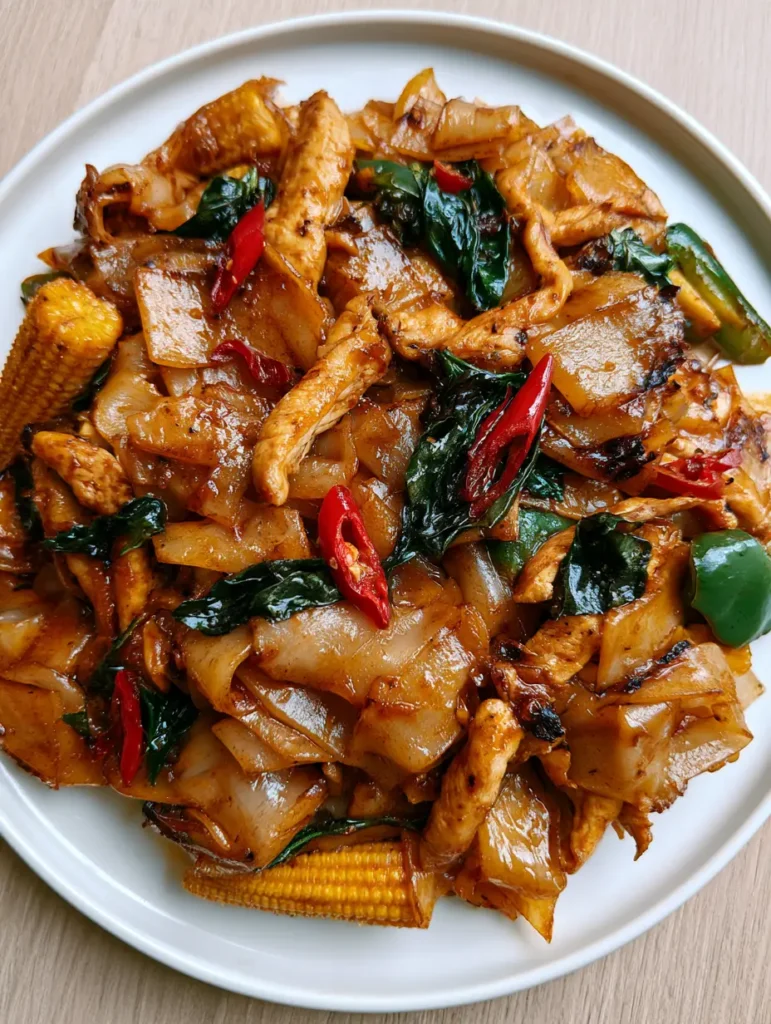
Pour the sauce over the noodles and begin a vigorous tossing motion. You are looking for the “visual cue” of the noodles turning from translucent white to a deep, uniform dark brown. The high heat will cause the edges of the flat noodles to slightly crisp and char.
The Final Aromatic Wilt
Turn off the heat entirely before adding the holy basil leaves. The residual heat of the wok is enough to wilt them into the dark green ribbons described in our visual blueprint. Tossing them at the very end preserves their delicate essential oils.
Garnish the finished plate with a few extra fresh basil leaves and a few remaining slices of red bird’s eye chili for a vibrant color contrast against the minimalist white ceramic plate.
Expert Tips for the Perfect Pad Kee Mao
- Noodle Hydration: If using dried noodles, soak them in lukewarm water until they are flexible but still have a firm “al dente” bite. Over-soaking leads to mushy noodles that break in the wok.
- Don’t Overcrowd: If your wok isn’t large enough, cook in two batches. Overcrowding the pan causes the temperature to drop, resulting in steamed noodles rather than seared ones.
- The Sauce Ratio: If your noodles look pale, add an extra teaspoon of dark soy sauce. This ingredient is primarily for color and provides that rich, mahogany look.
- Spice Control: For a milder dish, deseed the bird’s eye chilies. The heat lives in the pith and seeds; removing them keeps the flavor while lowering the burn.
Serving and Pairing Suggestions
Thai Drunken Noodles are a complete meal on their own, but they pair beautifully with other Southeast Asian-inspired textures. For a refreshing contrast, consider serving a side of fresh cucumber salad with zingy ginger dressing.
If you are hosting a larger dinner party, these noodles serve as an excellent savory base alongside sticky honey garlic shrimp or even crispy wonton tacos for a fusion-style spread.
Storage and Reheating Guidelines
Fresh rice noodles are best enjoyed immediately, as they tend to firm up and lose their chewiness when refrigerated. However, leftovers can be stored in an airtight container for up to 2 days.
To reheat, avoid the microwave if possible. Instead, add a splash of water to a skillet over medium heat, add the noodles, and cover for 1-2 minutes to steam them back to life. This prevents the chicken from becoming rubbery.
Frequently Asked Questions
While Thai Basil is a common substitute, it has a licorice/anise flavor. Holy Basil (Tulsi) is more peppery and clove-like. Use Holy Basil for true authenticity, but Thai Basil will still produce a delicious dish.
If using fresh noodles, gently separate them by hand before adding to the wok. If using dried, ensure they are only soaked to ‘al dente’—they will finish softening in the sauce. Over-soaking is the most common cause of breaking.
Rice noodles are gluten-free, but traditional soy sauce and oyster sauce contain wheat. To make this gluten-free, use Tamari and a certified gluten-free oyster sauce or mushroom sauce.
Dark soy sauce is the key. Unlike regular light soy sauce, dark soy is thicker, less salty, and primarily used for its deep mahogany pigment and subtle molasses sweetness.
There are several theories: one is that the dish is so spicy you need to drink a lot to cool down; another is that it’s a popular late-night ‘hangover’ food; and a third suggests a chef once threw in whatever they had while drunk, creating this masterpiece.
Authentic Thai Drunken Noodles (Pad Kee Mao) Recipe
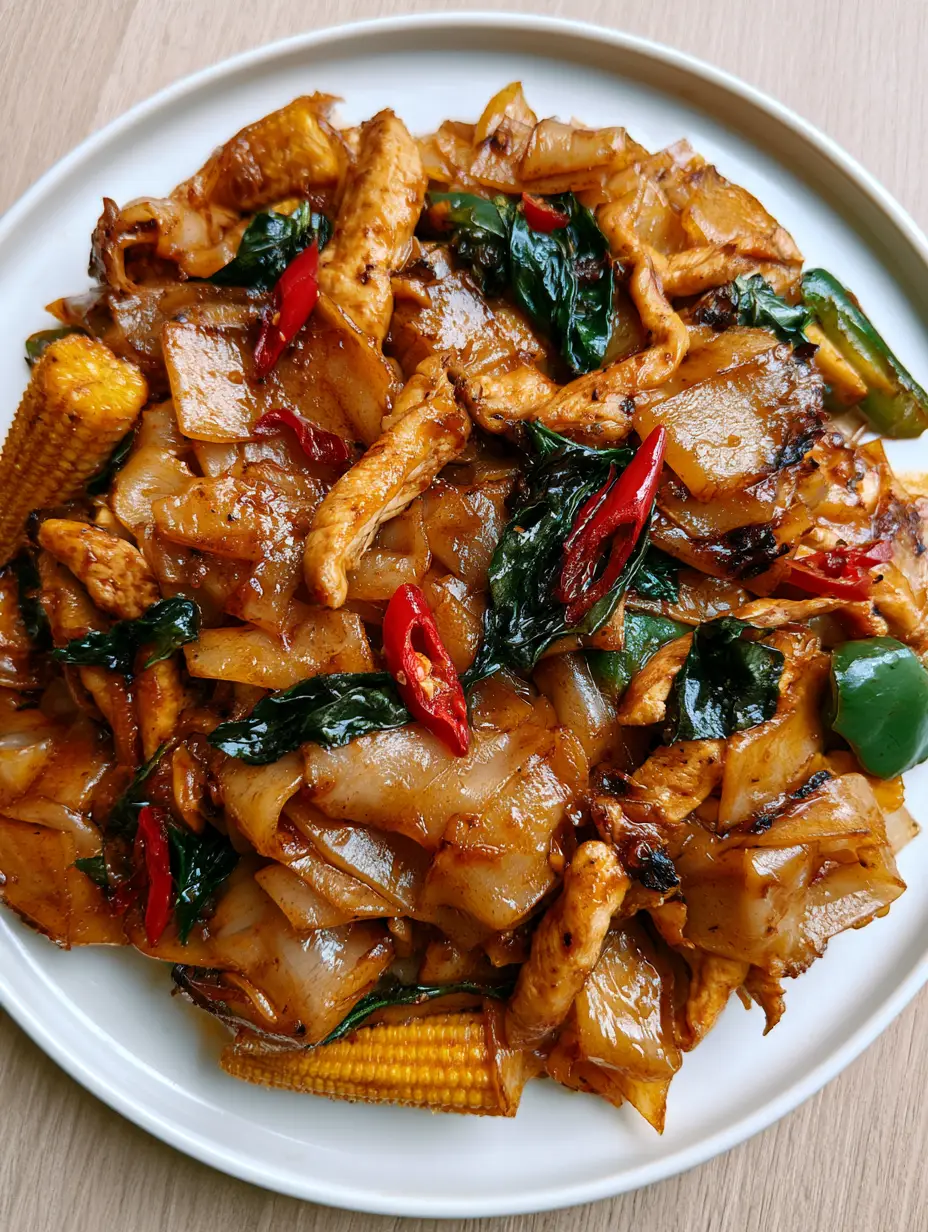
Thai Drunken Noodles: The Ultimate Guide to Wok-Seared Pad Kee Mao
Ingredients
Equipment
Instructions
- Whisk dark soy, light soy, oyster sauce, fish sauce, and sugar in a small bowl until combined.
- Heat 1 tbsp oil in a wok over high heat. Add chicken strips and sear for 90 seconds until a golden crust forms.
- Add minced garlic and bird's eye chilies. Stir for 30 seconds until fragrant.
- Add remaining oil, rice noodles, baby corn, and bell peppers. Pour sauce over noodles. Toss vigorously for 2-3 minutes until noodles are dark brown with charred edges.
- Remove from heat. Add holy basil leaves and toss until wilted. Garnish with fresh basil and remaining chilies.
Notes
Use fresh wide rice noodles if possible for the best translucent texture.
Closing & Call to Action
Mastering Thai Drunken Noodles is a rite of passage for any home cook looking to bring the vibrant energy of Thai street food into their kitchen. The combination of high-heat searing and the aromatic punch of holy basil creates a dish that is truly unforgettable. If you enjoyed this recipe, please leave a comment below and share your results! Don’t forget to follow us on Pinterest for more culinary inspiration.