Mastering the perfect Crusty Italian Bread Recipe is a rite of passage for every home baker. There is something deeply primal and satisfying about pulling a deeply browned, golden-amber loaf from your own oven. This recipe isn’t just about mixing flour and water; it is about capturing that rustic, artisanal essence found in the heart of an Italian bakery.
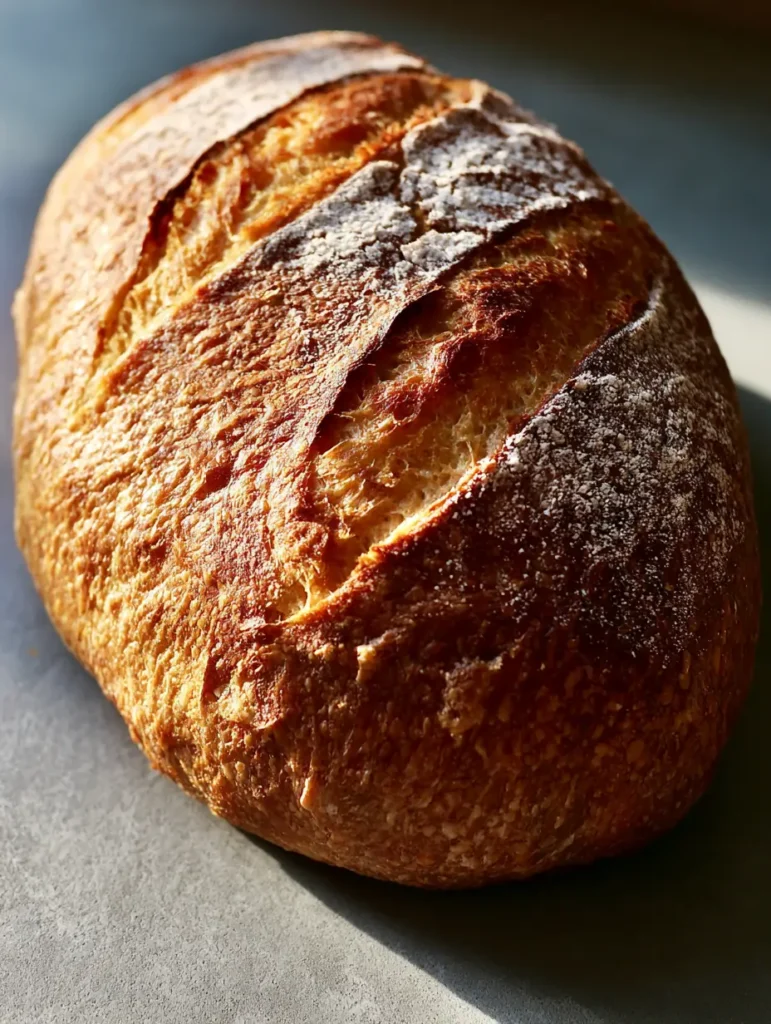
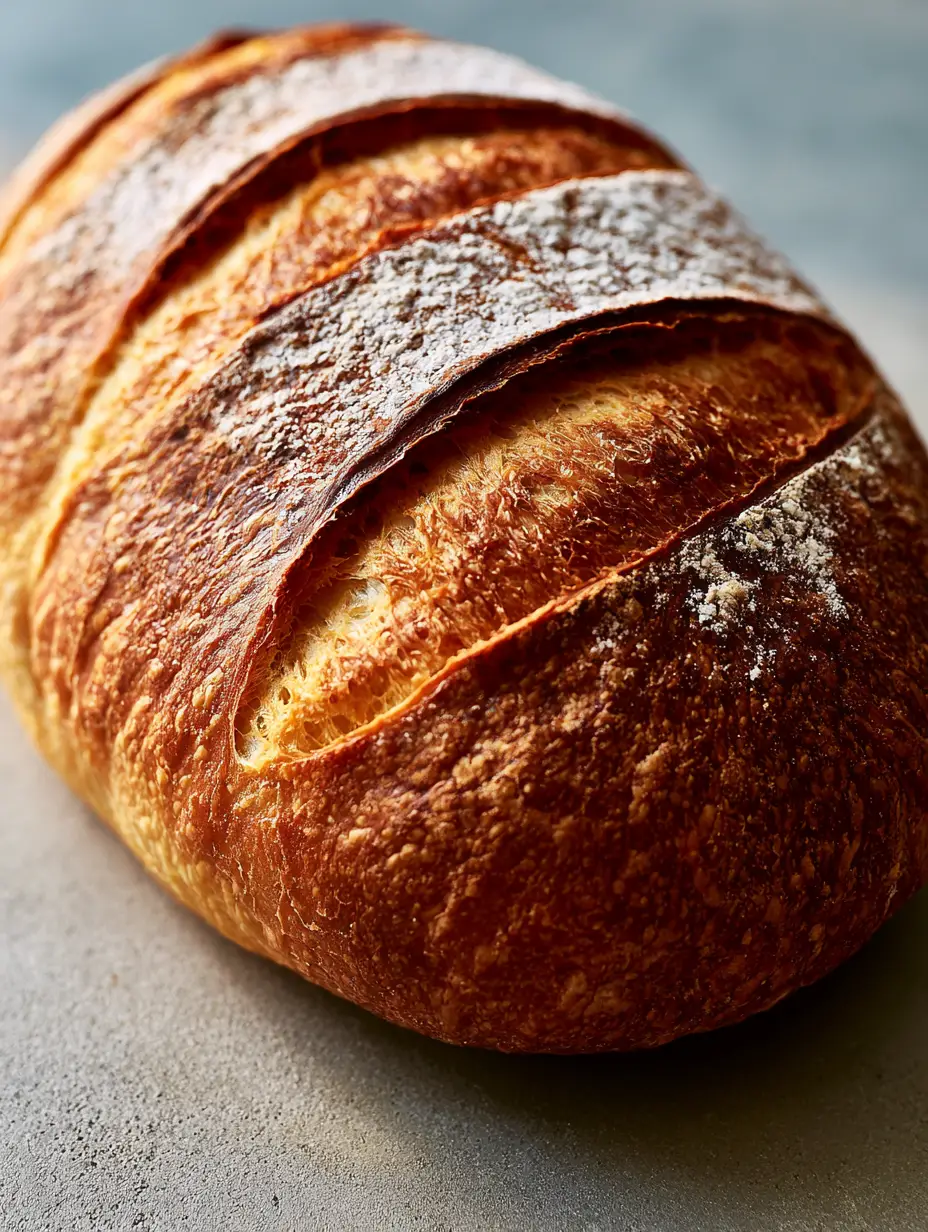
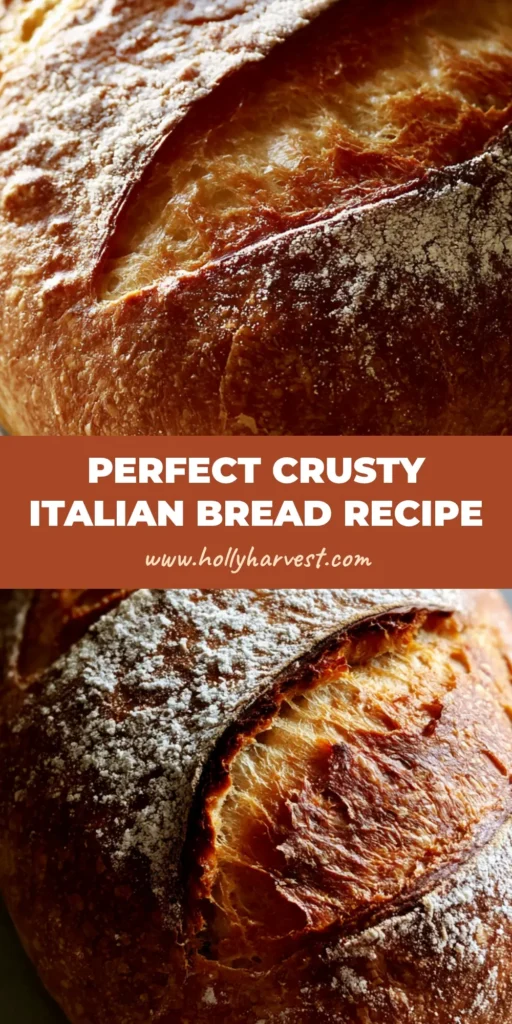
Imagine a loaf with a crackly, firm exterior that yields to a soft, airy interior. The visual hallmark of this bread—the thick, toasted crust and the delicate dusting of white flour on the artisanal scores—is exactly what we are achieving today. Whether you are a beginner or a seasoned pro, this guide will walk you through the science of the perfect crust.
We have designed this Crusty Italian Bread Recipe to replicate the professional results seen in high-end culinary photography. From the specific diagonal scoring to the steam-induced oven spring, every detail is accounted for. Get ready to fill your kitchen with the scent of toasted wheat and yeast.
Why This Is the Only Italian Bread Recipe You Need
- Visual Perfection: This loaf features the iconic golden-amber, crackly crust seen in professional bakes, complete with two prominent diagonal scores.
- Structural Integrity: Using high-protein flour ensures a firm, toasted exterior that holds its oval shape beautifully on a neutral gray cooling surface.
- Artisanal Texture: A fine dusting of white flour remains on the peaks of the crust, providing that sought-after rustic, handheld-photo aesthetic.
- Scientifically Proven: We utilize specific hydration levels and steam-injection techniques to guarantee a craggy, toasted texture every single time.
The Anatomy of Ingredients for an Authentic Italian Loaf
To achieve the visual and textural results of a world-class Crusty Italian Bread Recipe, the quality of your ingredients is paramount. Each component serves a functional purpose in the Maillard reaction and gluten development.
Bread Flour: 3.5 cups (438g). High protein content is non-negotiable for that firm, toasted exterior and the strength needed to support artisanal scoring. This provides the structure that keeps the loaf from flattening during the bake.
Warm Water: 1.25 cups (300ml). Filtered water heated to exactly 105°F-110°F (40°C-43°C) ensures the yeast activates efficiently without being scalded. This hydration level is the secret to a soft crumb and a crackly crust.
Active Dry Yeast: 2.25 tsp (7g). This is the engine of your bread, responsible for the rise and the airy pockets within the loaf. One standard packet is perfectly calibrated for this single oval loaf.
Fine Sea Salt: 1.5 tsp (9g). Beyond flavor, salt regulates the yeast activity and strengthens the gluten strands. It ensures your bread doesn’t rise too quickly and collapse, maintaining that beautiful oval shape.
Granulated Sugar: 1 tsp (4g). A tiny amount of sugar feeds the yeast and assists in the browning process. It helps achieve that deeply browned, golden-amber crust described in our visual blueprint.
Extra Flour for Dusting: 2 tbsp (15g). This is the “cosmetic” ingredient that stays on the peaks of the crust. It provides the visual contrast against the dark, toasted amber of the bread.
Essential Equipment for the Artisan Baker
Achieving a professional result requires the right tools to manipulate heat and moisture. To get that thick, crackly crust, you need to manage the environment inside your oven.
A heavy-duty baking stone or a cast-iron Dutch oven is highly recommended to provide consistent bottom heat. You will also need a sharp bread lame or a razor blade to create those two prominent diagonal artisanal scores. Without a clean cut, the bread will burst in unpredictable places rather than expanding upward.
Finally, a spray bottle filled with water or a shallow pan for the oven floor is essential. Steam is what keeps the surface of the dough supple during the first few minutes of baking, allowing for maximum “oven spring” and a craggy, rustic texture.
The Step-by-Step Evolution of Your Crusty Italian Loaf
Step 1: Activating the Yeast and Initial Mixing
In a large glass bowl, combine your warm water (300ml) and sugar. Sprinkle the yeast over the surface and let it sit for about 5-10 minutes. You are looking for a foamy, bubbly head to form, which signals the yeast is alive and ready to work.
Once foamy, stir in the sea salt and begin adding the bread flour (438g) one cup at a time. Use a sturdy wooden spoon or a Danish dough whisk until a shaggy, sticky mass forms. This is where the gluten begins to wake up.
Step 2: The Art of the Knead
Turn the dough onto a lightly floured surface. Knead the dough for 8-10 minutes by hand, or 5 minutes in a stand mixer with a dough hook. You are looking for a smooth, elastic consistency that “springs back” when poked.
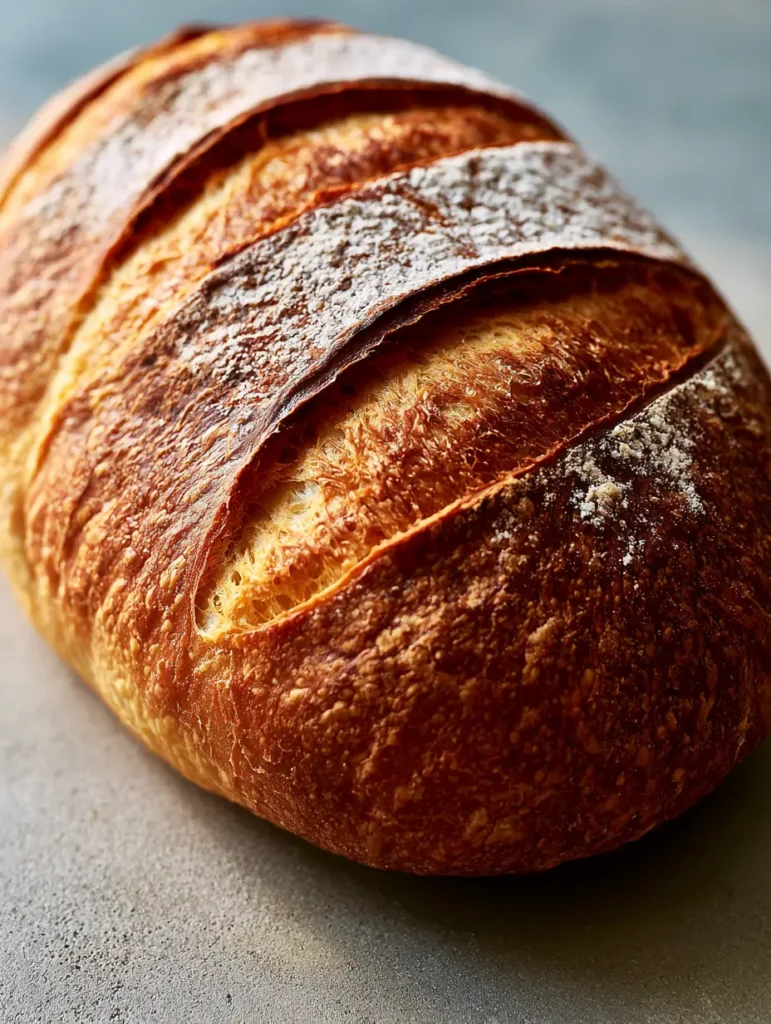
The dough should be firm enough to hold its shape but still slightly tacky to the touch. This balance is critical for achieving the oval-shaped loaf featured in our visual guide. Place it in a lightly oiled bowl and cover with a damp cloth.
Step 3: The Bulk Fermentation (First Rise)
Allow the dough to rise in a warm, draft-free spot for about 1 to 1.5 hours. It should double in size. This stage is where the complex, toasted wheat flavors develop within the dough.
If your kitchen is cold, you can place the bowl inside an oven that is turned off, with the oven light on. The small amount of heat from the bulb creates a perfect proofing environment.
Step 4: Shaping the Oval Loaf and Final Proof
Gently punch down the dough to release excess gas. Shape it into a rustic, oval loaf by folding the sides into the center and rolling it over. Ensure the seam is on the bottom to maintain a smooth top surface.
Place the loaf on a piece of parchment paper. Cover it loosely and let it rise for another 45 minutes. This second rise ensures the interior is light and airy, preventing a dense or “brick-like” loaf.
Step 5: Scoring and Creating the “Grigne”
Preheat your oven to 425°F (218°C). Place a shallow pan on the bottom rack. Just before the bread goes in, use a sifter to apply a fine dusting of white flour over the top of the loaf.
Using a sharp lame or razor, make two deep diagonal scores across the top. These scores should be about 1/2 inch deep. This creates the “peaks” where the white flour will remain visible after the crust browns.
Step 6: The Steam Bake for Maximum Crackle
Slide the loaf (on its parchment) onto the hot baking stone. Pour 1 cup of hot water into the shallow pan on the bottom rack and quickly close the door. This burst of steam is the secret to a thick, deeply browned, and crackly golden-amber crust.
Bake for 25-30 minutes. You are looking for a deep amber-gold hue and a firm exterior. If you tap the bottom of the loaf, it should sound hollow. The sensory cues of a successful bake include the “crackle” sound of the crust as it hits the cooler air.
Expert Tips for the Perfect Crusty Italian Bread Recipe
- The Flour Dusting Trick: Apply the flour before scoring. This ensures the flour only sits on the peaks, while the scores open up to reveal the dark, toasted interior of the bread.
- Internal Temperature: For perfect doneness, use an instant-read thermometer. The center of the loaf should reach 190°F-200°F (88°C-93°C).
- Don’t Slice Too Early: As tempting as it is, wait at least 30 minutes. The bread continues to cook and set its structure as it cools on the gray neutral surface.
- Steam Control: If you don’t have a steam pan, use a spray bottle to mist the oven walls every 3 minutes for the first 9 minutes of baking.
The Best Ways to Store and Refresh Your Loaf
Because this Crusty Italian Bread Recipe contains no preservatives, it is best enjoyed the day it is made. However, if you have leftovers, wrap the loaf in a clean kitchen towel rather than plastic. Plastic will soften that beautiful crackly crust and make it chewy.
To refresh a day-old loaf, mist the crust lightly with water and place it in a 350°F (175°C) oven for 5-8 minutes. This reactivates the crispness and brings back that “just baked” aroma. You can also freeze the loaf by wrapping it tightly in foil and plastic wrap for up to 3 months.
What to Serve With This Crusty Italian Loaf
This bread is a versatile workhorse in the kitchen. Its firm structure makes it the perfect vessel for soaking up sauces or acting as a base for hearty toppings. We love pairing a thick slice with a vibrant Peach Burrata Salad for a contrast in textures.
If you are looking for a full meal, serve it alongside Mediterranean Baked Salmon to mop up the citrusy juices. For a more casual lunch, this bread is the ideal companion for dipping into a fresh Cowboy Caviar Recipe (coming soon) or alongside a bowl of One-Pot Creamy Garlic Pasta (coming soon).
For those who love a rustic sandwich, use these slices to create an elevated version of Crack Burgers, or simply toast it and top it with a spread for a BBQ Chicken Flatbread style snack.
Frequently Asked Questions
While you can use All-Purpose flour, Bread Flour is preferred because its higher protein content (12-14%) creates a stronger gluten network. This results in a better ‘oven spring’ and the firm, toasted exterior characteristic of Italian loaves.
Visually, the crust should be a deep golden-amber. Sensorialy, the loaf should sound hollow when tapped on the bottom. For precision, the internal temperature should reach between 190°F and 200°F (88°C-93°C).
The secret is steam. By placing a pan of hot water in the oven during the first few minutes of baking, you prevent the crust from setting too quickly, allowing the loaf to expand and develop a thick, crackly, golden-amber exterior.
This usually happens if the yeast was expired, the water was too hot (killing the yeast), or the dough didn’t rise long enough. Ensure your dough doubles in size during the bulk fermentation to achieve a light, airy crumb.
Scoring isn’t just for looks; it controls where the bread expands. Two diagonal scores allow the dough to grow upward and outward symmetrically, creating those beautiful artisanal peaks dusted with flour.
The Master Crusty Italian Bread Recipe
Crusty Italian Bread Recipe: The Ultimate Guide to Artisan Loaves
Ingredients
Equipment
Instructions
- Combine warm water (300ml) and sugar in a bowl. Sprinkle yeast over and let stand for 5-10 minutes until foamy.
- Stir in salt and bread flour. Knead by hand for 8-10 minutes until smooth and elastic. The dough should spring back when touched.
- Place dough in an oiled bowl, cover, and let rise in a warm spot for 1-1.5 hours until doubled in size.
- Punch down dough and shape into a rustic oval. Place on parchment paper and let rise for another 45 minutes.
- Preheat oven to 425°F (218°C). Dust the loaf with flour and use a blade to make two diagonal scores 1/2 inch deep.
- Place loaf in oven with a pan of hot water on the bottom rack. Bake for 25-30 minutes until the crust is golden-amber and crackly.
Notes
Don't skip the steam; it's essential for the thick, crackly crust texture.
Bring the Italian Bakery Home Today
There is nothing quite like the pride of presenting a homemade, artisanal loaf to your family. This Crusty Italian Bread Recipe delivers on every visual and sensory promise—from the toasted wheat aroma to the deeply browned, crackly golden-amber crust. It is a testament to the beauty of simple ingredients handled with care.
We invite you to share your baking journey with us! Did your scores open up beautifully? Was that first crunch as satisfying as you hoped? Leave a comment below and let us know your results. Don’t forget to save this recipe to your “Baking Essentials” board on Pinterest so you can find it every time the craving for fresh bread hits!