Mastering the perfect Chicken Shawarma Recipe at home is the holy grail for lovers of Middle Eastern street food. Imagine thin ribbons of succulent chicken, stained a vibrant yellow-orange from a complex spice rub, boasting those irresistible charred, crispy edges that usually require a vertical rotisserie. This recipe delivers that exact sensory experience, topped with a velvety, opaque white garlic sauce that cuts through the warmth of the spices.
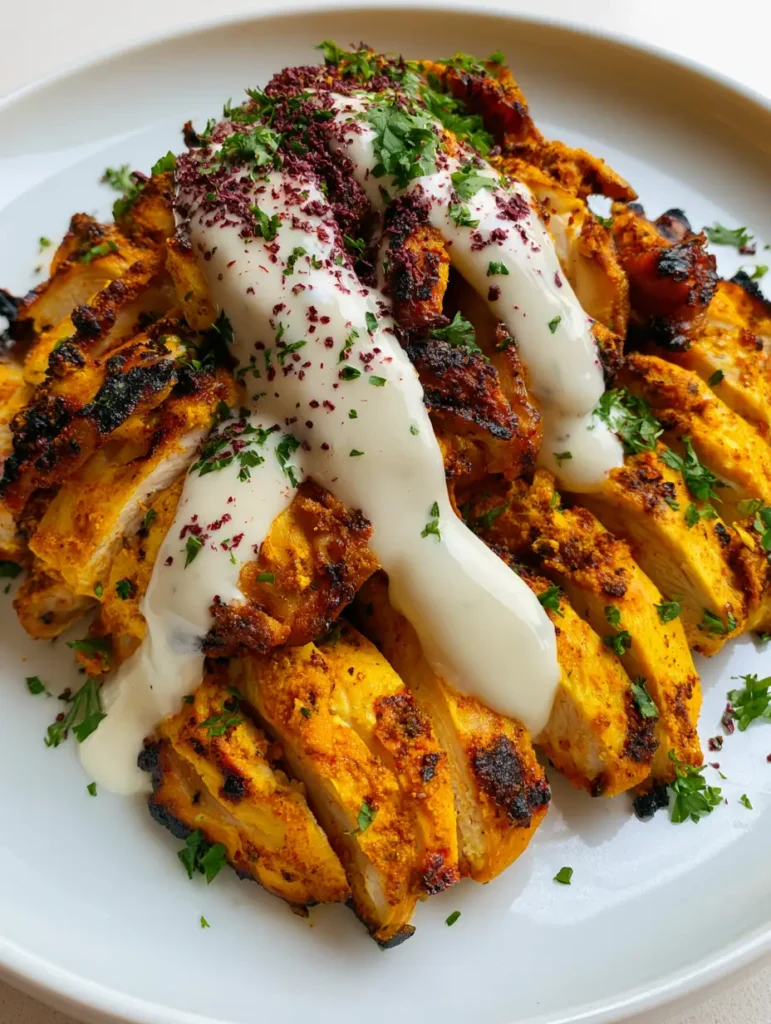
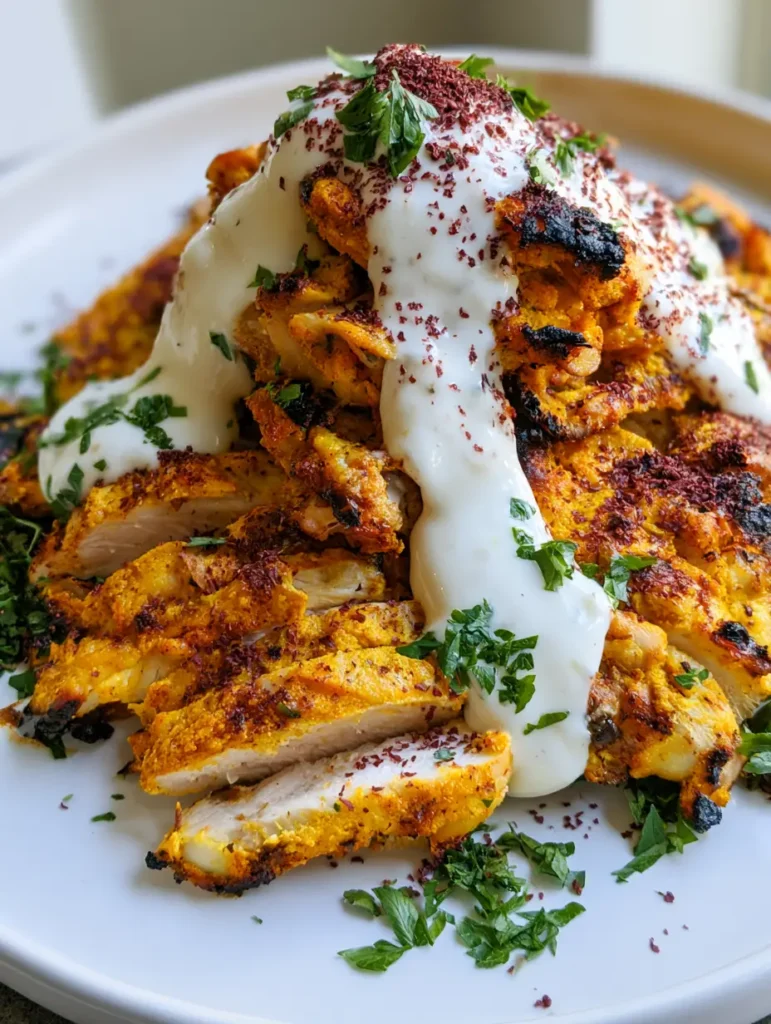
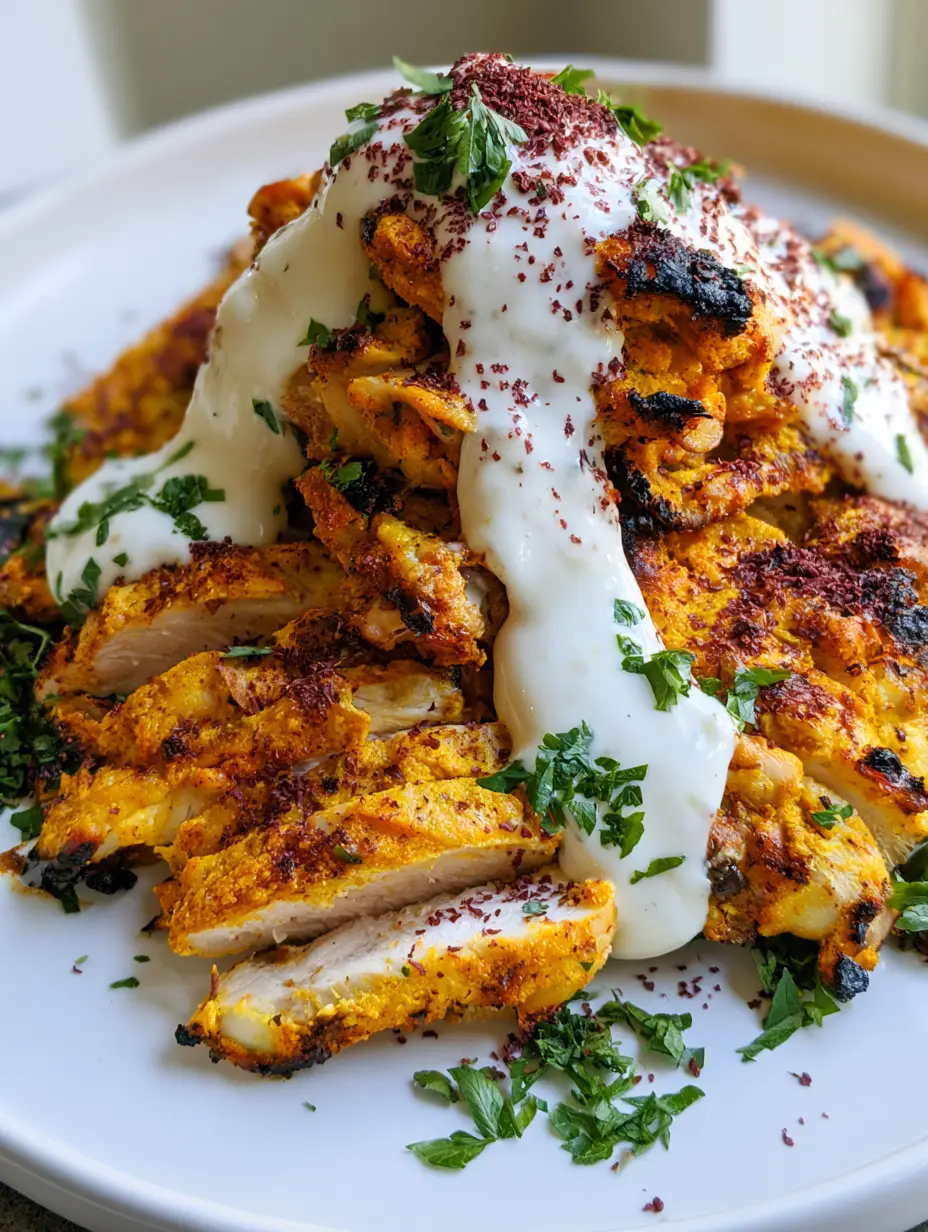
The visual appeal is undeniable: the contrast of the golden meat against a plain white ceramic plate, finished with a dusting of reddish-purple sumac and a forest of fresh green parsley. It is a dish that tastes just as vibrant as it looks, bringing the aromatic bustle of a Levantine market directly into your kitchen.
Whether you are a seasoned home cook or a weekend warrior, this guide will walk you through the science of the marinade and the technique of the sear. We are going to achieve restaurant-quality results using accessible tools and high-impact ingredients.
Why This Is the Only Chicken Shawarma Recipe You Need
- Visual Authenticity: We focus on the “charred spice marinade” to ensure your chicken looks exactly like the street-food classics, featuring visible blackened edges and a rich orange hue.
- Texture Contrast: By using specific high-heat techniques, we achieve the dual texture of tender, juicy interior meat and crispy, snap-crisp exteriors.
- The “Liquid Gold” Garlic Sauce: Our recipe includes a foolproof method for a thick, creamy garlic sauce (Toum style) that stays stable and provides that essential bite.
- Scientific Marination: We use an acid-and-enzyme approach to break down the connective tissue in chicken thighs, ensuring every bite is melt-in-your-mouth tender.
The Anatomy of Flavor: Essential Ingredients for Chicken Shawarma
Boneless Skinless Chicken Thighs (2 lbs / 900g): Thighs are non-negotiable for this Chicken Shawarma Recipe because their higher fat content allows for the long searing time needed to get those charred edges without drying out the meat.
Extra Virgin Olive Oil (1/4 cup / 60ml): This serves as the fat-soluble carrier for our spices, ensuring the turmeric and paprika bloom and coat the meat evenly for that vibrant yellow-orange color.
Fresh Lemon Juice (3 tbsp / 45ml): The citric acid acts as a tenderizer, brightening the heavy spices and helping to “cook” the surface of the meat during the marination phase.
Ground Turmeric (1 tsp / 5g): This is the primary pigment responsible for the vibrant yellow-orange spice rub described in our visual blueprint.
Smoked Paprika (1 tsp / 5g): Adds a subtle earthiness and contributes to the deep reddish-orange tones of the finished dish.
Ground Cumin and Coriander (1 tsp each / 5g): These provide the classic aromatic backbone, offering warm, citrusy, and nutty notes that are synonymous with authentic shawarma.
Garlic Cloves (6 large): Freshly minced garlic in the marinade provides the base flavor, while the sauce requires an additional head of garlic for that pungent, creamy punch.
Ground Red Sumac (1 tbsp / 15g): These reddish-purple flakes provide a unique tartness and a beautiful visual pop against the white garlic sauce.
Fresh Flat-Leaf Parsley (1/2 cup / 30g): Finely chopped green parsley adds a necessary herbaceous freshness and a brilliant color contrast to the charred meat.
Must-Have Equipment for Culinary Success
Cast Iron Skillet or Heavy Bottomed Griddle: To achieve the “visible charred edges” mentioned in the visual prompt, you need a surface that retains high heat better than stainless steel or non-stick pans.
Sharp Chef’s Knife: Essential for achieving the “thinly sliced” texture of the chicken thighs after they have been grilled.
Food Processor or High-Speed Blender: Necessary for emulsifying the garlic and oil into a thick, opaque white sauce that can be poured in a “thick stream.”
The Step-by-Step Evolution of a Masterpiece
1. Developing the Vibrant Yellow-Orange Marinade
In a large glass bowl, whisk together your olive oil, lemon juice, turmeric, paprika, cumin, coriander, and minced garlic. You should see a thick, bright orange paste form; this is the soul of your Chicken Shawarma Recipe.
Add your chicken thighs to the bowl, ensuring every crevice is coated. Let this marinate for at least 4 hours, though overnight is preferred for the spices to penetrate deep into the muscle fibers.
2. The Emulsion: Creating the Opaque Garlic Sauce
While the chicken marinates, prepare the garlic sauce (Toum). Place peeled garlic cloves and salt in a food processor and pulse until finely minced. With the motor running, very slowly drizzle in neutral oil (like grapeseed) in a pin-sized stream.
Alternate the oil with small splashes of lemon juice. Continue this process until the mixture transforms into a thick, fluffy, white cloud that holds its shape—perfect for pouring over the meat later.
3. Achieving the Perfect Char
Heat your cast iron skillet over medium-high heat until it is wisps of smoke begin to rise. Place the chicken thighs in the pan, ensuring you do not overcrowd them; work in batches if necessary.
Listen for the aggressive sizzle—this is the sound of the Maillard reaction. Sear for 6-8 minutes per side. You are looking for a deep, dark golden-brown crust with specific areas of black charring on the edges.
4. Slicing for Street-Food Texture
Once the chicken reaches an internal temperature of 165°F (74°C), remove it from the heat and let it rest for 5 minutes. This allows the juices to redistribute, ensuring the meat stays succulent.
Using a sharp knife, slice the chicken into thin strips, roughly 1/4 inch (6mm) wide. You will see the beautiful contrast between the orange exterior and the juicy, white interior.
Expert Tips for the Ultimate Chicken Shawarma
- Don’t Clean the Pan: Those little brown bits (fond) left in the pan after the first batch are concentrated flavor. Use them to toast your pita or simply toss the sliced chicken back in for 30 seconds to pick them up.
- Temperature Control: If the chicken is browning too fast but is still raw inside, lower the heat slightly, but never lose that sizzle.
- The Resting Period: Cutting the chicken too soon will cause the juices to run out, leaving you with dry meat instead of the succulent piles shown in the visual blueprint.
- Sumac Placement: Always add the sumac last. Its reddish-purple color bleeds when wet, so sprinkling it over the sauce right before serving ensures the most striking visual.
Optimal Storage and Reheating Methods
Leftover chicken from this Chicken Shawarma Recipe can be stored in an airtight container in the refrigerator for up to 4 days. To maintain the charred texture, reheat the sliced meat in a dry skillet over high heat for 2-3 minutes rather than using a microwave.
The garlic sauce will keep for up to 2 weeks in the fridge. However, do not freeze the garlic sauce, as the emulsion will break, leaving you with a greasy mess instead of a creamy topping.
What to Serve with This Vibrant Dish
To turn this into a full Mediterranean feast, consider pairing your shawarma with various textures. A cauliflower shawarma bowl makes an excellent vegetable-forward side dish that echoes the spice profile.
If you prefer a wrap format, try serving the chicken inside a toasted pita, much like a chicken torta but with Middle Eastern flair. For a lighter option, a fresh cucumber and tomato salad provides a cooling crunch that balances the heat of the charred chicken.
If you’re looking for more global chicken inspiration, our chipotle chicken bowl offers a similarly charred, spice-forward experience from a different culinary tradition.
Frequently Asked Questions
While you can use breast, thighs are highly recommended because their fat content allows for the high-heat searing required to get charred edges without the meat becoming dry.
A heavily preheated cast iron skillet or griddle is the best tool. The high heat retention creates a sear that mimics the crispy exterior of traditional rotisserie shawarma.
This recipe uses a traditional Toum, which is an emulsified garlic sauce that is thick, white, and opaque, providing a much sharper bite than tahini.
The signature color comes from the combination of ground turmeric and smoked paprika in the marinade, which blooms in the olive oil to coat the meat.
That is sumac, a dried berry spice that is reddish-purple in color. It adds a pleasant tart, lemony flavor and beautiful visual contrast to the dish.
The Final Masterpiece: Homemade Chicken Shawarma
Chicken Shawarma Recipe: The Ultimate Guide to Juicy, Charred Perfection
Ingredients
Equipment
Instructions
- Combine olive oil, lemon juice, turmeric, paprika, cumin, and garlic into a vibrant orange paste.
- Toss chicken thighs in the marinade and refrigerate for 4-24 hours.
- Heat a cast iron skillet and sear chicken for 6-8 minutes per side until visible charred edges form.
- Let rest for 5 minutes, then thinly slice into ribbons.
- Pile sliced chicken on a plate, pour over a thick stream of garlic sauce, and sprinkle with sumac and parsley.
Notes
Add the sumac right before serving to keep the reddish-purple flakes vibrant.
Bringing the Streets of the Levant to Your Table
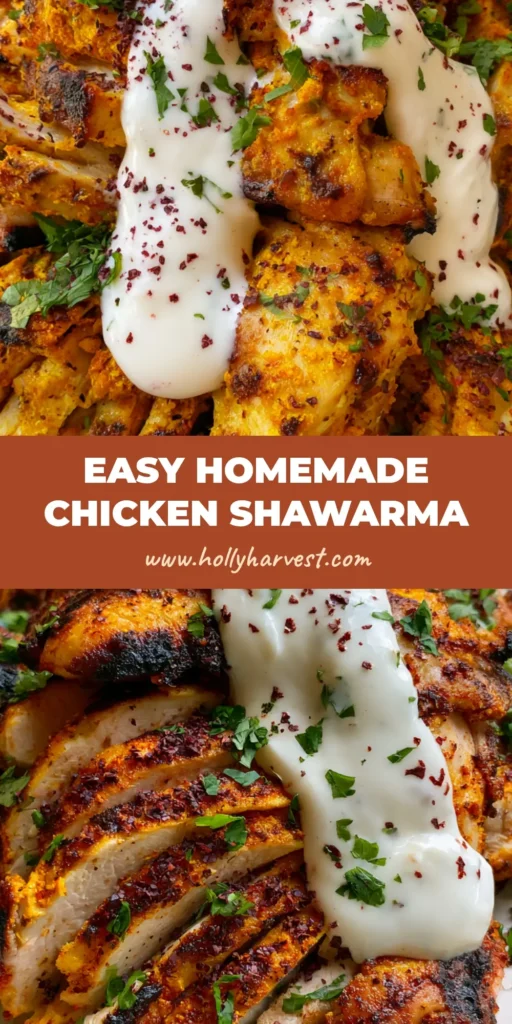
The beauty of this Chicken Shawarma Recipe lies in its balance: the warmth of the turmeric-stained meat, the cooling punch of the garlic sauce, and the acidic brightness of the sumac. It is a visual and culinary triumph that proves you don’t need a professional rotisserie to achieve professional results.
If you enjoyed this recipe, please leave a comment below and let us know how your char turned out! Don’t forget to share your creations and follow us on Pinterest for more vibrant, kitchen-tested recipes.