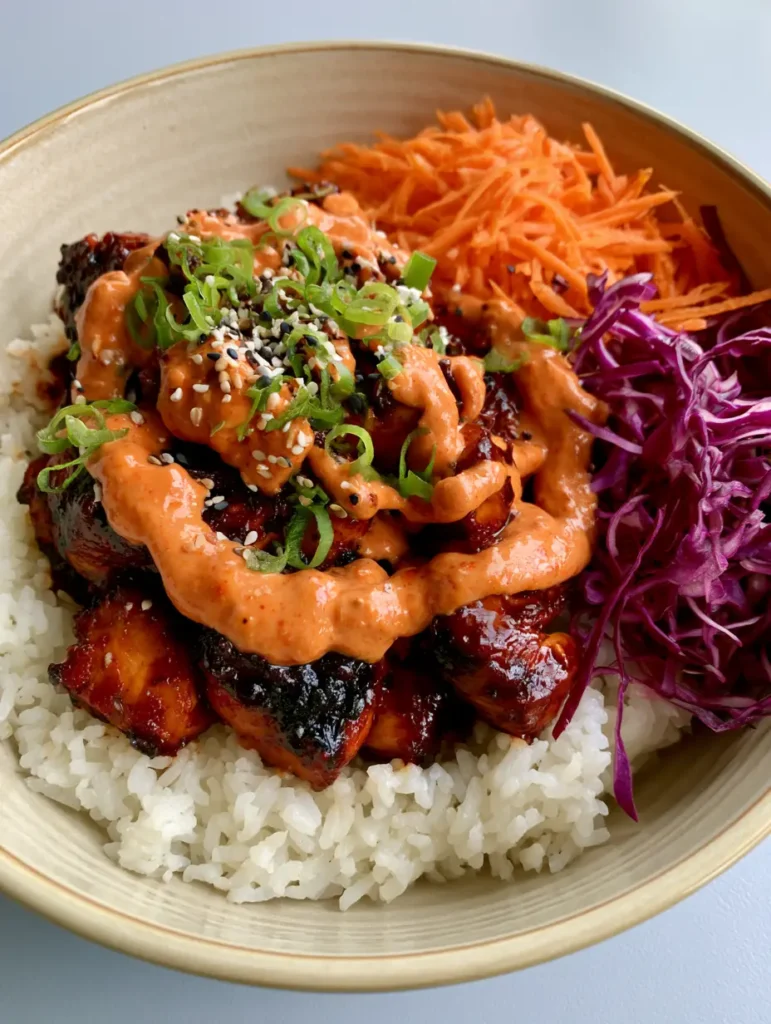
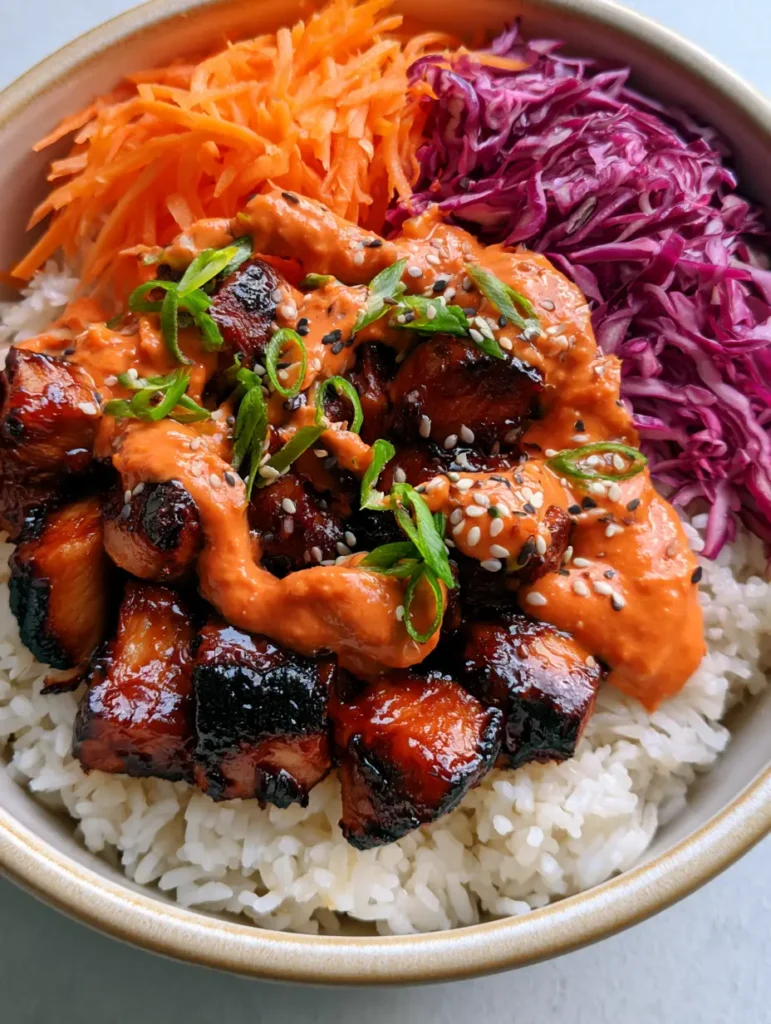
There is something inherently satisfying about a meal that hits every single flavor profile—sweet, salty, spicy, and umami—while offering a visual feast of vibrant colors. These Korean BBQ Chicken Bowls are designed to be that perfect “everything” meal. Imagine tender, caramelized chicken chunks coated in a dark, glossy glaze resting atop a cloud of fluffy white rice, surrounded by the crunch of fresh vegetables.
The beauty of the Korean BBQ Chicken Bowls lies in the contrast of temperatures and textures. We are pairing piping hot, charred chicken with stone-cold shredded carrots and red cabbage, then tying it all together with a velvety, salmon-colored gochujang sauce. It is a handheld-photo-worthy dish that tastes even better than it looks in a smartphone snap under soft natural light.
Whether you are looking for a weeknight dinner that feels like a gourmet treat or a high-protein meal prep option that won’t get boring by Wednesday, this recipe delivers. Much like our chipotle chicken bowl, this dish focuses on building layers of flavor in a single vessel for maximum satisfaction and minimal cleanup.
Why You Will Crave These Vibrant Korean BBQ Chicken Bowls
- The Ultimate Glaze: We use a high-heat caramelization technique to ensure every chicken chunk has a dark, glossy, and slightly charred exterior that mimics a traditional charcoal grill.
- Textural Harmony: Between the fluffy steamed rice, the snappy raw cabbage, and the creamy sauce, every bite offers a different sensory experience.
- Customizable Heat: The creamy orange gochujang sauce allows you to control the spice level, making it accessible for those who prefer mild flavors or those who want a kick similar to spicy beef ramen.
- Visual Brilliance: The bright orange carrots and vibrant purple red cabbage don’t just provide nutrients; they make the bowl look like a professional culinary creation.
The Anatomy of a Perfect Korean Bowl: Key Ingredients
To achieve the professional results seen in our visual blueprint, each ingredient must be selected for both its flavor and its visual contribution. Here is what you will need to gather for your Korean BBQ Chicken Bowls.
The Protein and the Glossy Glaze
Chicken Breast: 1.5 lbs (680g) of boneless, skinless chicken breast cut into 1-inch (2.5cm) chunks. This cut stays lean while absorbing the dark glaze perfectly.
Soy Sauce: 1/2 cup (120ml) of low-sodium soy sauce provides the salty, umami base required for that signature Korean BBQ depth.
Brown Sugar: 1/3 cup (65g) of packed light brown sugar. This is the “secret” to the caramelization; the sugar melts and bubbles into a thick syrup that clings to the meat.
Toasted Sesame Oil: 1 tbsp (15ml) added at the end of the glaze process to provide an aromatic, nutty finish that doesn’t burn off during high-heat cooking.
Fresh Ginger and Garlic: 1 tbsp (6g) of each, finely grated. These aromatics provide the sharp, fresh bite that balances the sweetness of the glaze.
The Fresh and Crunchy Elements
White Rice: 2 cups (370g) of dry long-grain or medium-grain white rice. Once steamed, this provides the neutral, fluffy base that soaks up the extra sauce.
Red Cabbage: 2 cups (180g) of very thinly shredded purple cabbage. This adds a peppery crunch and a stunning color contrast against the dark chicken.
Carrots: 1 cup (125g) of shredded raw carrots. These provide a natural sweetness and a bright orange pop that makes the bowl visually “sing.”
The Creamy Gochujang Drizzle
Gochujang Paste: 2 tbsp (30g) of fermented Korean chili paste. This is what gives the sauce its signature “salmon” color and complex heat.
Mayonnaise: 1/2 cup (115g) of high-quality mayonnaise. This mutes the sharpness of the chili paste and creates a thick, creamy drizzle.
Rice Vinegar: 1 tsp (5ml) to add a touch of acidity, cutting through the richness of the mayo.
Essential Equipment for Authentic Caramelization
While you don’t need a specialized kitchen to make Korean BBQ Chicken Bowls, certain tools will help you achieve the “charred” visual described in the Midjourney prompt.
A heavy-bottomed cast iron skillet or a large stainless steel frying pan is superior to non-stick for this recipe. You want the chicken to stick slightly so that the sugars in the glaze can undergo the Maillard reaction, creating that dark, glossy crust.
You will also need a sharp chef’s knife or a mandoline slicer. The cabbage and carrots should be “thinly shredded”—almost like a slaw—to ensure they are easy to eat and don’t overwhelm the delicate rice base. If you enjoy recipes with finely prepped veggies, you might also like the vegetable-heavy profile of our chicken chow mein.
Step-by-Step: Mastering the Korean BBQ Chicken Bowls
1. Steaming the Perfect Fluffy Rice
Begin by rinsing 2 cups (370g) of white rice under cold water until the water runs clear. This removes excess surface starch, ensuring the grains are fluffy rather than gummy. Combine with 3 cups (710ml) of water in a pot, bring to a boil, then reduce to a simmer and cover for 15-18 minutes. Once done, let it sit covered off the heat for 5 minutes before fluffing with a fork.
2. Prepping the Vibrant “Rainbow” Garnish
While the rice cooks, shred your red cabbage and carrots. Aim for matchstick-thin pieces. The thinner the vegetables, the better they will interact with the creamy sauce. Keep them in separate mounds to maintain that distinct “mound” look seen in the visual blueprint. Thinly slice 3 green scallions on a bias for a professional finish.
3. Achieving the Dark, Glossy Chicken Char
Pat the chicken chunks dry with paper towels. Season lightly with salt. Heat 2 tbsp (30ml) of neutral oil in your skillet over medium-high heat until it shimmers. Add the chicken in a single layer, leaving space between chunks. Visual Cue: Do not move the chicken for the first 3 minutes. You want to see a deep golden-brown crust form on the bottom before flipping.
Once the chicken is mostly cooked, pour in the soy sauce, brown sugar, ginger, and garlic mixture. Sensory Cue: The sauce will begin to bubble aggressively and release a sweet, pungent aroma. Continue to toss the chicken as the liquid reduces into a thick, dark, mahogany syrup. It should look “glazed” and shiny, not watery.
4. Whisking the Creamy Orange Drizzle
In a small bowl, combine the mayonnaise, gochujang, and rice vinegar. Whisk until the color is a uniform, pale salmon-orange. If the sauce is too thick to drizzle, add 1 tsp (5ml) of water at a time until it reaches a “ribbon” consistency. This sauce is a great topper for many dishes, including a chicken torta for a fusion twist.
Expert Tips for Culinary Success
- Don’t Overcrowd the Pan: If you add too much chicken at once, the temperature of the skillet will drop, and the chicken will steam in its own juices rather than caramelizing. Cook in batches if necessary.
- The “Glossy” Secret: If your glaze looks dull, add a teaspoon of honey or corn syrup at the very end. The glucose molecules provide an extra-shiny finish that catches the light beautifully.
- Temper the Spice: Gochujang brands vary in heat. Start with 1 tablespoon and taste the sauce before adding the second. You can always add more, but you can’t take it out!
- Rice Variety: While white rice is the blueprint standard, you can swap for brown rice or even quinoa. If you prefer a more “fusion” bowl approach, consider the base used in our teriyaki chicken bowl.
Storing and Reheating Your Leftovers
The Korean BBQ Chicken Bowls are exceptional for meal prep, but there is a trick to storing them. Keep the glazed chicken and rice in one container, and the raw cabbage and carrots in another. This prevents the vegetables from wilting when you reheat the chicken.
Refrigerator: Store for up to 4 days in airtight containers. To reheat, microwave the chicken and rice for 90 seconds with a damp paper towel draped over the top to keep the rice moist.
Freezing: The glazed chicken freezes beautifully for up to 3 months. However, we do not recommend freezing the raw vegetables or the gochujang sauce, as the texture will degrade significantly upon thawing.
What to Serve With These Bowls
These bowls are a complete meal on their own, but if you are hosting a larger dinner party, they pair perfectly with a side of crispy wontons or a cucumber salad. If you have leftover gochujang sauce, it makes an incredible dip for oven-baked chicken drumsticks.
For a lighter side, a simple miso soup or some steamed edamame with sea salt rounds out the Korean-inspired experience. If you enjoy the sweet and savory notes of this dish, you should also try our teriyaki chicken wonton tacos for your next gathering.
Frequently Asked Questions
Absolutely. You can whisk the soy sauce, sugar, ginger, and garlic together and store it in the fridge for up to a week. Simply pour it over the seared chicken when ready to cook.
Yes! Chicken thighs have a higher fat content and will stay even juicier. Just ensure you sear them long enough to render the fat and achieve that signature char.
Gochujang has a fermented, savory heat, but when mixed with mayonnaise as a ‘creamy orange sauce,’ the spiciness is significantly mellowed, resulting in a mild-to-medium kick.
To make it gluten-free, replace the soy sauce with tamari or coconut aminos and ensure your gochujang paste is certified gluten-free, as some brands use barley malt.
For the finest texture, use a mandoline slicer or the shredding attachment on a food processor. A sharp chef’s knife also works if you take your time to cut very thin strips.
The Ultimate Korean BBQ Chicken Bowl Recipe
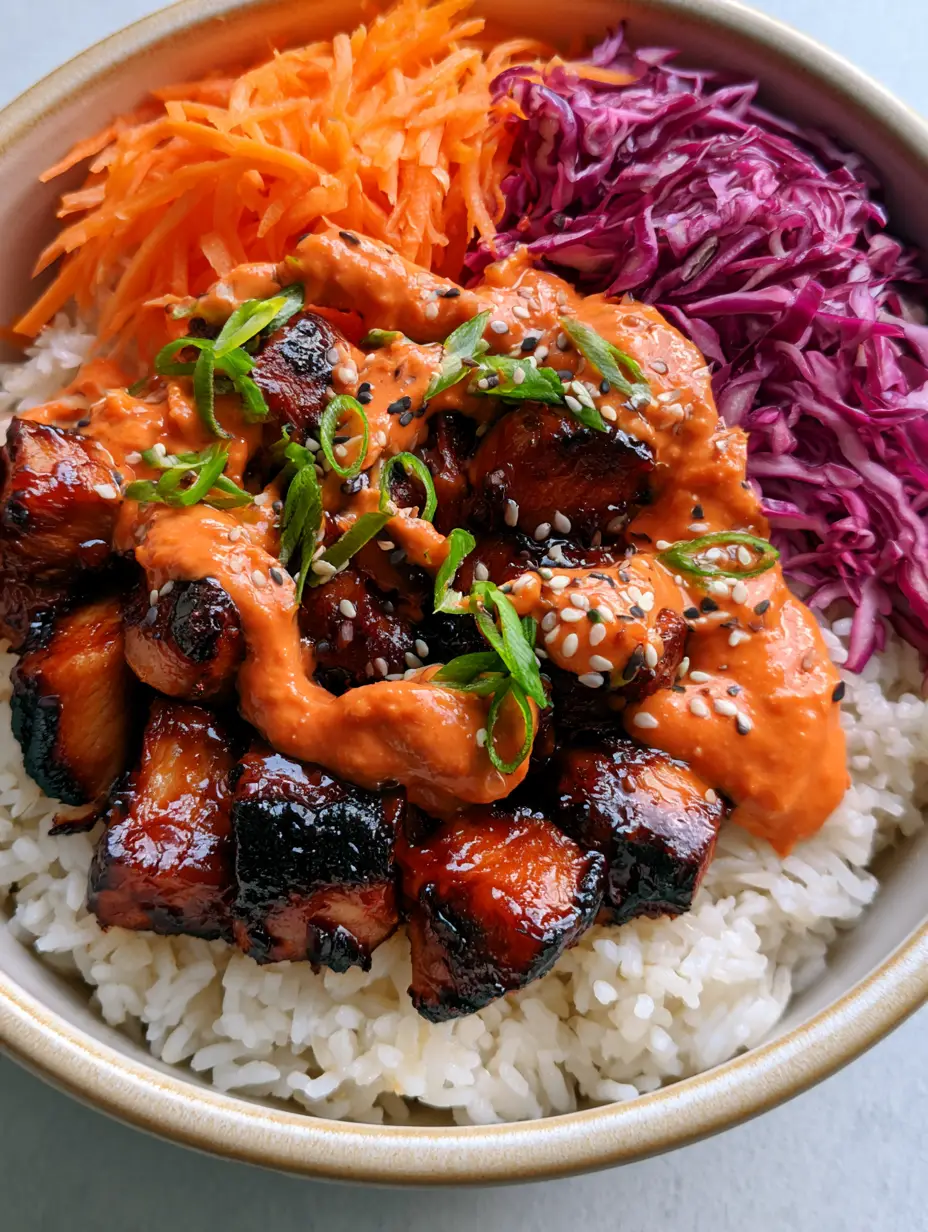
Korean BBQ Chicken Bowls with Creamy Gochujang Drizzle
Ingredients
Equipment
Instructions
- Rinse rice and cook according to package instructions until fluffy.
- Thinly shred the red cabbage and carrots; slice the green onions.
- Sear chicken chunks in a hot skillet until a dark brown crust forms.
- Add soy sauce, sugar, garlic, and ginger. Simmer until the sauce becomes a dark glossy glaze.
- Layer rice, chicken, and vegetables in bowls. Drizzle with gochujang sauce and garnish with sesame seeds.
Notes
Keep raw veggies separate if meal prepping to maintain crunch.
Closing & Call to Action
These Korean BBQ Chicken Bowls prove that healthy eating doesn’t have to be bland or boring. With their dark, caramelized glaze and creamy, spicy drizzle, they hit all the right notes for a satisfying lunch or dinner. The combination of fresh, raw vegetables and warm, savory chicken creates a balanced meal that leaves you feeling energized.
If you made this recipe, we would love to see your results! Did you get that perfect char on your chicken? Tag us in your photos or leave a comment below with your favorite bowl toppings. Don’t forget to save this recipe to your “Weeknight Dinners” board on Pinterest so you can find it whenever the craving for Korean BBQ strikes!