Mastering the perfect Chicken Chow Mein Recipe at home is the holy grail for lovers of Chinese-American cuisine. There is a specific sensory magic that happens when thin egg noodles meet a scorching hot pan, resulting in those iconic “char marks” and a smoky aroma known as wok hei.
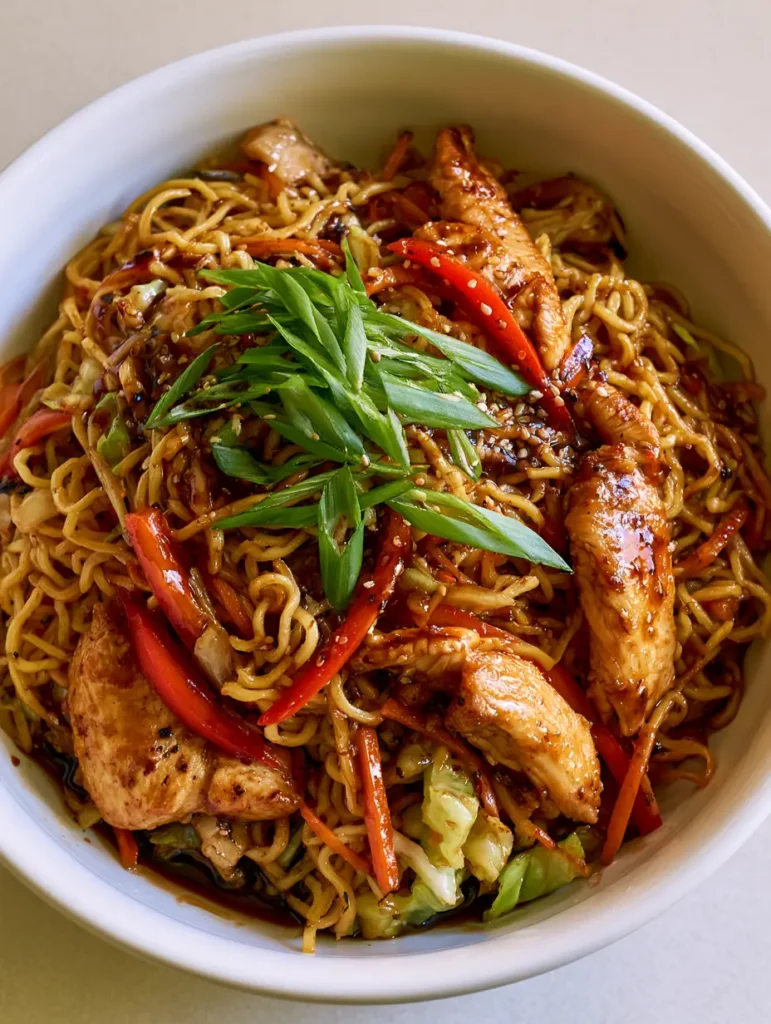
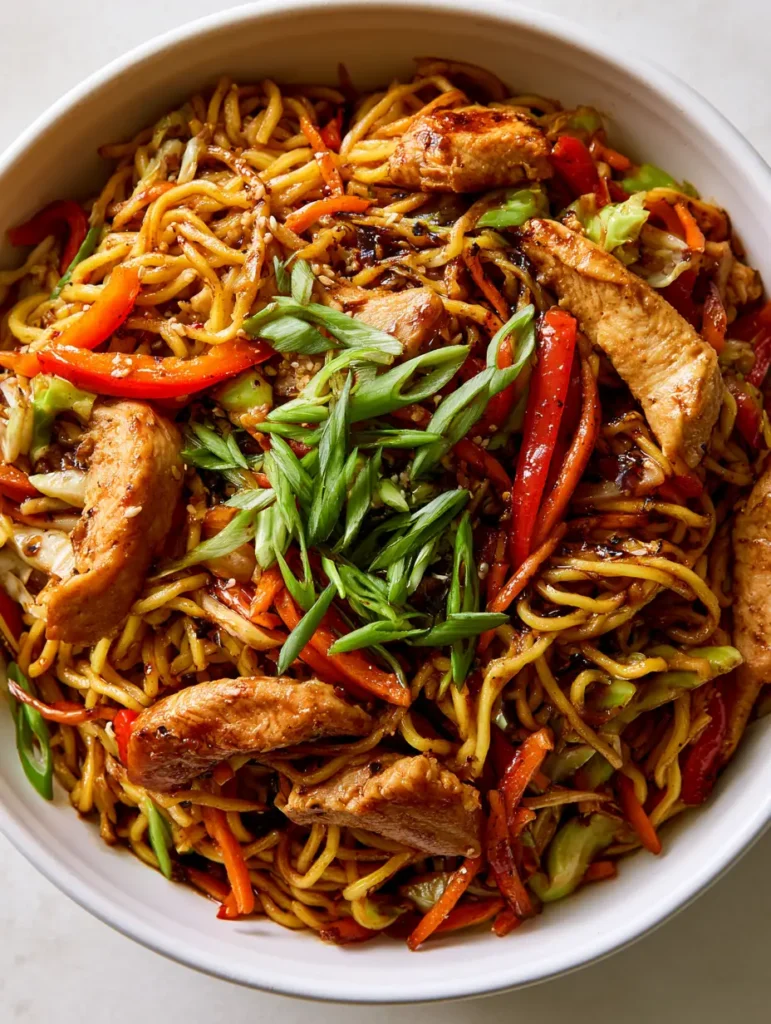
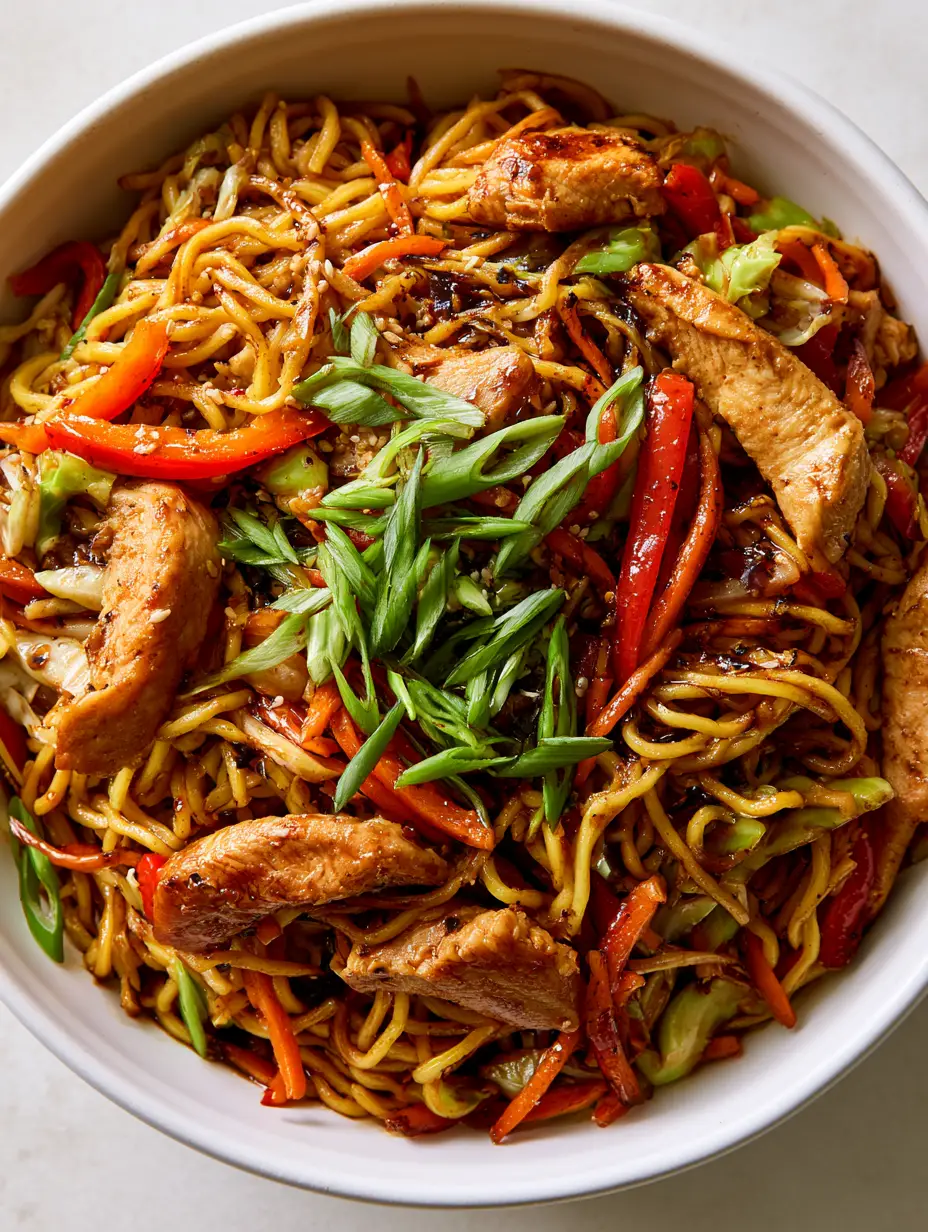
This recipe focuses on recreating the exact visual and textural experience of a high-end bistro dish. We are aiming for a white ceramic bowl overflowing with golden, seared chicken breast and vibrant, crisp-tender vegetables, all bound together by a glossy, dark savory sauce that clings to every noodle strand.
By following this guide, you will achieve that professional “handheld smartphone photo” quality. Every ingredient, from the julienned carrots to the toasted sesame seeds, is chosen to provide a balance of color, crunch, and umami that will make your kitchen feel like the best stir-fry shop in town.
Why This Savory Noodle Bowl Is a Weeknight Game Changer
- Visual Perfection: The contrast between the bright red bell pepper slivers, orange carrots, and deep green scallions creates a restaurant-quality presentation.
- Textural Contrast: You get the crunch of fresh shredded cabbage paired with the tender, juicy sear of golden-brown chicken breast strips.
- The Glossy Finish: Our specific sauce ratio ensures a dark, rich coating that isn’t greasy but reflects light beautifully for that “glossy” finish.
- Wok-Kissed Noodles: We utilize high-heat techniques to ensure your thin egg noodles develop slight char marks without becoming mushy or broken.
Essential Elements for a Savory Noodle Bowl
Thin Egg Noodles: 10 oz (285g) of fresh or dried yellow egg noodles are the backbone of this dish. Look for “chow mein” specific noodles, which are designed to hold their shape and withstand the high heat of stir-frying without clumping.
Chicken Breast: 1 lb (450g) of chicken breast, sliced into thin, uniform strips. Searing these over high heat ensures a golden-brown exterior while maintaining a succulent, tender interior that rivals any tender chicken preparation.
Red Bell Peppers: 1 medium (150g) pepper, sliced into thin slivers. These provide a pop of sweetness and a vibrant red hue that cuts through the dark brown tones of the soy-based sauce.
Julienned Carrots: 1 cup (125g) of thin, matchstick-sized carrots. The julienne cut is vital here as it allows the carrots to soften slightly while retaining a structural “snap” that complements the noodles.
Shredded Green Cabbage: 2 cups (150g) of finely shredded cabbage. Cabbage is a culinary workhorse in stir-fries, absorbing the savory sauce and providing volume and a mild, earthy sweetness.
Dark Soy Sauce: 2 tbsp (30ml) of premium dark soy sauce. This is the “secret” to that deep, glossy brown color seen in the visual blueprint; it is thicker and less salty than light soy sauce.
Aromatics: 3 cloves of garlic (15g) and 1 tsp (5g) of fresh grated ginger. These “invisible” ingredients provide the aromatic foundation that elevates the dish from simple noodles to a complex, savory masterpiece.
Finishing Touches: Fresh green onions (diagonally sliced) and white sesame seeds. These are not just garnishes; they provide a hit of fresh onion flavor and a subtle nutty crunch that completes the sensory experience.
The Best Tools for Stir-Frying at Home
To achieve the specific “sear” and “char marks” described in the visual prompt, you need the right equipment. A heavy-bottomed carbon steel wok is the gold standard because it responds instantly to temperature changes and develops a natural non-stick surface.
If you don’t own a wok, a large 12-inch (30cm) cast iron or stainless steel skillet is a great alternative. The key is surface area; you need enough room to toss the ingredients without crowding the pan, which leads to steaming rather than searing.
Additionally, a sharp chef’s knife or a mandoline is essential for achieving those perfect julienned carrots and thin bell pepper slivers. Precision cutting ensures that all vegetables cook at the same rate, preserving their bright colors and crisp textures.
Mastering the Art of the Seared Noodle
Step 1: Preparing the Foundation
Cook your 10 oz (285g) of thin egg noodles according to package directions, but aim for “al dente.” Drain them thoroughly and toss with 1 tsp (5ml) of toasted sesame oil to prevent sticking; dry noodles are the key to achieving char marks later.
Step 2: The Golden Chicken Sear
Heat 2 tbsp (30ml) of neutral oil in your wok over high heat until it begins to shimmer and smoke slightly. Add your chicken breast strips in a single layer, seasoning with a pinch of salt and pepper.
Let the chicken sit undisturbed for 2 minutes until a deep, golden-brown crust forms. Flip and cook for another 60 seconds until just opaque, then remove the chicken from the wok and set aside to keep it juicy.
Step 3: Stir-Frying the Rainbow
In the same hot wok, add another 1 tbsp (15ml) of oil if needed. Toss in your julienned carrots, sliced red bell peppers, and shredded cabbage. Stir-fry aggressively for 2-3 minutes.
Watch for the “visual cues”: the cabbage should wilt slightly but remain bright green, and the bell peppers should take on a glossy sheen while maintaining their structural integrity. Add your garlic and ginger in the last 30 seconds to avoid burning.
Step 4: The Great Noodle Char
Push the vegetables to the sides of the wok and add the cooked noodles to the center. Let the noodles sit against the hot metal for 30-45 seconds without moving them.
Listen for a distinct sizzling sound. When you see those slight char marks forming on the bottom of the noodles, it’s time to toss everything together with the chicken and your prepared glossy dark soy sauce mixture.
Step 5: The Glossy Glaze & Garnish
Pour the sauce over the mixture and toss vigorously for 1-2 minutes over high heat. The sauce will thicken slightly and coat every ingredient in a dark, savory glaze.
Turn off the heat and fold in half of your diagonally sliced green onions. Transfer the overflowing noodles into a white ceramic bowl, topping with the remaining green onions and a light sprinkle of white sesame seeds for that perfect top-down photo finish.
Success Strategies for Perfect Textures
- Dry Your Noodles: After boiling, make sure the noodles are as dry as possible. Excess moisture creates steam, which prevents the noodles from getting those beautiful char marks.
- High Heat is Non-Negotiable: Stir-frying is a high-temperature technique. If your pan isn’t hot enough, the vegetables will release water and become soggy rather than crisp.
- Mise en Place: Because this Chicken Chow Mein Recipe cooks in under 10 minutes, have all your vegetables sliced and sauce mixed before you turn on the stove.
- Don’t Crowd the Pan: If you are doubling the recipe, cook it in two batches. Overcrowding drops the pan temperature and ruins the sear on the chicken and noodles.
Meal Prep and Freshness Guide
This dish is fantastic for meal prep because the thin egg noodles hold up well to reheating. Store leftovers in an airtight container in the refrigerator for up to 3 days.
To reheat, avoid the microwave if possible, as it can make the noodles soft. Instead, toss the leftovers back into a hot skillet with a teaspoon of water or splash of soy sauce for 2 minutes to revive the textures.
While you can freeze this dish, the textures of the cabbage and bell peppers will change slightly upon thawing. If you do freeze it, ensure it is completely cooled before sealing it in a freezer-safe bag for up to 1 month.
Rounding Out Your Asian-Inspired Feast
While this noodle dish is a complete meal on its own, it pairs beautifully with other Asian-inspired textures. Consider serving it alongside a teriyaki glazed protein for a multi-course dinner.
If you’re looking for more fusion ideas, the savory notes in this sauce complement dishes like garlic hot honey chicken, which adds a sweet heat to the meal. For a lighter pairing, a crisp cucumber salad or a side of Korean-style marinated greens works wonders.
For those who love a variety of chicken textures throughout the week, you might also enjoy our teriyaki chicken wonton tacos, which share similar flavor profiles but offer a fun, crunchy vessel.
Your Questions Answered
While you can use spaghetti in a pinch, it lacks the alkaline properties and egg content of traditional Chow Mein noodles. For the best visual and textural match, look for thin yellow egg noodles in the refrigerated or international aisle.
Ensure your noodles are very dry after boiling. Add them to a smoking hot wok with oil and let them sit undisturbed for 30-60 seconds before tossing. This allows the heat to sear the noodle surface.
The secret is high-heat searing. By cooking the thin strips quickly over high heat, you develop a golden crust while the inside stays juicy. Avoid overcooking once the chicken is added back to the noodles at the end.
Dark soy sauce is essential for achieving the deep, glossy brown color shown in the visual prompt. If you only have regular soy sauce, the dish will taste similar but will look much lighter and less ‘glossy’.
The primary difference lies in the noodle preparation. Chow Mein noodles are fried or stir-fried to create a crispier texture (often with char marks), whereas Lo Mein noodles are boiled and tossed in sauce, resulting in a softer, saucier dish.
The Ultimate Chicken Chow Mein Recipe Card
Chicken Chow Mein Recipe: The Ultimate Better-Than-Takeout Guide
Ingredients
Equipment
Instructions
- Cook egg noodles al dente (10 oz / 285g). Drain and toss with sesame oil to prevent sticking.
- Sear chicken breast strips (1 lb / 450g) in a hot wok until a golden-brown crust forms. Remove and set aside.
- High-heat stir-fry the julienned carrots, sliced red bell peppers, and shredded cabbage for 2-3 minutes until crisp-tender.
- Add noodles back to the wok. Let them sit against the heat for 45 seconds to develop char marks before tossing with sauce and chicken.
- Top with diagonally sliced green onions and white sesame seeds before serving in a white ceramic bowl.
Notes
Swap chicken breast for thighs if you prefer a higher fat content and extra juiciness.
Closing & Call to Action
Creating a restaurant-quality Chicken Chow Mein Recipe at home is all about the details: the sear on the chicken, the snap of the vegetables, and the char on the noodles. This dish proves that with a few high-heat techniques, you can achieve professional results in your own kitchen.
If you enjoyed this recipe, we would love to hear from you! Please leave a comment below with your results or any variations you tried. Don’t forget to sign up for our newsletter for more elite culinary guides delivered straight to your inbox.
Found this recipe helpful? Pin it to your favorite dinner board on Pinterest so you never lose it! Your shares help us continue to develop these deep-dive culinary resources.